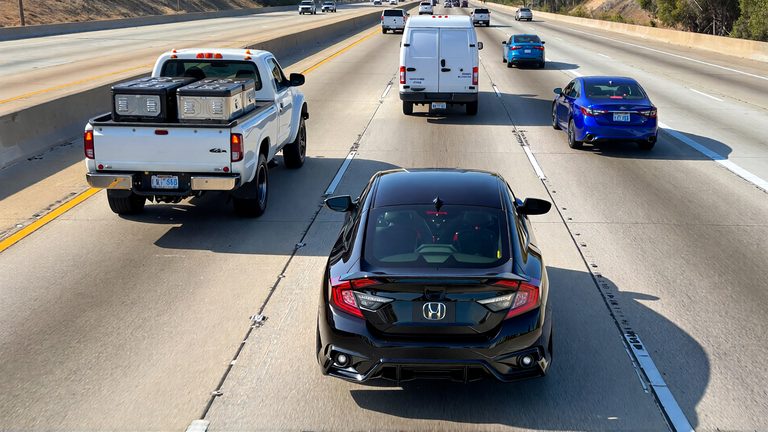
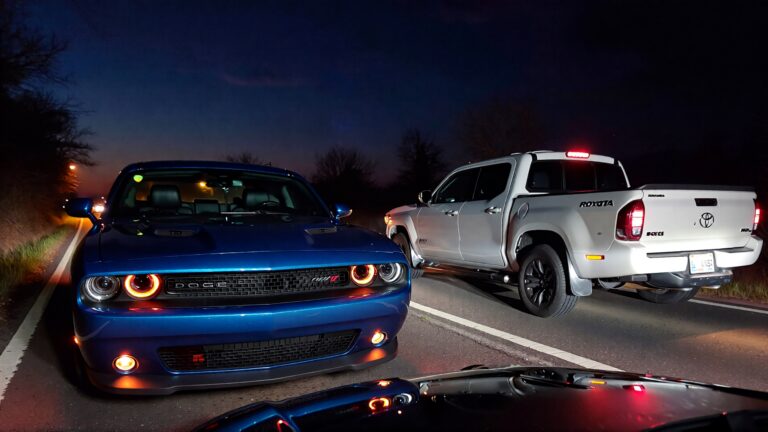
State Route 299 was completely blocked in both directions just east of Buckhorn Summit on Wednesday afternoon after a head-on crash involving multiple vehicles, according to Caltrans District 2. The collision triggered a vehicle fire and left at least one driver trapped, prompting a multi-agency emergency response on the remote mountain corridor.
What Happened on Highway 299
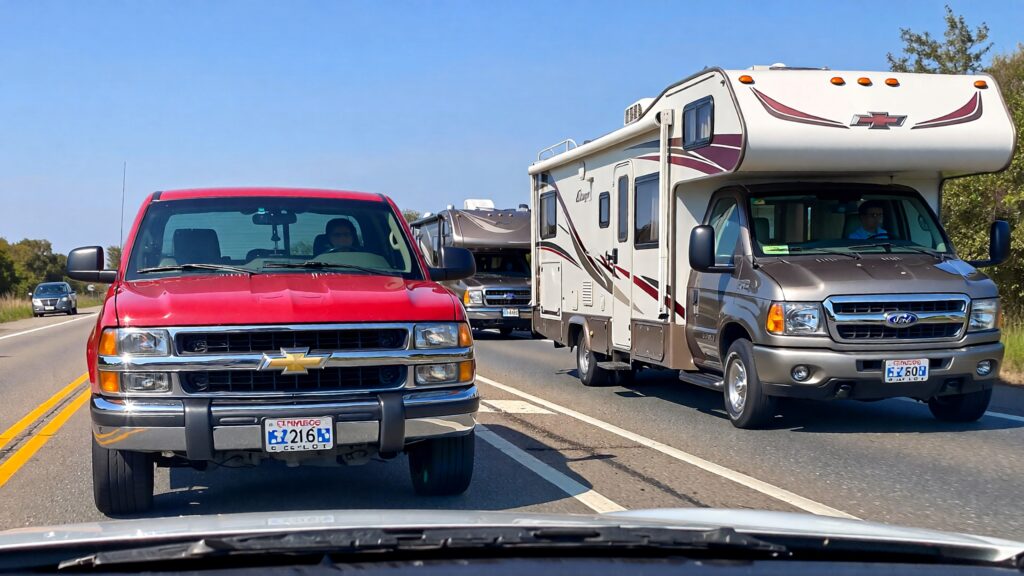
The California Highway Patrol’s Traffic Incident Information Page indicates the crash was reported around 2:34 p.m. Wednesday. Preliminary information points to a head-on collision involving a red Chevrolet, a gray Ford pickup truck, and an RV or camper van.
CHP logs describe the Chevrolet’s engine catching fire following impact, with flames visible in the engine compartment and black smoke rising from the scene. At least one driver was reported trapped inside a vehicle, and bystanders at the scene reportedly used a sledgehammer in an attempt to force entry before emergency crews arrived.
Both lanes of Highway 299 were shut down as Cal Fire and other emergency personnel responded to the crash, extinguished the fire, and worked to free the trapped occupant. The closure affected a stretch of highway near Buckhorn Summit, known for its winding, mountainous terrain and frequent serious collisions due to limited passing zones and sharp curves.
The Dangers of Head-On Collisions on Rural Highways
Head-on crashes are among the most catastrophic types of traffic collisions, and rural mountain routes like Highway 299 present unique risks. Two-lane highways with limited shoulders, blind curves, and steep grades leave little room for drivers to react when a vehicle drifts into oncoming traffic.
When a fire ignites after impact, as reportedly happened in this crash, the danger to occupants multiplies dramatically, turning survivable injuries into life-threatening emergencies within seconds.
Vehicle fires following a collision can result from ruptured fuel lines, damaged batteries, or electrical shorts in the engine compartment. When a driver is trapped and unable to exit before flames spread, injuries can include severe burns in addition to trauma from the initial impact. These situations underscore why rapid extrication and fire suppression are critical in the first moments after a crash like this one.
Legal Rights of Crash Victims in California
Under California Civil Code §1714, all drivers have a legal duty to exercise reasonable care to avoid causing harm to others on the road. When a driver crosses into oncoming traffic, whether due to distraction, fatigue, impairment, or a mechanical failure, and causes a head-on collision, that driver may be held liable for the resulting injuries and damages.
Victims of collisions like this one may pursue compensation for medical expenses, including emergency treatment for burns or trauma, lost wages, pain and suffering, and long-term rehabilitation costs.
California’s statute of limitations under Code of Civil Procedure §335.1 generally gives injury victims two years from the date of the crash to file a personal injury lawsuit, though it’s important to consult with an attorney promptly since evidence and witness recollections can fade quickly.
If the crash resulted in a fatality, surviving family members may have grounds for a wrongful death claim under CCP §377.60, while a decedent’s estate may pursue a survival action under CCP §377.30 to recover damages the victim could have claimed had they survived.
Additionally, if any aspect of the roadway’s design, maintenance, or signage contributed to the crash, Government Code §835 permits claims against public entities responsible for dangerous conditions on public property.
Understanding Settlement Value After a Serious Crash
Every case is different, and no article can predict the value of a specific claim, but injury attorneys often use two common methods to help estimate a preliminary settlement range: the multiplier method and the per diem method.
The multiplier method takes the total of a victim’s “special damages” (medical bills, lost income, and other quantifiable costs) and multiplies it by a factor typically between 1.5 and 5, depending on the severity of the injuries, to account for pain and suffering. A more catastrophic injury, such as severe burns or a traumatic extrication, generally supports a higher multiplier.
The per diem method instead assigns a specific dollar value to each day the victim experiences pain and disruption to daily life, starting from the date of the crash through the point of maximum medical recovery, and multiplies that daily rate by the number of affected days. Both approaches are starting points for negotiation, not guarantees, and an experienced attorney can help determine which method, or combination of methods, better reflects the specifics of a case.
How Catastrophic Injury Settlement Calculators Help Estimate Case Value
A catastrophic injury settlement calculator is a tool that provides injured victims and their families with a preliminary ballpark estimate of what a personal injury claim might be worth based on the information they provide. These calculators typically ask for details such as total medical expenses, lost income, the nature and permanence of the injury, and the number of days a victim has experienced pain and limitations in daily life.
Using either the multiplier method or the per diem method described above, the tool applies a formula to those inputs and generates an estimated settlement range.
For catastrophic injuries such as traumatic brain injuries, spinal cord damage, severe burns, or amputations, this estimate often needs to account for future medical care, long-term disability, lost earning capacity, and the profound impact on a victim’s quality of life, factors that go far beyond simple special damages.
While a calculator can be a useful starting point to help victims understand the general scale of their claim and prepare for conversations with an attorney, it cannot account for the nuances of liability, insurance policy limits, comparative fault, or the strength of available evidence.
That’s why these tools are best used as an educational first step, not a final answer, and should always be followed up with a full case evaluation from an experienced personal injury attorney who can assess the unique facts of the case. Call us now at +1-866-218-3776 to speak with the experts. Call us now at +1-866-218-3776 to speak with the experts.
Take Action Today – Get the Help You Deserve
“Our hearts go out to everyone affected by this crash, especially the driver who was trapped and anyone who witnessed those terrifying moments. In situations like this, the physical injuries are often just the beginning. The emotional weight of surviving something so frightening can linger long after the flames are out and the highway reopens. If you or someone you love was hurt in this collision, please don’t try to face the insurance companies or the recovery process alone. Get the medical care you need first, then let an experienced attorney handle the rest so you can focus on healing. You deserve support, answers, and someone in your corner fighting for the compensation that reflects what you’ve truly been through.” — Andy Gillin, Managing Partner, GJEL Accident Attorneys
If you or someone you love was hurt in this crash on Highway 299, don’t wait to get the help you need. GJEL Accident Attorneys has spent more than 40 years fighting for injured Californians, recovering over $950 million on behalf of our clients, and we’re ready to put that experience to work for you.
Best of all, you won’t pay a dime out of pocket to get started: we work entirely on a contingency fee basis, which means our fees come only from the compensation we recover for you. If we don’t win your case, you owe us nothing.
There’s no risk in reaching out, only the chance to get real answers about your legal options while our team handles the insurance companies and legal complexities on your behalf. Call 1-855-508-9565 now for a free, no-obligation consultation, or visit our Pleasanton office to get started today.
Local Resources for Shasta County and the Highway 299 Corridor
Since the crash occurred just east of Buckhorn Summit, on the Shasta County side of the Shasta-Trinity County line, the following agencies and resources may be helpful for anyone affected:
California Highway Patrol, Redding Area Office
The CHP Redding Area handles patrol, incident reports, and traffic enforcement along Interstate 5 and State Routes 44, 273, and 299 throughout Shasta County. Collision reports for crashes in this area can typically be requested through this office.
Address: 2503 Cascade Blvd., Redding, CA 96003
Phone: (530) 225-0500
Website: https://www.chp.ca.gov/find-an-office/northern-division/135-redding
CHP Redding Communications Center
This 24/7 dispatch center coordinates emergency response for Trinity, Shasta, Tehama, and Lassen counties, including incidents on Highway 299 near Buckhorn Summit, and also supports Caltrans District 2 during weekends, holidays, and after hours.
Phone: (530) 242-3210
Website: https://www.chp.ca.gov/find-an-office/northern-division/135-redding-communications-center
Shasta County Sheriff’s Office
For non-CHP law enforcement matters, records requests, or general safety concerns in unincorporated Shasta County.
Address: 1500 Court Street, Redding, CA 96001
Phone: (530) 245-6135
Website: https://www.shastacounty.gov/sheriff
Caltrans District 2 / QuickMap
For real-time updates on Highway 299 lane closures, construction delays, and current road conditions near Buckhorn Summit and throughout the region.
Website: https://quickmap.dot.ca.gov
Shasta County Health and Human Services Agency
Offers crisis counseling referrals and support services for residents coping with trauma following a serious accident.
Address: 2640 Breslauer Way, Redding, CA 96001
Phone: (530) 225-5700
Website: https://www.shastacounty.gov/health-human-services-agency