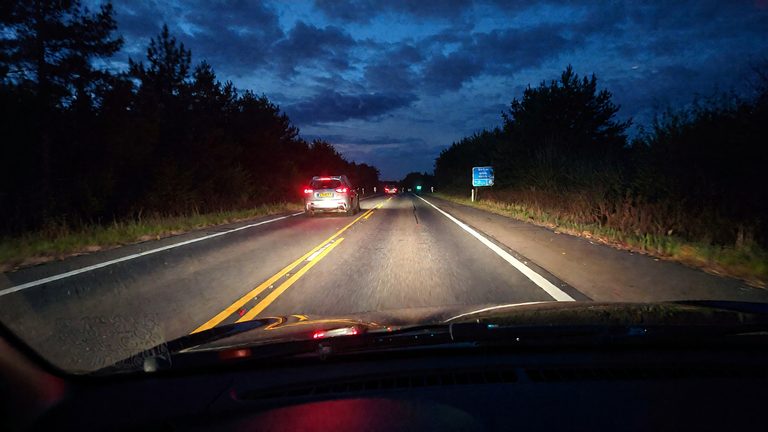
A man lost his life on the evening of Thursday, October 29, 2026, after being struck by a pickup truck in El Sobrante. At approximately 8:02 PM, the California Highway Patrol received reports of a pedestrian collision on San Pablo Dam Road, east of Hillcrest Road. The fatal pedestrian accident occurred on San Pablo Dam Road, a well-traveled route through the unincorporated community of El Sobrante in Contra Costa County, where residents, commuters, and pedestrians share the roadway every day.
The man’s death is a painful loss for his family, friends, and neighbors, and it is a reminder of how quickly an ordinary evening can change when a pedestrian and a vehicle meet. Because the collision occurred after dark, when visibility is often reduced for both drivers and pedestrians, investigators will likely examine how the surroundings may have affected what each person could see. The driver of the pickup truck remained at the scene and cooperated with the California Highway Patrol, and the agency’s investigation is ongoing.
What Investigators Have Reported
According to investigators, the pedestrian was struck by a red Chevrolet pickup truck traveling westbound in the right lane of San Pablo Dam Road. Emergency responders declared the man deceased at the scene. The driver of the Chevrolet remained at the scene, cooperated with authorities, and was not injured.
The CHP has not publicly released the pedestrian’s identity, and the investigation into the cause of the crash is ongoing. As of the latest reports, the CHP has not publicly said what led up to the collision, and key details remain unconfirmed. Authorities have not released the pedestrian’s identity, his age, or where he was in relation to the roadway when he was struck, including whether he was crossing at the time.
It is also unclear what the lighting and weather conditions were, how fast the pickup truck was traveling, or whether any contributing factors, such as distraction or impairment, were part of the inquiry.
In collisions like this one, investigators generally document the scene, measure roadway evidence, interview the driver and any witnesses, and review available video before reaching conclusions about fault. Because the early account of a crash can change as that work is completed, the details above reflect only what has been reported so far.
Families affected by a collision like this should know that the findings in the official report will carry significant weight in any later insurance or legal claim, which is why preserving independent evidence early is so important.
A Driver’s Duty of Care Toward Pedestrians
California law places a heightened responsibility on motorists to protect pedestrians, who have no physical protection in a collision. Under Civil Code §1714, every person is responsible for injuries caused by a failure to use ordinary care, and courts apply that standard with particular attention to the vulnerability of people on foot.
Vehicle Code §21950 requires drivers to yield the right-of-way to pedestrians in marked and unmarked crosswalks. Even where a pedestrian is outside a crosswalk, Vehicle Code §21954 makes clear that drivers must still exercise due care for their safety. Speed, visibility, lighting, distraction, and the driver’s ability to see and react in time all become important questions in a case like this one.
Wrongful Death Claims Under California Law
If the driver of the Chevrolet is found to have neglected this duty of care, the family of the man who died may have grounds for a wrongful death claim. Under Code of Civil Procedure §377.60, certain family members, including a surviving spouse, domestic partner, children, and in some cases other dependents or heirs, may bring the action.
Compensation in a wrongful death case can include funeral and burial expenses, the loss of financial support the person would have provided, and the loss of companionship, care, guidance, and household services. Separately, Code of Civil Procedure §377.30 allows the deceased person’s estate to pursue a survival action for losses the person suffered before death, such as medical expenses and lost income.
Under Code of Civil Procedure §335.1, these claims generally must be filed within two years of the date of death, so acting early helps preserve evidence that fades quickly, including surveillance footage, vehicle data, and witness memories.
A wrongful death claim in California exists to hold a negligent party accountable when someone’s carelessness ends a life, and it is brought on behalf of the family members the person leaves behind. Under Code of Civil Procedure §377.60, the right to file belongs first to the surviving spouse or domestic partner, the children, and the children of any deceased child.
If none of those relatives survive, the right may pass to those who would inherit the person’s property under California’s intestate succession rules. Certain dependents, such as stepchildren, parents, or a putative spouse, may also qualify if they relied on the person for financial support.
A personal representative of the estate can bring the action on the family’s behalf, and the claim is typically pursued as a single case that accounts for every eligible heir. To succeed, the family must show that the driver owed a duty of care, breached it, and that the breach caused the death.
The damages available are meant to reflect what the family has lost, including funeral and burial costs, the income and benefits the person would have contributed, the value of the household services he provided, and the loss of love, companionship, comfort, guidance, and moral support.
Because these cases turn on evidence, including the CHP’s findings, witness accounts, and any available video or vehicle data, families benefit from speaking with an attorney early, well before the two-year filing deadline approaches.
How Shared Fault Can Affect a Pedestrian Case
Insurance companies often look for ways to shift blame onto the person who was hit. California follows a pure comparative fault system, which means that if the pedestrian is found to have contributed to the collision in some way, any recovery may be reduced by his percentage of fault.
That reduction does not bar the family from receiving compensation. A family could still recover a substantial portion of damages even if some fault were assigned to the pedestrian, which is why a thorough, independent investigation matters.
Insurance companies frequently look for ways to place part of the blame on the person who was struck, and California’s comparative fault rules give them room to try. Under the pure comparative fault doctrine established in Li v. Yellow Cab Co., a person who is partly responsible for a collision can still recover damages, but the total is reduced by his percentage of fault.
For example, if a jury were to find that a pedestrian was 20 percent at fault for a $1,000,000 loss, the recovery would be reduced by $200,000 to $800,000. The reduction does not eliminate the claim, and the family could still recover compensation even if the pedestrian were found to be at fault for the majority of the blame.
Arguments about shared fault often center on whether the pedestrian was in a crosswalk, whether he was visible to approaching drivers, and whether he yielded when required under Vehicle Code §21954. That same statute also states that a pedestrian’s duty to yield does not relieve a driver of the obligation to exercise due care, so the driver’s speed, attention, and ability to see and react remain central questions.
Because the percentage of fault assigned to each party directly affects the final recovery, a careful investigation of lighting, vehicle speed, sight lines, and witness accounts can make a meaningful difference in how a claim is valued and resolved.
Road Conditions and Other Responsible Parties
Not every pedestrian collision is the driver’s fault alone. If poor lighting, a missing crosswalk, or another dangerous condition on a public roadway contributed to the crash, a government entity may share responsibility under Government Code §835. These claims carry short-notice deadlines, so families should speak with an attorney quickly. If the driver was working at the time of the collision, an employer may also bear liability.
Not every pedestrian collision is the driver’s fault alone, and a thorough investigation considers everyone whose actions or decisions may have played a part. If the collision was influenced by poor lighting, a missing or poorly marked crosswalk, inadequate signage, or another hazard on the roadway, a government entity responsible for designing or maintaining that stretch of road may share liability.
Under Government Code §835, a public entity can be held responsible for injuries caused by a dangerous condition of its property when it created the condition or knew about it and failed to fix it within a reasonable time. These claims follow much stricter rules than ordinary negligence cases.
This includes a short six-month deadline to file a written claim with the government agency before a lawsuit can be filed, which is far shorter than the general two-year window. Liability can also extend beyond the roadway itself.
If the driver was working at the time of the collision, such as making a delivery or traveling between job sites, the employer may be legally responsible for the driver’s negligence, and commercial insurance policies often provide significantly more coverage than a personal auto policy. A vehicle owner who allowed an unsafe or unfit driver to use the truck may also face responsibility.
Identifying every potentially liable party early matters because it can determine how much insurance coverage is available to the family, and the evidence needed to prove these claims, such as maintenance records, lighting data, and employment information, can be lost if no one acts quickly to preserve it.
Understanding How Wrongful Death Settlements Are Valued
Families often want to know what a wrongful death claim might be worth, and the honest answer is that every case is different. Attorneys commonly begin with two approaches to estimate value.
The multiplier method totals the family’s economic losses, such as funeral and burial costs and the income and benefits the person would have provided over a lifetime, and then multiplies that figure by a number that reflects the severity of the loss and the strength of the evidence of fault. For illustration only, a case with $400,000 in economic losses and a multiplier of three would produce a starting estimate of $1,200,000.
The per diem method assigns a reasonable daily dollar amount to non-economic losses, such as the loss of companionship, guidance, and emotional support, and multiplies it by the period during which the family is expected to feel that loss. Neither method guarantees a result, and both serve as negotiating tools rather than fixed formulas.
The final value depends on several practical factors, including the age, health, and earning history of the deceased, the number and dependence of surviving family members, the clarity of the evidence of the driver’s negligence, and the amount of available insurance coverage.
Any percentage of fault assigned to the pedestrian will also reduce the total. Because insurers often value these claims conservatively, families benefit from having an attorney who can document every category of loss and build a case that reflects the full impact of their loved one’s death.
Wrongful Death Settlement Calculators and Why They Matter
A wrongful death settlement calculator is an online tool that provides families with a rough estimate of what a claim may be worth by asking for details such as funeral and burial costs, the income and benefits the deceased earned, the ages of surviving family members, and the severity of the non-economic loss.
Most calculators apply the same multiplier and per diem principles that attorneys use, which makes them a useful way to see how different categories of loss add up to a total. For a grieving family, that can bring some clarity at a time when everything feels uncertain and help set realistic expectations before conversations with insurers begin.
Calculators also encourage families to think about losses they might overlook, such as the value of household services, lost retirement contributions, and the future guidance a parent or spouse would have provided. It is important to understand their limits, however.
A calculator cannot evaluate the strength of the evidence, the percentage of fault assigned to each party, the amount of insurance coverage available, or the way a jury in Contra Costa County might view the case.
The figure it produces is an educational starting point and not a prediction or a promise of any result. Families who want an accurate valuation should speak with an experienced wrongful death attorney, who can review the full circumstances and build a claim that reflects the true impact of their loss. Call us now at 1-855-508-9565 to speak with the experts.
Take Action Today: You Won’t Pay Unless We Win
“Losing a loved one in a sudden collision is a pain no family should have to carry, and our hearts go out to everyone affected by this tragedy in El Sobrante. In the days after a crash like this, insurance companies often move quickly to gather statements and shape the story, and families deserve to have someone in their corner before that happens. If you or someone you love has been hurt or lost in a pedestrian collision, do not wait to learn where you stand. California law sets strict deadlines, and critical evidence can disappear fast. Our team will handle the investigation and the insurance companies so you can focus on healing, and you will owe us nothing unless we recover compensation for you.”-Andy Gillin, Managing Partner, GJEL Accident Attorneys
GJEL Accident Attorneys has more than 40 years of experience and has recovered over $950 million for injured Californians and their families. We handle every wrongful death and pedestrian accident case on a contingency fee basis, which means there are no attorney fees unless we recover compensation for you. If your family has lost a loved one in a pedestrian collision in El Sobrante or anywhere in Contra Costa County, call us at 1-855-508-9565 or visit the Orinda office for a free, confidential consultation.
Local Resources for Those Affected
Anyone who witnessed this collision or has lost a loved one or been injured in a similar crash can reach out to the agencies below. Always call 911 in an emergency:
California Highway Patrol, Contra Costa Area Office
The CHP investigated this collision. The Contra Costa Area Office is located at 5001 Blum Road, Martinez, CA 94553, and is open Monday through Friday from 8:00 AM to 5:00 PM. Witnesses and family members can call (925) 646-4980 or email 320Investigations@chp.ca.gov to share information with the investigating officer. Office page: https://www.chp.ca.gov/find-an-office/golden-gate-division/320-contra-costa/
CHP Collision Report Requests
A copy of the official CHP crash report can be requested online through the CHP crash portal or by submitting form CHP 190 in person or by mail to the nearest CHP Area office. Only a proper party of interest may request the report, and a fee applies. An attorney can also request the report on a family’s behalf. Request page: https://chp.ca.gov/traffic/request-a-crash-report/
Contra Costa County Sheriff’s Office
The Sheriff’s Office is located at 651 Pine Street, Martinez, CA 94553, and can be reached at (925) 646-2441 for non-emergency matters. Website: https://www.cocosheriff.org
Contra Costa County Sheriff-Coroner, Coroner’s Division
The Coroner’s Division is responsible for determining the cause of death in cases like this one and for identifying the deceased and releasing that information to the family. It is located at 1960 Muir Road, Martinez, CA 94553, and can be reached at (925) 313-2850. Coroner’s Division page: https://cocosheriff.org/bureaus/support-services/coroner-s-division
Contra Costa County Public Works Department
San Pablo Dam Road runs through unincorporated El Sobrante, where Public Works maintains county roads, crosswalks, traffic signals, and streetlights. Residents can use the department to report traffic concerns, lighting problems, or dangerous roadway conditions. The office is located at 255 Glacier Drive, Martinez, CA 94553. Department page: https://www.contracosta.ca.gov/publicworks. Service request page: https://www.contracosta.ca.gov/7875/Request-Services
Contra Costa County District Attorney, Victim Witness Assistance Program
Victim advocates can guide families through the criminal justice system, assist with victim compensation applications, and connect them with counseling and community services. The program is located at 900 Ward Street, Martinez, CA 94553, and is open Monday through Friday from 8:00 AM to 5:00 PM. The Martinez office can be reached at (925) 957-8650 and the Richmond office at (510) 374-3272. Program page: https://contracosta.ca.gov/3466/Programs-Services