

A Monday afternoon two-vehicle collision between a garbage truck and a Hyundai at South Clovis Avenue and East South Avenue in Fresno County has left at least one person dead. The crash is a painful reminder of how quickly an ordinary drive through the Central Valley can change a family’s life. Fowler is a close-knit community, and news of a fatal crash on a road so many residents travel every day tends to be felt well beyond the families directly involved.
For the loved ones of the person who died, the hours after a collision like this are often defined by uncertainty, waiting for official confirmation, and trying to absorb a loss that came without warning. Neighbors, coworkers, and friends are left wondering how a routine Monday afternoon turned so tragic.
As the California Highway Patrol continues its investigation into how the garbage truck and the Hyundai came together at South Clovis Avenue and East South Avenue, the community is left to grieve as it waits for answers. In moments like these, families deserve compassion, accurate information, and the space to mourn without having to face the practical and legal questions alone.
What We Know About the Fowler Crash
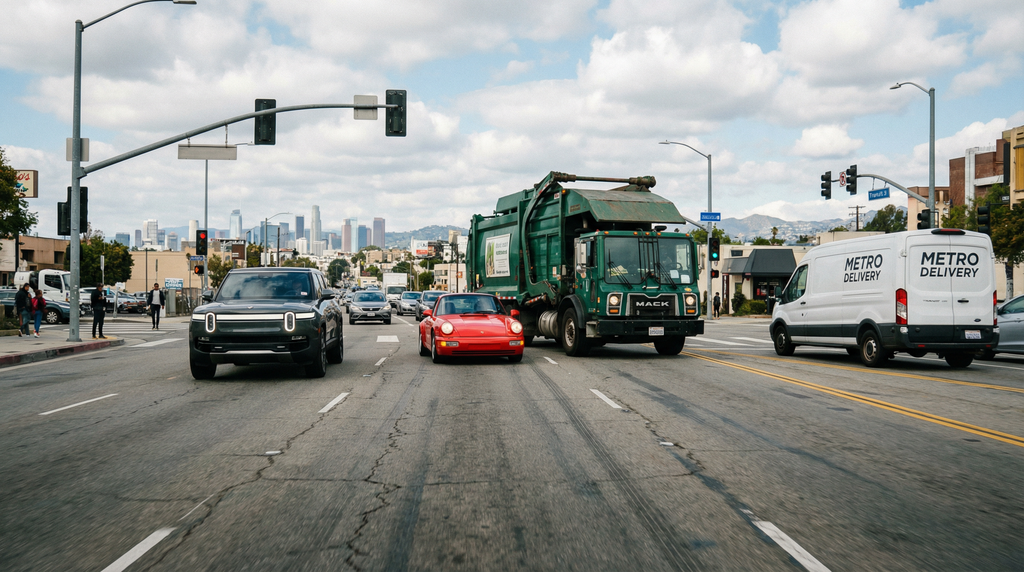
The California Highway Patrol received the first reports of the collision on Nov. 16 at approximately 4:10 p.m. According to initial CHP information, a blue Hyundai came to rest at the edge of a canal, while the garbage truck remained on the roadway, obstructing traffic. CAL FIRE and other emergency responders reached the scene shortly after the crash and dealt with major injuries and a pin-in situation. Emergency medical services were dispatched under run number 627.
ABC30 reported that the CHP described the garbage truck as traveling north on Clovis Avenue and the Hyundai as traveling west on South Avenue, and that the driver of the Hyundai, believed to be a woman in her 60s, died. The CHP has not formally released the identities of those involved, which are being withheld pending notification to the families. The cause of the crash remains under investigation, and no conclusions about fault should be drawn until investigators finish their work.
A Rural Intersection With Heavy Truck Traffic
South Clovis Avenue is a working corridor for the agricultural communities surrounding Fowler. Farm equipment, delivery vehicles, commercial haulers, and waste collection trucks share these roads with commuters and families, often at intersections where drivers must quickly judge speed and distance.
Canals and irrigation channels run alongside many of these roads with little margin for error. When a passenger vehicle collides with a heavily loaded commercial truck, the difference in size and weight almost always places the occupants of the smaller vehicle at a far greater risk of catastrophic injury.
Rural intersections like South Clovis Avenue and East South Avenue present challenges that drivers in more developed areas may not face. Long, flat stretches of road can create a false sense of security and encourage higher speeds, while crops, irrigation equipment, and roadside vegetation can limit sightlines at crossings.
Many of these intersections lack traffic signals, relying instead on stop signs that depend entirely on each driver’s attention and judgment. Heavy vehicles such as garbage trucks, tractor-trailers, and agricultural haulers need considerably more distance to slow down or stop, and their size can make them difficult for other drivers to gauge.
Late afternoon adds another layer of risk, as low sun angles can cause glare, and fatigue at the end of a workday can slow reaction times. For drivers of passenger vehicles, the safest approach is to come to a full stop, look carefully in every direction, and never assume a large truck can yield in time.
For truck operators, the responsibility is equally clear: maintain a safe speed, keep a constant lookout at every crossing, and be prepared to react to the unexpected. When either side fails to take these precautions, the consequences on roads like these can be devastating.
Additional Perspective on Safety at Rural Intersections
Rural intersections like South Clovis Avenue and East South Avenue present challenges that drivers in more developed areas may not face. Long, flat stretches of road can create a false sense of security and encourage higher speeds, while crops, irrigation equipment, and roadside vegetation can limit sightlines at crossings.
Many of these intersections lack traffic signals, relying instead on stop signs that depend entirely on each driver’s attention and judgment. Heavy vehicles such as garbage trucks, tractor-trailers, and agricultural haulers need considerably more distance to slow down or stop, and their size can make them difficult for other drivers to gauge.
Late afternoon adds another layer of risk, as low sun angles can cause glare, and fatigue at the end of a workday can slow reaction times. For drivers of passenger vehicles, the safest approach is to come to a full stop, look carefully in all directions, and never assume a large truck will yield in time.
For truck operators, the responsibility is equally clear: maintain a safe speed, keep a constant lookout at every crossing, and be prepared to react to the unexpected. When either side fails to take these precautions, the consequences on roads like these can be devastating.
Safer rural intersections depend on more than individual driver behavior, and engineering plays a significant role in preventing the kind of collision that occurred in Fowler. Features such as advance warning signs, rumble strips, enhanced stop sign visibility, reflective pavement markings, overhead lighting, and flashing beacons can all help drivers recognize an upcoming crossing sooner and respond with more time to spare.
Guardrails and buffer zones near canals and irrigation channels can also reduce the severity of a crash when a vehicle leaves the roadway. Residents who regularly travel these roads are often the first to notice hazards, such as overgrown vegetation blocking a stop sign, faded markings, or a spot where near-misses happen repeatedly, and these concerns can be reported to Fresno County Public Works or Caltrans for review.
Under Government Code §835, a public entity can be held responsible when a dangerous condition of its property contributes to an injury and the entity had notice of the problem and time to address it.
That is one reason prompt reporting and thorough documentation of road conditions matter, both to prevent future tragedies and to protect the rights of families after a crash. Communities that stay engaged with local agencies about road safety give everyone who travels these roads a better chance of getting home safely.
Why Collisions With Commercial Trucks Are So Complex
A crash involving a garbage truck is not handled like an ordinary two-car collision. Several parties may share responsibility, including the driver, the employer operating the truck, a contractor holding a municipal collection agreement, and the company responsible for maintaining the vehicle.
Under California’s respondeat superior doctrine, an employer can be held liable for the negligence of an employee acting within the scope of employment. Civil Code §1714 establishes the general duty of every person to use ordinary care, and the Vehicle Code sets out the right-of-way and stop sign requirements, including §21800 and §22450, that investigators weigh when determining how an intersection collision unfolded.
If the truck was operated by a public agency, Government Code §835 and the California Government Claims Act may apply. Claims against a public entity generally must be presented within six months of the incident, a deadline far shorter than that for private defendants. Families who are still grieving can easily miss it without realizing it exists.
California also follows a pure comparative fault system. Even if an investigation concludes that a driver bore some responsibility, the family may still recover damages reduced by that percentage. A fatality case is rarely as simple as the first headline suggests, and evidence such as event data recorder data, dash-camera footage, maintenance logs, and driver records can significantly change the picture.
Legal Options for Families After a Fatal Crash
When a person dies because of someone else’s negligence, California law gives the family two distinct paths. A wrongful death action under Code of Civil Procedure §377.60 may be brought by specified surviving family members, including a spouse, domestic partner, children, and, in some cases, other dependents or heirs.
It allows recovery for the loss of financial support, household services, companionship, and guidance, as well as funeral and burial expenses. A survival action under Code of Civil Procedure §377.30 allows the deceased person’s estate to recover damages the person could have pursued if they had lived, such as medical expenses and pain and suffering before death.
The statute of limitations for these claims is generally two years from the date of death under Code of Civil Procedure §335.1. Evidence disappears much faster than that. Vehicles are repaired or salvaged, electronic data is overwritten, and witness memories fade, which is why early legal guidance matters.
How Wrongful Death Compensation Is Evaluated
No two cases are valued alike, but attorneys and insurers commonly use two methods to organize a catastrophic injury or wrongful death claim. The multiplier method sums economic losses, such as medical bills, funeral costs, and lost income, and applies a multiplier reflecting the severity of the loss and the strength of the liability evidence.
The per diem method assigns a daily dollar value to non-economic suffering and multiplies it across the relevant period. Both are educational frameworks rather than guarantees, and the final value depends on the deceased person’s age and earning capacity, the family’s relationships, the evidence of fault, and the available insurance coverage.
Online settlement calculators can give families a rough sense of how these methods work, but they cannot account for the facts that drive real outcomes. A commercial truck case often involves higher policy limits and multiple defendants, which is one more reason an individual assessment is worth far more than a generic estimate.
Wrongful Death Settlement Calculators and How They Help Estimate Case Value
A wrongful death settlement calculator is an educational tool that helps families understand how the value of a claim may be approached after a fatal crash. Most calculators begin with the economic losses, such as final medical expenses, funeral and burial costs, and the income and benefits the person would have provided over the course of their working life.
They then address non-economic losses, which are harder to measure and include the loss of companionship, guidance, and emotional support. This is where the multiplier method and the per diem method come into play. The multiplier method sums the economic damages and applies a multiplier that reflects the severity of the loss and the strength of the liability evidence.
While the per diem method assigns a daily dollar value to the suffering and multiplies it over a defined period. Used together, these methods provide families with a framework for understanding why two cases that appear similar on the surface can result in very different outcomes. A calculator can also show how factors such as the age of the deceased.
Also, their earning capacity, the number of dependents, and available insurance coverage affect the estimate. Their importance lies in helping grieving families set realistic expectations and ask better questions early in the process, but they have clear limits.
A calculator cannot account for disputed fault, California’s pure comparative fault rules under which a recovery may be reduced by a percentage of responsibility, multiple defendants, policy limits, or the difficult-to-quantify details of a family’s relationship with their loved one. The figure it produces is an estimate and never a promise of what a case is worth.
A personalized evaluation by an experienced attorney who can review the evidence, the insurance coverage, and the full extent of the family’s losses remains the most reliable way to understand the true value of a wrongful death claim. Call us now at 1-855-508-9565 to speak with the experts.
Take Action Today – Get the Help You Deserve
“My heart goes out to everyone affected by the crash in Fowler, especially the family who lost a loved one and anyone still recovering from injuries. In the days after a collision like this, it is natural to feel overwhelmed, and you should never feel pressured to have every answer right away. What I can tell you from more than 40 years of helping California families is that the steps you take early can protect your rights later. Seek medical care, keep records of your treatment and expenses, avoid giving recorded statements to insurance companies before you understand your options, and speak with an attorney who can preserve critical evidence while it still exists. You focus on healing, and we will handle the legal burden. If you or someone you love was hurt in this crash, please reach out to us for a free, no-obligation conversation. You will never owe us a fee unless we recover compensation for you.”— Andy Gillin, Managing Partner, GJEL Accident Attorneys
If you lost a family member in the Fowler crash or in any other collision involving a commercial truck, you do not have to navigate the aftermath on your own. With more than 40 years of experience and over $950 million recovered for clients, GJEL Accident Attorneys has helped California families pursue accountability after devastating losses.
We work on a contingency fee basis, which means you pay no attorney fees unless we recover compensation for you. Call 1-855-508-9565 or visit gjel.com for a free, confidential consultation.
Related California legal resources: California car accident lawyers, Fresno personal injury lawyers, and California wrongful death attorneys.


