Last updated July 17, 2026
A 33-year-old Sacramento County man lost his life Saturday after a head-on collision on Highway 50 near Sierra Ski Ranch Road, according to the California Highway Patrol’s South Lake Tahoe office. The crash serves as a sobering reminder of how quickly an unsafe driving decision can turn fatal on one of Northern California’s most heavily traveled mountain corridors.
Highway 50 cuts through some of the Sierra Nevada’s most demanding terrain, where elevation changes, sharp curves, and heavy traffic from Lake Tahoe-bound travelers create unforgiving conditions for any lapse in driver judgment. The stretch near Sierra Ski Ranch Road is particularly frequented by weekend visitors heading to and from the Tahoe basin, making situational awareness and adherence to safe driving practices critically important for everyone sharing the roadway.
What Happened in the Head-On Collision
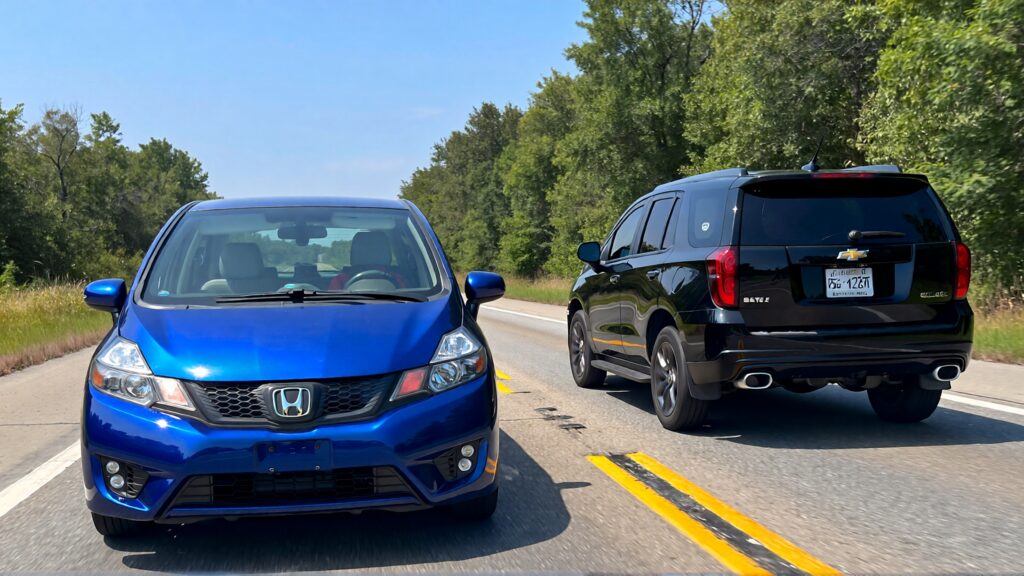
The CHP reported that the Sacramento County man was driving a 2010 Honda Fit westbound on Highway 50 when he made an unsafe turn directly into the path of an oncoming 2024 Chevrolet Tahoe traveling eastbound. The driver of the Tahoe, a 41-year-old North Highlands resident, was unable to avoid the collision.
Medical personnel pronounced the Honda driver dead at the scene. His name has not been released pending notification of his family. The Tahoe driver sustained moderate injuries and was transported to Barton Memorial Hospital in South Lake Tahoe for treatment. CHP investigators found no indication that either driver had been impaired, and criminal charges were considered unlikely in connection with the crash.
The CHP reported that the Sacramento County man was driving a 2010 Honda Fit westbound on Highway 50 when he made an unsafe turn directly into the path of an oncoming 2024 Chevrolet Tahoe traveling eastbound. The driver of the Tahoe, a 41-year-old North Highlands resident, was unable to avoid the collision.
Medical personnel pronounced the Honda driver dead at the scene. His name has not been released pending notification of his family. The Tahoe driver sustained moderate injuries and was transported to Barton Memorial Hospital in South Lake Tahoe for treatment. CHP investigators found no indication that either driver had been impaired, and criminal charges were considered unlikely in connection with the crash.
The significant size and weight disparity between the compact 2010 Honda Fit and the full-size 2024 Chevrolet Tahoe likely contributed to the severity of the outcome for the Honda’s driver, as smaller vehicles offer considerably less structural protection in a direct head-on impact with a larger SUV.
Investigators from the CHP’s South Lake Tahoe office responded to the scene to document the collision, gather physical evidence, and interview the surviving driver as part of their standard crash investigation protocol. The identity of the deceased has been withheld as authorities work to ensure his next of kin are properly notified before any public release of that information.
The Legal Landscape After a Fatal Turning Collision
When a driver makes an unsafe turn that results in a fatal collision, California law provides a clear framework for accountability and financial recovery. Even in the absence of criminal charges, the families of victims may still have powerful civil legal options available to them.
Under California Civil Code Section 1714, all drivers owe a duty of reasonable care to others on the road. Executing an unsafe turn that crosses into oncoming traffic is a textbook breach of that duty. When that breach causes a fatality, it forms the foundation of a wrongful death claim.
The family members of the man killed in this crash may be entitled to pursue compensation under California Code of Civil Procedure Section 377.60, which permits certain surviving relatives, including spouses, children, and domestic partners, to file a wrongful death lawsuit. A separate survival action under CCP Section 377.30 may allow the estate to recover damages the decedent himself suffered before death, including pain and suffering and lost future earnings.
California’s statute of limitations for wrongful death claims is two years from the date of death under CCP Section 335.1. Acting promptly ensures that evidence is preserved and legal options remain open.
Unsafe Turns and Driver Liability Under California Law
California Vehicle Code Section 22107 requires that no driver make a turn without first determining that it can be made safely and only after giving an appropriate signal. A violation of this statute can serve as evidence of negligence in a civil proceeding, even when criminal charges are not pursued. This distinction matters: the standard of proof in a civil wrongful death case is preponderance of the evidence, meaning it is more likely than not that negligence occurred.
That threshold is far lower than the beyond-a-reasonable-doubt standard required in criminal prosecution. Families should not interpret the absence of criminal charges as meaning they have no legal recourse. Beyond Section 22107, California Vehicle Code Section 21801 further requires that a driver intending to turn left or make a U-turn must yield the right-of-way to all vehicles approaching from the opposite direction that are close enough to constitute an immediate hazard.
A failure to yield in that situation, particularly on a high-speed corridor like Highway 50, where opposing traffic may be traveling at 55 miles per hour or faster, dramatically increases both the likelihood and the severity of a collision. California courts have long recognized that turning in front of oncoming traffic on a divided or undivided highway is among the most foreseeable causes of serious injury and death, and juries are regularly instructed to consider statutory violations of the Vehicle Code as evidence of a driver’s negligence when evaluating fault in civil cases.
Understanding the Value of a Wrongful Death Claim
No financial settlement can undo the loss of a loved one, but California law recognizes that families deserve compensation for what they have suffered and will continue to suffer. Damages in a wrongful death claim typically include:
- Loss of financial support that the deceased would have provided
- Loss of companionship, guidance, and household services
- Funeral and burial costs
- Medical expenses incurred before death
- Emotional distress suffered by surviving family members
For a 33-year-old man, the economic losses alone can be substantial. Using either the multiplier method, which applies a factor to calculated economic damages, or the per diem method, which assigns a daily value to pain and suffering, an experienced attorney can help surviving family members build a credible damages case.
The Tahoe Driver’s Rights as an Injured Party
The 41-year-old North Highlands driver who was hospitalized with moderate injuries also has legal rights in this matter. As the driver of the vehicle struck by an unsafe turner, this individual may have a strong personal injury claim for medical expenses, lost wages, pain and suffering, and any long-term complications from the injuries sustained.
California follows a pure comparative fault system, meaning even if an injured party is found partially responsible, they may still recover damages proportional to the other driver’s fault. In this case, however, all available evidence points to the Honda driver’s turn as the sole cause of the collision.
Moderate injuries, as categorized by the CHP, can encompass a wide range of harm, including broken bones, lacerations requiring surgical intervention, soft tissue damage, and trauma to the neck and spine, all of which can result in extended recovery periods, ongoing physical therapy, and high out-of-pocket medical costs even for individuals with health insurance coverage.
Beyond the immediate physical injuries, survivors of serious collisions frequently experience psychological aftereffects, including post-traumatic stress disorder, anxiety behind the wheel, and depression, all of which are recognized as compensable damages under California personal injury law.
The Tahoe driver should also be aware that insurance companies, even those representing the at-fault party, have a financial incentive to minimize payouts and may make early settlement offers that fall far short of the full value of the claim. Consulting with an experienced personal injury attorney before accepting any settlement ensures that the full scope of current and future damages is properly accounted for and that the injured party’s rights are fully protected throughout the claims process.
Understanding Fatal Accident Settlement Calculators
When a family loses a loved one in a fatal collision, one of the most pressing and practical questions they face is what their case may be worth. Fatal accident settlement calculators serve as a useful starting point for understanding the range of compensation that may be available, helping surviving family members make informed decisions as they navigate the legal process.
These tools typically account for several key categories of damages, including the deceased’s age, occupation, and projected lifetime earnings, the financial contributions they would have made to their household, the value of services they provided, such as childcare or home maintenance, and the non-economic losses suffered by surviving family members, such as loss of companionship, love, and emotional support.
Two of the most widely used methods for calculating settlement values in wrongful death cases are the multiplier method and the per diem method. The multiplier method works by first calculating the total economic damages, such as lost income and medical expenses, and then multiplying that figure by a number typically ranging from 1.5 to 5, depending on the severity of the circumstances, the degree of negligence involved, and the extent of emotional suffering endured by the surviving family.
The per diem method, by contrast, assigns a specific daily dollar value to the pain, suffering, and loss of companionship experienced by survivors, then multiplies that figure by the number of days those losses are expected to continue, which in many wrongful death cases extends across the remainder of the surviving family members’ lifetimes.
For a 33-year-old decedent with potentially decades of earning capacity ahead of him, both methods can yield substantial figures that reflect the true depth of what his family has lost. While no calculator can capture the full human cost of losing a loved one, these tools provide a grounded, evidence-based framework that attorneys use to build compelling damage arguments and negotiate effectively with insurance carriers on behalf of grieving families.
Take Action Today – Get the Help You Deserve
“Losing someone you love in a sudden, preventable crash is a pain that no family should ever have to endure, and my heart goes out to everyone affected by this tragedy on Highway 50. What I want the family of the man killed in this crash to know is that the absence of criminal charges does not mean the absence of accountability. California civil law exists precisely for situations like this, and your family has the right to pursue justice and financial relief regardless of what happens on the criminal side. For the driver of the Tahoe who is now recovering at Barton Memorial, please do not navigate the insurance process alone. Insurers move quickly after a crash, and without experienced legal representation, injured victims often settle for far less than their case is truly worth. At GJEL, we have spent more than 40 years recovering over $980 million for people in exactly your position, and we are ready to put that experience to work for you. The consultation is free, and you pay nothing unless we win. Please do not wait to reach out.”-Andy Gillin, Managing Partner, GJEL Accident Attorneys
GJEL Accident Attorneys has represented injured victims and grieving families throughout Northern California for more than four decades. Our attorneys handle every aspect of the legal process, from gathering crash scene evidence and working with accident reconstruction experts to negotiating with insurance companies and, when necessary, taking cases to trial.
We work on a contingency fee basis, meaning you pay nothing unless we win. If you lost a family member in this crash or were injured in a collision caused by another driver’s negligence, contact us today for a free consultation.
Compassionate GJEL accident attorneys are always available to discuss your case, and you pay nothing unless we secure a favorable outcome. Let our experienced legal team shoulder the legal burden while you focus on what matters most – your family’s healing and recovery. Contact us today at +1-866-218-3776 or visit our Orinda office to secure your future and compensation.
Local Resources for Crash Victims and Families in the South Lake Tahoe Area
Families and injured parties involved in this crash, or anyone seeking assistance following a serious traffic collision in the South Lake Tahoe area, may find the following agencies, services, and resources helpful:
California Highway Patrol, South Lake Tahoe Area Office. The CHP’s South Lake Tahoe office handled the investigation of this crash and maintains official records of all collisions occurring on Highway 50 and surrounding roadways in the region. Families may request copies of official crash reports through this office, which are often essential documents in civil legal proceedings. Phone: (530) 577-1001 Website: https://www.chp.ca.gov/Programs-Services/Offices-Inspections/Offices/South-Lake-Tahoe
South Lake Tahoe Police Department The South Lake Tahoe Police Department serves the city of South Lake Tahoe and can assist residents and visitors with traffic-related concerns, non-emergency incident reporting, and referrals to victim support services. Phone: (530) 542-6100 Website: https://www.cityofslt.us/212/Police-Department
El Dorado County Sheriff’s Office. The El Dorado County Sheriff’s Office provides law enforcement services throughout unincorporated areas of El Dorado County, including portions of Highway 50 outside the city limits of South Lake Tahoe. The Sheriff’s Office also oversees the county jail and coordinates with CHP on major collision investigations. Phone: (530) 621-5655 Website: https://www.edcgov.us/Government/Sheriff
El Dorado County Coroner’s Office The El Dorado County Coroner’s Office is responsible for investigating deaths occurring within the county, issuing official death certificates, and notifying next of kin. Families of the deceased will need to work with this office to obtain the documentation required for estate and legal proceedings. Phone: (530) 621-6660 Website: https://www.edcgov.us/Government/Coroner
Barton Memorial Hospital is the primary regional medical center serving the South Lake Tahoe area and is where the injured Tahoe driver received treatment following this crash. The hospital provides emergency care, trauma services, surgical care, and inpatient rehabilitation for accident victims. Address: 2170 South Ave, South Lake Tahoe, CA 96150 Phone: (530) 541-3420 Website: https://www.bartonhealth.org
California Office of Traffic Safety (OTS) The California Office of Traffic Safety is a state agency dedicated to reducing traffic deaths and injuries across California. Their website provides safety resources, grant program information, and data on traffic collision trends across the state, including mountain highway corridors such as Highway 50. Website: https://www.ots.ca.gov
California Highway Patrol Statewide Integrated Traffic Records System (SWITRS) SWITRS is the CHP’s official collision data system, allowing the public, researchers, and legal professionals to access aggregated traffic collision statistics by location, roadway, and collision type throughout California. This resource can be valuable for attorneys building a case involving a particular stretch of highway. Website: https://iswitrs.chp.ca.gov
El Dorado County Victim Witness Assistance Center The El Dorado County Victim Witness Assistance Center provides free support services to victims of crimes and serious accidents, including help understanding the legal process, referrals to counseling and financial assistance programs, and accompaniment to court proceedings. Families navigating the aftermath of a fatal crash may find this office to be a valuable source of practical and emotional support. Phone: (530) 621-5791 Website: https://www.edcgov.us/Government/DA/Victim-Services
California Department of Motor Vehicles (DMV) The California DMV can assist families with vehicle title transfers, registration matters, and license-related issues that commonly arise following a fatal traffic collision. The DMV also maintains driving records that may be relevant in civil litigation. Phone: 1-800-777-0133 Website: https://www.dmv.ca.gov
California Courts Self-Help Center. For families who want to better understand the civil legal process, the California Courts Self-Help Center provides plain-language guides on filing wrongful death claims, understanding court procedures, and navigating the California civil justice system. Website: https://www.courts.ca.gov/selfhelp.htm
National Highway Traffic Safety Administration (NHTSA) The NHTSA is the federal agency responsible for vehicle safety standards, crash data collection, and traffic safety research nationwide. Their website offers resources on vehicle safety ratings, recall information, and national crash statistics that may be relevant to victims and their legal representatives. Website: https://www.nhtsa.gov
Crisis Support Services of Nevada County and the Sierra For families and survivors experiencing acute emotional distress following a traumatic loss or injury, Crisis Support Services provides 24-hour crisis intervention, grief counseling referrals, and mental health support for residents and visitors throughout the Sierra Nevada region. Phone: (530) 265-5565 Website: https://www.cssnc.org