Last updated August 27, 2026
A violent early-morning rollover crash on southbound Interstate 280 in San Francisco claimed one life and sent four people to the hospital on Friday, June 12, 2026. The collision, which left the vehicle fully engulfed in flames, prompted road closures that extended into the morning commute hours.
Crashes of this severity, particularly those involving fire, often result in catastrophic injuries that require extensive and costly medical care. Victims and their families are frequently left navigating hospital bills, insurance negotiations, and legal questions at one of the most difficult moments of their lives.
What Happened on the Fiery Rollover Crash
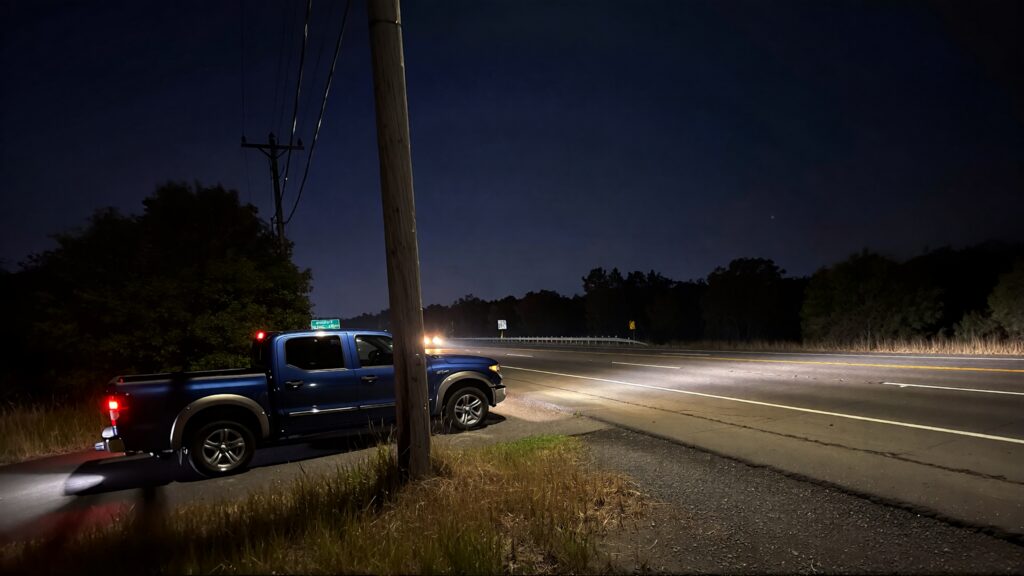
According to the California Highway Patrol, the crash occurred at approximately 12:20 AM on Friday, June 12, 2026, on southbound Interstate 280 near Mariposa Street in San Francisco. The vehicle rolled over and became fully engulfed in flames following the impact. Two occupants were involved in the collision, and a total of four people were hospitalized. Tragically, one fatality has been confirmed among those transported.
Local news outlets reported on the crash and the significant traffic disruption that followed. Multiple on-ramps to southbound I-280 were closed in the aftermath of the collision, including those from Brannan and Sixth Streets, King Street, and Mariposa Street. Those closures remained in effect overnight and were not reopened until 7:00 AM.
The San Francisco Police Department is leading the investigation. At the time of initial reporting, the identities of those involved and the specific circumstances of the crash had not been released. The investigation remains ongoing.
Why Single-Vehicle Crashes Can Still Involve Multiple Liable Parties
When a crash involves only one vehicle, many people assume that no personal injury claim is possible. That assumption is not always correct. California investigations sometimes reveal that other drivers, road conditions, or infrastructure deficiencies contributed to a rollover or other single-vehicle accident.
Under California Civil Code Section 1714, individuals and entities have a general duty to exercise ordinary care to avoid causing harm to others. If a nearby driver acted negligently and forced another vehicle to swerve or lose control, that driver may bear partial responsibility for the resulting crash and injuries. Similarly, if a dangerous road feature, such as inadequate lighting, missing guardrails, or a poorly designed on-ramp, contributed to the collision, a government entity could be held liable under Government Code Section 835, which governs dangerous conditions on public property.
California’s pure comparative negligence rule, as established in Li v. Yellow Cab Co. and codified in California practice, allows an injured party to recover compensation even if they are found partially at fault. Compensation is simply reduced in proportion to the injured person’s degree of fault. This means that even if an investigation determines that a crash victim shares some responsibility for what happened, they may still be entitled to recover damages for medical bills, lost wages, pain and suffering, and other losses.
Passenger Rights When a Friend or Family Member Was Driving
One of the most emotionally complicated situations in personal injury law arises when a passenger is injured in a crash caused by the driver of the vehicle they were riding in. This is especially common when the driver and passenger are friends, family members, or romantic partners. The injured passenger may feel guilty about filing a claim, not wanting to create financial or legal problems for someone they care about.
It is important to understand that a personal injury claim in this context is generally made against the driver’s liability insurance, not against the driver personally. California law requires drivers to carry minimum liability insurance precisely to cover situations like this. Under Vehicle Code Section 16056, the minimum coverage requirements exist to ensure that injured parties have a means of financial recovery.
Without a formal claim, an insurance company has little incentive to offer a fair settlement that accounts for medical expenses, rehabilitation costs, lost income, and non-economic damages such as pain and suffering. A personal injury attorney can step in as a neutral party to handle all communications with the insurer, protect the injured passenger’s legal rights, and navigate the emotional complexity that comes with making a claim involving someone close to you.
How California Law Calculates Damages After a Serious Crash
Damages in a California personal injury case fall into two broad categories: economic and non-economic:
Economic damages are the measurable, out-of-pocket losses that result from an injury. These include emergency medical treatment, hospitalization, surgery, follow-up care, physical therapy, prescription medications, and lost wages if the injured person was unable to work during recovery. In severe cases, they also include future medical costs and diminished earning capacity.
Non-economic damages cover intangible losses that are harder to quantify but no less real. Pain and suffering, emotional distress, loss of enjoyment of life, and loss of consortium for a surviving spouse or partner all fall within this category.
California attorneys typically use one of two approaches to calculate a fair settlement value. The multiplier method involves adding up total economic damages and multiplying them by a factor, usually between 1.5 and 5, depending on the severity of the injuries and the degree of the defendant’s fault. The per diem method assigns a daily dollar value to the pain and suffering experienced by the injured person and multiplies it by the number of days from the date of injury through maximum medical recovery.
In wrongful death cases, California Code of Civil Procedure Section 377.60 allows surviving family members, including spouses, domestic partners, children, and, in some circumstances, other dependents, to bring a claim for financial support lost due to the death as well as funeral and burial expenses. A separate survival claim under CCP Section 377.30 may also be filed to recover damages the deceased person experienced between the time of injury and the time of death.
The Statute of Limitations in California Personal Injury Cases
Time is a critical factor in any California personal injury case. Under Code of Civil Procedure Section 335.1, the statute of limitations for personal injury and wrongful death claims is two years from the date of the injury or death. Waiting too long to consult an attorney can result in losing the right to pursue compensation entirely, regardless of how serious the injuries were or how clear the liability may be.
There are some exceptions. Claims involving a government entity, such as those based on dangerous road conditions maintained by a public agency, must be filed under the California Government Claims Act within 6 months of the incident. Missing this administrative deadline can bar a claim against a public entity before the two-year window even becomes relevant.
The sooner an attorney becomes involved, the better positioned they are to gather evidence, identify all potentially liable parties, preserve witness testimony, and build the strongest possible case on the client’s behalf.
How a Fatal Accident Settlement Calculator Can Help You Understand Your Claim’s Value
When a family loses a loved one in a fatal crash, one of the first questions they face is what a wrongful death claim might actually be worth. A fatal accident settlement calculator is a practical tool that helps survivors and their attorneys begin to estimate the potential value of a claim by accounting for the key financial and personal losses the family has suffered.
These calculators typically factor in the deceased’s age, occupation, annual income, life expectancy, and the financial support they would have continued to provide to dependents over time. They also account for non-economic losses such as the loss of companionship, guidance, and emotional support that surviving spouses, children, and other family members will experience for years to come.
While no calculator can produce a guaranteed settlement figure, since every case turns on its own specific facts, evidence, and the degree of each party’s liability, using one early in the process gives families a meaningful starting point for understanding the scope of their financial loss.
It also helps an attorney identify which categories of damages apply to the case and ensure that nothing is overlooked when negotiating with an insurance company or presenting a claim in court. At GJEL Accident Attorneys, we use every available tool to make sure our clients never leave compensation on the table. Call us now at +1-866-218-3776 to speak with the experts.
What GJEL Accident Attorneys Can Do for You
“A crash like this one, where lives are lost, and families are left with serious injuries and unanswered questions, is exactly the kind of situation no one should have to navigate alone. My heart goes out to everyone affected by what happened on I-280 that night. From a legal standpoint, I want families to know that the window to protect their rights is limited, and the steps taken in the days and weeks following a fatal accident can make a significant difference in the outcome of a claim. Please do not wait to speak with an attorney. At GJEL, we will listen to your story, explain your options clearly, and fight as hard as we can to make sure you and your family are treated fairly every step of the way.” — Andy Gillin, Managing Partner, GJEL Accident Attorneys
GJEL Accident Attorneys has been fighting for injured Californians for more than 40 years. Our firm has recovered over $980 million for clients across the state, including in complex highway accident cases involving fires, rollovers, multiple vehicles, and government liability.
GJEL takes all personal injury and wrongful death cases on a contingency fee basis, meaning there are no upfront costs and you pay nothing unless we win your case. If you were injured in this crash or lost a loved one, we encourage you to reach out for a free consultation as soon as possible.
Let our experienced legal team shoulder the legal burden while you focus on what matters most – your family’s healing and recovery. Contact us today at +1-866-218-3776 or visit our Oakland office to secure your future and compensation.
Local Resources for Those Affected by This Crash
San Francisco Police Department
1 Dr. Carlton B. Goodlett Place, San Francisco, CA 94102
Non-emergency line: (415) 553-0123
www.sanfranciscopolice.org
California Highway Patrol — Golden Gate Division
400 MacArthur Blvd, Oakland, CA 94610
(510) 450-3821
www.chp.ca.gov/golden-gate-division
San Francisco Department of Public Health
101 Grove Street, San Francisco, CA 94102
(415) 554-2500
www.sfdph.org
Zuckerberg San Francisco General Hospital and Trauma Center
1001 Potrero Avenue, San Francisco, CA 94110
(415) 206-8000
zuckerbergsanfranciscogeneral.org
UCSF Medical Center
500 Parnassus Avenue, San Francisco, CA 94143
(415) 476-1000
www.ucsfhealth.org
211 San Francisco (Social Services and Support)
Dial 2-1-1
www.211sf.org
California Victim Compensation Board
P.O. Box 3036, Sacramento, CA 95812
(800) 777-9229
www.victims.ca.gov
Interstate 280 through San Francisco is investigated by the California Highway Patrol rather than SFPD, which changes how the report is obtained. Our San Francisco car accident lawyers work with both. Call (415) 986-4777.