A fatal three-vehicle crash on Elkhorn Boulevard in the Rio Linda area of Sacramento County claimed one life and left a second person with serious injuries on Friday afternoon. The collision has prompted an active investigation by the California Highway Patrol, and the community is left grappling with yet another preventable tragedy on local roadways.
How the Crash Unfolded
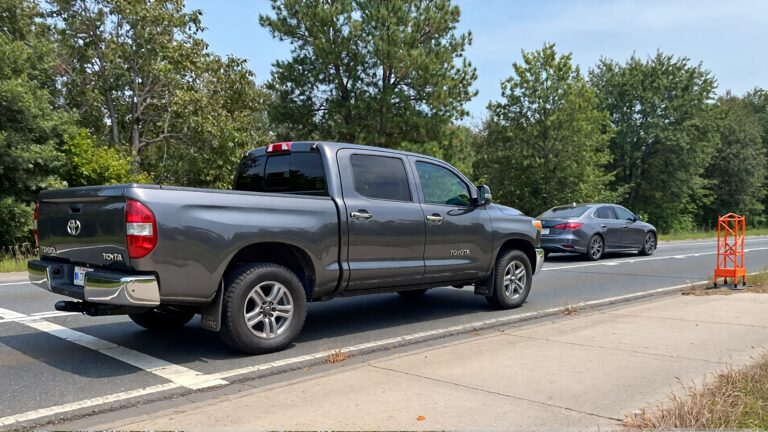
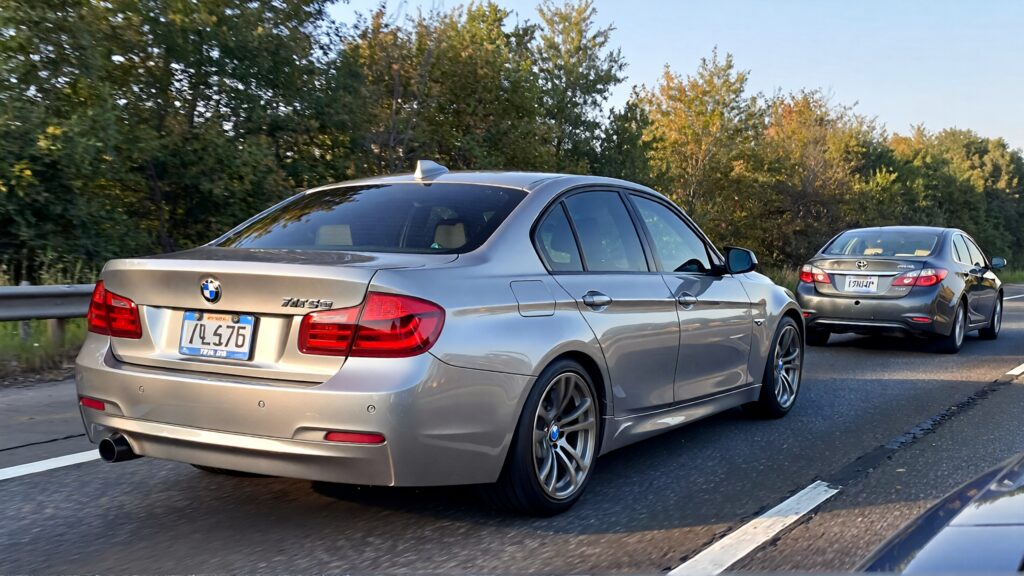
The crash occurred around 2 p.m. at the intersection of Elkhorn Boulevard and 20th Street. According to a CHP official who spoke with CBS News Sacramento at the scene, the driver of a silver BMW lost control while traveling westbound on Elkhorn Boulevard and crossed into the eastbound lanes, directly into the path of an oncoming Toyota.
The driver of the Toyota was killed as a result of the impact. A third vehicle was also involved in the collision and sustained minor damage, though no additional details about that vehicle or its occupants have been released.
Elkhorn Boulevard is a heavily traveled corridor through Rio Linda, carrying commuter traffic between North Highlands and the surrounding unincorporated communities of Sacramento County. The stretch near 20th Street includes a mix of residential frontage and open roadway, conditions that can encourage higher travel speeds even though the posted limits are set with those residential access points in mind.
Crashes in which a vehicle crosses a centerline into oncoming traffic are among the most dangerous types of collisions on roads like this one, since the closing speed between the two vehicles leaves little to no time for either driver to take evasive action. That dynamic is consistent with what investigators have described here, and it will likely be a central focus as the CHP works to determine exactly why the BMW left its lane in the first place.
Emergency Response and Casualties
The Sacramento Metropolitan Fire District, commonly known as Metro Fire, responded to the scene and confirmed that one person was pronounced dead. A second person involved in the crash was transported to a hospital by ambulance for treatment of serious injuries. As of this writing, the identities of those involved have not been released by authorities, and the condition of the surviving victim has not been publicly updated.
Crashes of this severity typically draw a multi-agency response, with Metro Fire crews working alongside CHP officers and paramedics to stabilize the scene, extricate any trapped occupants, and triage injuries before transport.
The fact that one victim required immediate hospitalization by ambulance points to injuries serious enough to need urgent medical intervention beyond what could be addressed on scene, a pattern common in high-speed, head-on style collisions.
Meanwhile, the intersection at Elkhorn Boulevard and 20th Street was likely closed or partially blocked for an extended period while investigators documented the scene and cleared the vehicles, a standard but disruptive part of the response that often affects traffic in the surrounding Rio Linda area for hours after the initial call.
California Highway Patrol Investigation
The California Highway Patrol is leading the investigation into the cause of the crash. Investigators will likely examine several factors common to loss-of-control collisions, including vehicle speed, road conditions, mechanical issues, and driver impairment or distraction. Under California Vehicle Code §22350, drivers are prohibited from operating a vehicle at a speed greater than is safe for existing conditions.
Also, violations of this basic speed law are frequently cited in crashes in which a vehicle crosses the centerline into oncoming traffic. If the investigation reveals evidence of negligence, whether through excessive speed, mechanical failure, or another factor, that evidence will play a central role in any subsequent civil claims.
As part of a standard fatal-collision investigation, CHP officers typically document the scene through measurements, photographs, and skid mark analysis, and may call in a Multidisciplinary Accident Investigation Team (MAIT) to reconstruct exactly how and why the BMW crossed into oncoming traffic.
Investigators will also look into whether the driver was under the influence of alcohol or drugs, a factor that would potentially expose the at-fault driver to criminal charges in addition to civil liability. Toxicology results, if ordered, can take several weeks to return, so a final determination of cause may not be available right away.
Until the CHP completes its investigation and issues a formal report, the exact reason the BMW lost control remains officially unconfirmed, though the account provided at the scene gives a clear picture of how the fatal impact occurred.
Understanding Wrongful Death Claims in California
When a crash like this one results in a fatality, California law provides surviving family members a path to pursue accountability through a wrongful death claim. Under California Code of Civil Procedure §377.60, certain surviving family members, including a spouse, domestic partner, or children of the deceased, have standing to bring a wrongful death action against the party responsible for the crash.
Separately, CCP §377.30 allows a decedent’s estate to pursue a survival action for damages the deceased could have claimed had they lived, such as pain and suffering experienced between the time of the crash and death.
California’s general negligence statute, Civil Code §1714, establishes that individuals are liable for injuries resulting from their failure to exercise ordinary care. In the context of a crash in which a driver loses control and crosses into oncoming lanes, this statute often forms the legal basis for a negligence claim.
Families pursuing a claim should also be aware of California’s statute of limitations for wrongful death actions, generally two years from the date of death under CCP §335.1, though certain circumstances can affect this deadline. Speaking with an attorney promptly helps ensure that evidence is preserved and deadlines are met.
How a Settlement Is Calculated
Families and injury victims often want to understand how compensation is calculated in a case like this. Attorneys typically use one of two methods to help estimate damages, particularly for pain and suffering.
The multiplier method takes the total of a victim’s economic damages, such as medical bills, lost wages, and funeral or burial expenses, and multiplies that figure by a number typically ranging from 1.5 to 5, depending on the severity of the injury or loss. A catastrophic injury or wrongful death generally warrants a higher multiplier to reflect the depth of the harm suffered.
The per diem method instead assigns a specific dollar value to each day the victim is affected by their injury, then multiplies that daily rate by the number of days the impact is expected to last. This method is often used in cases involving long-term or permanent injury, where the day-by-day impact on a victim’s life can be clearly documented.
Both methods are starting points for negotiation, and the right approach depends on the specific facts of the case, including the strength of the evidence and the severity of the harm involved.
You Don’t Have to Face the Insurance Companies Alone
Families dealing with the aftermath of a fatal crash are often contacted quickly by insurance adjusters looking to settle claims for far less than they are worth. GJEL Accident Attorneys works on a contingency-fee basis, meaning families pay nothing upfront and owe a fee only if we recover compensation on their behalf. This allows families to focus on grieving and healing while we handle the investigation, negotiation, and litigation necessary to pursue full accountability.
Insurance companies move quickly after a fatal crash, often reaching out to grieving families within days to offer a fast settlement before the full scope of damages, medical bills, lost future income, funeral costs, and the emotional toll of losing a loved one has even been calculated.
Accepting an early offer can permanently close the door on a family’s ability to recover what they are actually owed, since most settlements require signing away any right to pursue further compensation later.
An experienced attorney can step in immediately to communicate with adjusters on the family’s behalf, preserve evidence at the scene before it disappears, and ensure no offer is accepted until the true value of the claim is understood. Having that buffer between a grieving family and an insurance company’s negotiating tactics is often one of the most important steps in protecting a fair outcome.
How a Fatal Accident Settlement Calculator Helps Estimate Case Value
For families trying to determine what a wrongful death claim may be worth, a fatal accident settlement calculator can offer a helpful starting point for understanding the numbers involved.
These tools work by taking documented economic losses, medical and funeral expenses, lost income the deceased would have earned, and loss of household services, and applying either the multiplier or per diem method to estimate an additional value for the non-economic harm suffered by surviving family members, such as loss of companionship and guidance.
While no calculator can account for every detail of a specific case, including liability disputes, insurance policy limits, or the unique relationship between the deceased and their survivors, it provides families with a realistic range to work from, rather than guessing at a number or relying solely on an insurance company’s initial offer.
GJEL Accident Attorneys uses these calculations as one part of a broader case evaluation, combining them with a full review of the evidence and applicable California law to pursue the maximum compensation a family is entitled to. Call us now at +1-866-218-3776 to speak with the experts.
Our Commitment: No Fees Unless We Win Your Case
“When a crash happens in an instant, the aftermath can feel like it stretches on forever, medical bills piling up, questions about what really happened, and the fear of facing an insurance company alone. I’ve spent my career helping families and injury victims through exactly this kind of uncertainty, and I can tell you that you don’t have to navigate it by yourself. If you or someone you love was hurt in this collision, the most important thing you can do right now is protect your rights before evidence disappears and before an adjuster pressures you into a lowball settlement. Reach out to us. We’ll listen to your story, walk you through your options, and fight to make sure you get the compensation you actually deserve.” — Andy Gillin, Managing Partner, GJEL Accident Attorneys
If you or a loved one was injured or lost their life in this crash, you deserve a legal team that fights for you, not the insurance company. At GJEL Accident Attorneys, we work entirely on a contingency fee basis, which means you pay nothing out of pocket to get started, and we only get paid if we win your case.
There are no upfront costs, no hourly bills, and no financial risk to you at a time when your focus should be on healing and supporting your family. With over 40 years of experience and more than $950 million recovered for our clients, we know what it takes to hold negligent drivers accountable and secure the compensation you deserve. Call us today at 1-855-508-9565 or visit our San Francisco office for a free consultation, and let us handle the fight while you focus on recovery.
Additional Local Resources for Crash Victims and Families
Beyond the immediate emergency responders, several additional agencies can provide helpful information and support to those affected by this crash:
Sacramento Police Department: While this crash occurred in the unincorporated Rio Linda area under county jurisdiction, the Sacramento Police Department oversees traffic enforcement and public safety within the City of Sacramento and can direct residents to the appropriate reporting agency. More information is available at www.cityofsacramento.gov/police.
Sacramento County Sheriff’s Office: Since Rio Linda is an unincorporated community, the Sacramento County Sheriff’s Office is the primary law enforcement agency for non-traffic matters in the area, including crime reporting and community safety concerns. Details on services and contact options can be found at www.sacsheriff.com.
California Department of Transportation (Caltrans), District 3: Caltrans oversees the state highway system and traffic infrastructure throughout the greater Sacramento region, including road conditions, construction updates, and traffic alerts relevant to routes such as Elkhorn Boulevard. Their regional information is available at dot.ca.gov/caltrans-near-me/district-3.
California Department of Motor Vehicles (DMV): Families needing to handle vehicle title transfers, obtain driving records, or address other administrative matters following a fatal crash can find guidance at www.dmv.ca.gov.
Sacramento Superior Court, Traffic Division: For questions related to traffic citations, court proceedings, or case records tied to the collision, the Sacramento County Superior Court traffic division provides case lookup and general court information at www.saccourt.ca.gov.