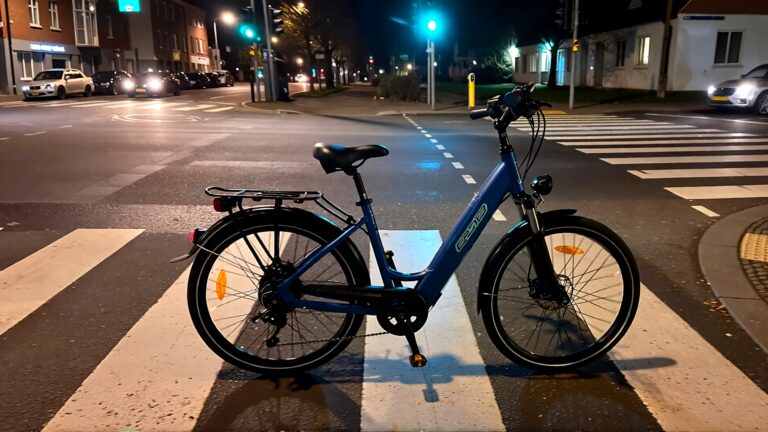
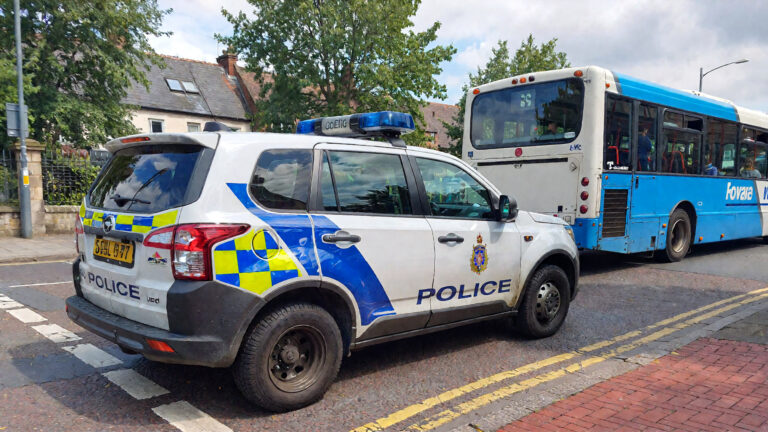
A San Jose man riding an electric bicycle was struck and killed by a dump truck on Tully Road early Thursday morning, marking the city’s 32nd fatal traffic collision of 2026. The e-bike crash tragedy has reignited concern over safety along a corridor the city itself has flagged as dangerous, and it raises important questions about the rights of families who lose a loved one on California’s roads.
What Happened on Tully Road
According to the San Jose Police Department, officers responded to the area of Tully Road and Lanai Avenue at approximately 7:45 a.m. on September 3, 2026, following a report of a collision between a vehicle and a bicyclist.
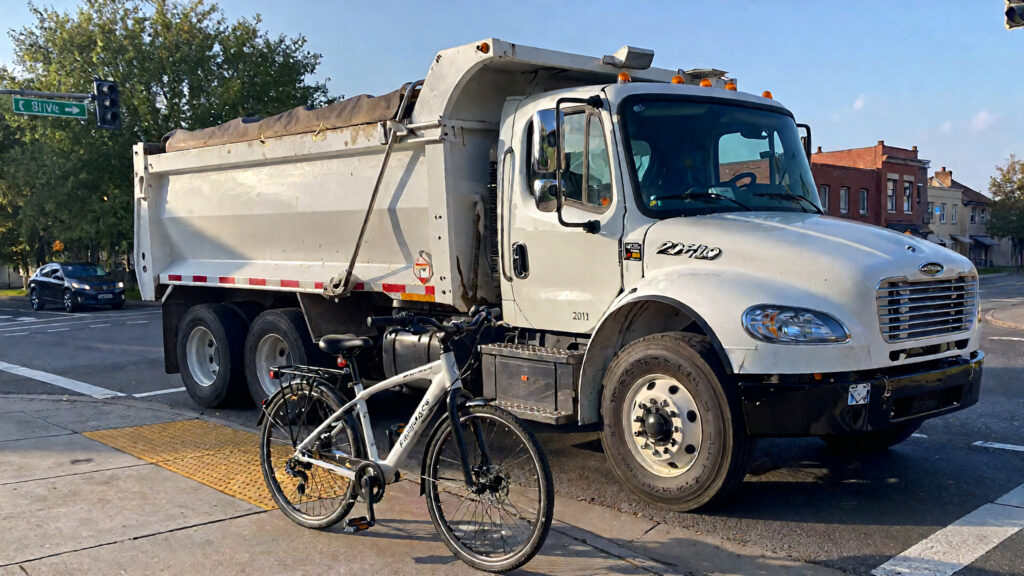
The preliminary investigation found that a white 2012 Freightliner dump truck, driven by an adult male, was traveling westbound on Tully Road through its intersection with Lanai Avenue and approaching Highway 101 when it struck an electric bicycle. The bicyclist, also an adult male, was riding westbound in the designated bike lane at the time of impact.
He was pronounced deceased at the scene. The truck driver remained at the location and cooperated fully with investigators, and police stated that drugs and alcohol do not appear to have been a factor in the crash. Westbound Tully Road was closed from South King Road to the Highway 101 on-ramp for an extended period while officers processed the scene. The Santa Clara County Office of the Medical Examiner-Coroner will release the victim’s identity once his family has been notified.
A Corridor With a Troubling History
This crash was the second bicyclist fatality San Jose recorded within roughly 24 hours, following another fatal bike collision near Trimble Road and North First Street the next day. It also comes just two years after a female bicyclist was killed on this same stretch of Tully Road in 2024. The road falls within the city’s Tully Road Priority Safety Corridor Project, part of San Jose’s broader Vision Zero Action Plan to eliminate traffic deaths.
Residents who work near the intersection have described a pattern of aggressive and distracted driving in the area, including motorists running red lights along Tully Road between South King Road and Highway 101. With this crash, San Jose’s 2026 traffic death toll had climbed to 32, a sharp increase from the 22 fatalities recorded at the same point in 2025.
Data cited by city officials show why Tully Road has drawn this level of attention. Between 2018 and 2022 alone, the corridor recorded 14 traffic deaths and 39 serious injuries, placing it among San Jose’s most dangerous streets alongside Story Road and Capitol Expressway.
The city’s approved Tully Road Priority Safety Corridor Project, which spans Monterey Road to Swift Lane, calls for median islands, raised pedestrian crossings, high-visibility crosswalks, and enhanced buffered bike lanes, along with a new traffic signal near Brahms Avenue and Kenesta Way.
Even so, safety advocates have pointed out that painted buffered bike lanes without physical, vertical separation still allow vehicles to drift into the bike lane near intersections and driveways, particularly on a six-lane road where drivers routinely exceed the posted 40 mph limit. Thursday’s crash occurred at a point along the corridor just east of the Highway 101 interchange, an area where merging traffic and complex signal timing add another layer of risk for anyone traveling outside a car.
California Law Protects Bicyclists in the Bike Lane
California law affords bicyclists specific protections on the roadway. Vehicle Code Section 21760, known as the Three Feet for Safety Act, requires drivers overtaking a bicyclist traveling in the same direction to leave at least three feet of clearance, or to slow to a safe speed until it is possible to pass at that distance.
When a commercial vehicle, such as a dump truck, strikes a cyclist lawfully riding in a marked bike lane, that fact pattern can raise serious questions about driver awareness, mirror checks, and blind-spot management, particularly for large trucks with significant visibility limitations.
Under California Civil Code Section 1714, every person is responsible for injuries caused by a failure to exercise ordinary care. California follows a pure comparative fault system, meaning a victim’s family can still recover damages even if some fault is allocated to another party, with recovery reduced proportionally to any shared responsibility.
California law also governs how vehicles must interact with a bike lane at intersections, which is especially relevant given where this crash occurred. Vehicle Code Section 21717 requires a driver who needs to cross a bike lane to make a turn to merge into that lane before turning, rather than cutting across it at the last moment, and to complete the turn as close as practicable to the curb under Section 22100.
This rule exists precisely to prevent the kind of “right hook” collision that occurs when a vehicle, particularly a large commercial truck with substantial blind spots, fails to fully account for a cyclist traveling straight through in the bike lane while the truck is turning or merging near an intersection.
Because this collision occurred as the dump truck moved through the Tully Road and Lanai Avenue intersection and approached the Highway 101 interchange, investigators will likely examine the truck’s exact path, mirror checks, and turn signal timing to determine whether these bike-lane merging rules were followed.
When a commercial driver violates a specific safety statute like this one, California’s doctrine of negligence per se can allow that violation alone to establish a presumption of fault, shifting significant weight onto the driver and, potentially, the trucking company that owns and maintains the vehicle.
Wrongful Death Claims Under California Law
When a traffic collision claims a life, surviving family members may have the right to pursue a wrongful death claim under California Code of Civil Procedure Sections 377.60 and 377.30.
These statutes allow a decedent’s spouse, domestic partner, children, or other qualifying heirs to seek compensation for the financial and emotional losses caused by the death, including lost future earnings, lost household services, funeral and burial costs, and the loss of the decedent’s love, companionship, and guidance.
A separate survival action may also be available to recover damages the victim personally suffered between the time of the collision and death, such as pain and conscious suffering. Because a public agency, such as the City of San Jose, may bear some responsibility for a dangerous roadway design or inadequate bicycle infrastructure, claims involving government entities are also subject to Government Code Section 835 and require a formal claim to be filed within strict, often short deadlines, well before the general statute of limitations would otherwise apply.
Determining who qualifies to bring a wrongful death claim is a critical first step, and California law sets a clear order of priority. A surviving spouse or domestic partner and the decedent’s children have the first right to file, followed by other individuals who would be entitled to the decedent’s property under California’s intestate succession laws if no closer heirs exist, such as parents or siblings who were financially dependent on the victim.
Timing matters just as much as eligibility. Most wrongful death claims against private individuals or companies must be filed within two years of the date of death under Code of Civil Procedure Section 335.1, but if a government entity, such as the City of San Jose or a public transit agency, bears any responsibility for the conditions that contributed to the crash.
The claim must also be presented within just six months of the incident under Government Code Section 911.2, a dramatically shorter window that can permanently bar a family’s claim if missed.
Because a fatal collision involving a commercial vehicle like a dump truck often also raises questions about the trucking company’s hiring practices, vehicle maintenance records, and compliance with commercial driving regulations, families are well served by having an attorney investigate every potentially liable party, including the driver’s employer, before any of these deadlines expire.
How Wrongful Death Settlements Are Calculated
Attorneys and insurance adjusters typically rely on one of two methods to estimate the value of non-economic damages in a wrongful death or catastrophic injury claim.
The multiplier method takes the total economic damages, such as medical expenses and lost income, and multiplies that figure by a number generally between one and five, depending on the severity of the loss and the strength of the liability evidence, to arrive at a value for pain, suffering, and loss of companionship.
The per diem method instead assigns a specific dollar value for each day the loss is expected to affect the family, then multiplies that daily figure across the relevant time period. Every case is different, and the appropriate method, along with the multiplier or daily rate applied, depends heavily on the specific facts, the jurisdiction, and the quality of evidence documenting the relationship between the victim and their survivors.
Beyond the multiplier and per diem methods used to value non-economic losses, a thorough settlement calculation also requires a detailed accounting of economic damages, which often make up a substantial portion of a wrongful death recovery.
These typically include the decedent’s projected lifetime earnings based on age, occupation, and career trajectory; the value of household services and childcare the decedent would have provided; funeral and burial expenses; and any medical costs incurred before death.
Several factors specific to this case may influence the final value of a claim, including the clarity of liability established by the police investigation, whether the truck driver’s employer carries a commercial insurance policy with higher coverage limits than a standard personal auto policy, and whether any evidence of distracted or negligent driving emerges as the investigation continues.
Commercial vehicles like dump trucks are frequently insured under policies with significantly higher limits than those individual drivers carry, which can meaningfully affect what a family can ultimately recover, making a thorough review of the trucking company’s insurance coverage and safety record an important early step in any claim.
E-Bike Accident Settlement Calculators and How They Help Estimate Case Value
E-bike accident settlement calculators are tools that attorneys and injury victims use to arrive at a preliminary, ballpark estimate of what an e-bike accident claim might be worth, and they can be especially useful in cases like this one, where a bicyclist was following the law and riding safely in a designated bike lane before being struck.
These calculators typically start with the hard economic numbers, such as medical bills, lost wages, property damage to the e-bike itself, and, in a fatality case, funeral and burial costs, then apply either the multiplier method or the per diem method to estimate non-economic damages like pain, suffering, and the loss of a loved one’s companionship.
For e-bike-specific claims, calculators also account for factors unique to electric bicycles, including the higher average speeds e-bikes travel compared to traditional bicycles, which can increase both the severity of injuries and the complexity of determining fault, as well as the value of the e-bike itself, which often costs significantly more to replace than a standard bicycle.
It is important to understand that no online calculator can account for every detail of a specific case, such as the strength of the liability evidence, whether a commercial vehicle or trucking company is involved, the applicable insurance policy limits, or how a judge or jury in a particular county might view the facts.
These tools are best used as a starting point for understanding the general range of a potential claim, not as a substitute for a full case evaluation by an attorney who can review the police report, medical records, and other evidence to build an accurate and complete picture of what a family may be entitled to recover. Call us now at 1-855-508-9565 to speak with the experts.
Take Action Today – Get the Help You Deserve
“Losing someone you love in a crash like this is one of the hardest things a family can go through, and no words can make that pain go away. What I can tell you, from decades of doing this work, is that you don’t have to face the questions that come next alone. If your loved one was riding a bike, walking, or otherwise doing everything right when they were hurt or killed by someone else’s negligence, you have real legal rights, and there are real deadlines that can affect your ability to protect them. Evidence disappears, memories fade, and insurance companies move fast to protect their bottom line, not your family. My advice is simple: don’t wait to find out where you stand. Reach out to an attorney who will treat your loved one’s life with the respect it deserves, ask the hard questions on your behalf, and fight to hold the responsible party accountable. That’s what we’re here for, and we’d be honored to help your family through it.” – Andy Gillin, GJEL Accident Attorneys
If you or a family member has been affected by a bicycle, pedestrian, or commercial vehicle collision in San Jose or anywhere in California, GJEL Accident Attorneys is available to help. With more than 40 years of experience and over $950 million recovered for injured clients and their families, our firm understands the complexities of claims involving commercial vehicles and government entities.
We work on a contingency fee basis, meaning you pay nothing unless we win your case. Call 1-855-508-9565 for a free, confidential consultation, or visit our Sacramento office to learn more.
Local Resources for Affected Families
For families seeking further information, updates, or assistance related to this collision or traffic safety in San Jose more broadly, the following official resources may be helpful:
San Jose Police Department: www.sjpd.org
San Jose Police Department Traffic Investigations Unit (news and case updates): www.sjpd.org/Home/Components/News/News/2933/262
Santa Clara County Office of the Medical Examiner-Coroner: mec.santaclaracounty.gov
City of San José Vision Zero Program (traffic safety data, priority safety corridors, and ongoing improvement projects): www.visionzerosj.org
City of San José Department of Transportation, Tully Road Safety Project: www.sanjoseca.gov/your-government/departments-offices/transportation/projects-planning/tully-road-safety-project
Santa Clara County District Attorney, Law Enforcement Agency Directory: da.santaclaracounty.gov/prosecution/law-enforcement-links
California Department of Motor Vehicles: www.dmv.ca.gov
California Highway Patrol: www.chp.ca.gov