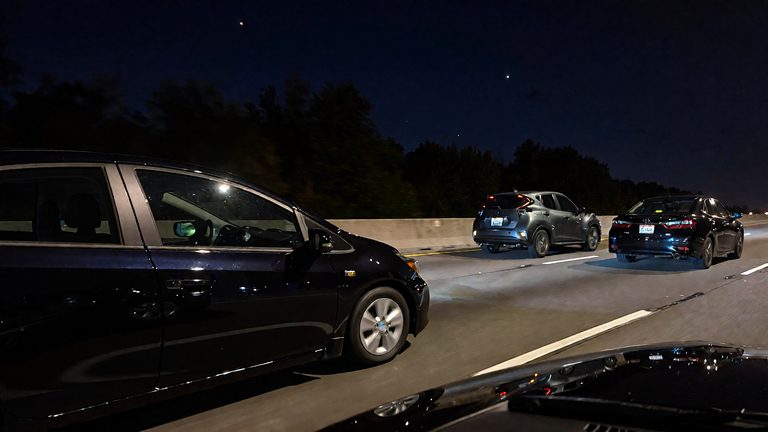
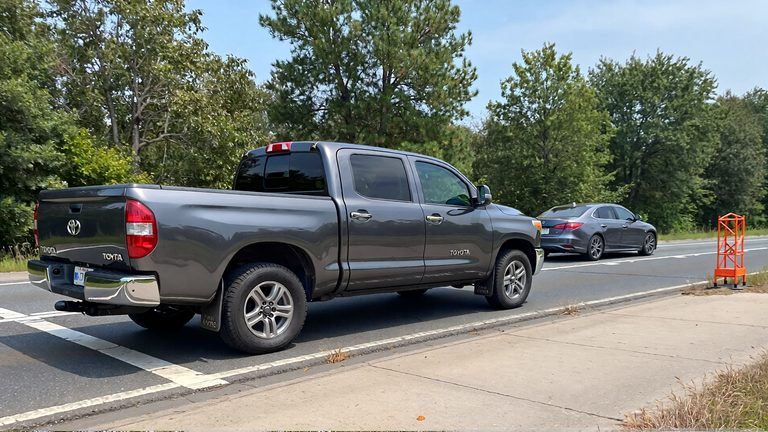
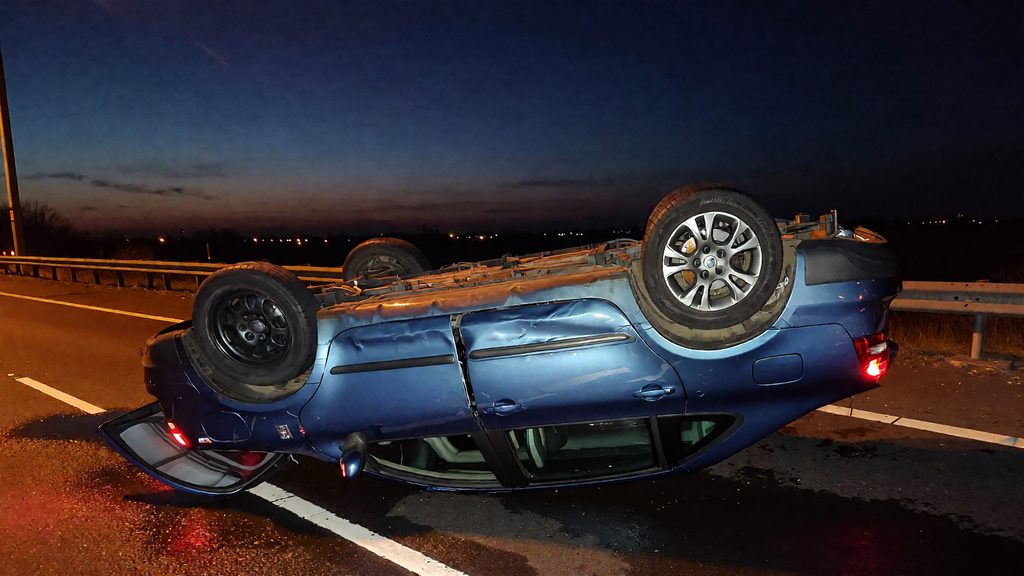
A single-vehicle rollover crash in unincorporated Placer County left three teenagers injured in the early morning hours. The crash happened at approximately 12:25 a.m. at Wise Road and Crater Hill Road. According to initial information, a Toyota pickup driven by a 16-year-old left the roadway and overturned.
A 17-year-old passenger was ejected from the truck and suffered major injuries. The driver and a second passenger sustained moderate injuries. Alcohol and drugs are suspected as contributing factors, though the investigation is ongoing and no final determination has been announced.
Why Rollover Crashes Are So Dangerous for Passengers
Rollover crashes are among the most violent collisions that occur on rural roads. When a pickup truck leaves the pavement and overturns, occupants can be thrown against the interior, struck by loose objects, or ejected from the vehicle entirely.
Ejection greatly increases the risk of catastrophic injury, including traumatic brain injuries, spinal cord damage, and multiple fractures. Seat belts are the most effective protection against ejection, and a rollover is exactly the type of crash where they matter most.
Rural roads like Wise Road add other hazards for young drivers, including limited lighting, curves, uneven shoulders, and long response times for emergency crews. Late-night driving compounds these risks, particularly for inexperienced drivers who have had less time behind the wheel to learn how to recover from a loss of control.
Alcohol, Drugs, and Young Drivers in California
California law treats impaired driving by minors very seriously. Drivers under 21 are subject to a zero-tolerance standard for alcohol, which means even a small measurable amount can lead to penalties, including license suspension. Drug impairment, whether from illegal substances, cannabis, or prescription medication taken improperly, can also lead to criminal charges and civil liability.
If investigators determine that impairment contributed to this crash, the consequences could extend well beyond the driver. Questions may arise about where the alcohol or drugs came from, who knew about their use, and whether other adults or individuals played a role in making them available to minors.
Beyond the criminal penalties a young driver may face, impairment can reshape the entire civil picture after a crash. When a driver is suspected of being under the influence, insurers often scrutinize the claim more closely, and some policies contain provisions that may affect coverage depending on the circumstances.
That can leave injured passengers and their families uncertain about where compensation will come from. Evidence such as toxicology results, witness statements, text messages, and social media posts from earlier in the evening can be important in establishing what happened and who may be responsible.
Because this kind of evidence can be lost or overwritten quickly, families should preserve as much as possible and consult an attorney early. Teen passengers are also frequently unaware of a driver’s condition or feel pressure to get in the car anyway, which is one reason the law looks carefully at everyone who may have contributed to an impaired driving situation, not only the person behind the wheel.
Provisional License Restrictions and Late-Night Driving
California’s graduated driver licensing program places specific limits on newly licensed teens. During the first 12 months after a provisional license is issued, a minor generally may not drive between 11 p.m. and 5 a.m., and may not transport passengers under age 20 unless accompanied by a licensed driver who is at least 25.
There are limited exceptions, such as medical necessity, school or employment needs, and family necessity. A crash at 12:25 a.m. involving teenage passengers in the vehicle may raise questions about whether these restrictions applied and were followed. These rules exist because inexperienced drivers face a higher risk of serious crashes at night and when carrying peers.
When a provisional license holder violates these restrictions, the consequences can affect more than the driver’s record. A violation can lead to citations, additional license penalties, and delays in obtaining a full license, and it may also become relevant in a civil claim after a serious crash.
Evidence that a teen was driving during restricted hours or carrying passengers in violation of the rules can be used to show that the driver was not acting as a reasonably careful person would. It can also raise questions for parents or guardians about whether they knew the teen was out late or had access to the vehicle.
For injured passengers, these details matter because they help paint a clearer picture of how the crash occurred and who may be responsible. Families should keep in mind that a license status is typically confirmed through official records, so it is wise to have an attorney help obtain that information rather than relying on assumptions about whether the restrictions applied on the night of the crash.
Who May Be Legally Responsible After a Teen Driver Crash
Injured passengers and their families often have more legal options than they realize. Liability in a case like this can involve several parties depending on the evidence. The driver may be held responsible for negligent or impaired driving.
In California, a parent or guardian who signed a minor’s driver’s license application can be held financially liable for the minor’s negligent driving, subject to statutory limits. Vehicle owners may also face liability for permitting a minor to drive. Depending on the facts, individuals who unlawfully furnished alcohol to minors may also face scrutiny.
Insurance coverage is another important issue. Auto policies, umbrella policies, and medical payments coverage may all come into play, and their interaction can be complicated when the injured person is a passenger who is friends with or related to the driver.
Protecting a Minor’s Legal Rights
Serious injuries to a minor often carry long-term consequences, including extended medical care, rehabilitation, missed school, and emotional trauma. California generally gives injury victims two years to file a personal injury lawsuit, but special rules may apply when the injured person is under 18.
Even so, waiting can make it harder to preserve evidence, locate witnesses, and document the full extent of the harm. Families should avoid giving recorded statements to insurance companies before understanding their rights and should keep all medical records, bills, and photographs related to the crash.
Any settlement involving a minor typically requires court approval, which is designed to protect the child’s interests. Having an experienced attorney guide that process helps ensure that compensation reflects both present and future needs.
Beyond the filing deadline and court approval of settlements, families should carefully consider how a minor’s compensation will ultimately be managed. When a court approves a settlement for a child, it may direct that funds be placed in a blocked account, a structured settlement, or a trust so the money is protected until the child reaches adulthood or is used only for approved needs such as medical care and rehabilitation.
This oversight can be reassuring, but it also means the settlement terms deserve close attention from the start. A serious injury at 17 can affect a young person’s education, earning potential, and independence for years, so it is important that any claim account for future medical treatment, therapy, and lost opportunities, not just the bills that exist today.
Parents or guardians may also have their own claims for medical expenses they paid or will pay on the child’s behalf. Because these issues are layered and the stakes are high, speaking with an attorney early helps families avoid accepting a quick offer that overlooks the full scope of what their child may need.
Steps Families Can Take After a Serious Teen Crash
Families dealing with a crash like this can focus on a few priorities. Follow all medical advice and keep detailed records of every appointment and treatment. Preserve any photos, messages, or social media content related to the evening.
Request a copy of the official crash report once it becomes available. Direct insurance adjusters to an attorney before agreeing to any statement or settlement offer.
In the days and weeks following a serious crash, the emotional weight on a family can make it hard to think about paperwork and deadlines, but a few deliberate habits can protect a teen’s recovery and any future claim.
Keep a simple journal that records the injured teen’s pain levels, physical limitations, sleep difficulties, and emotional changes, since these day-to-day details often capture the true impact of an injury better than medical charts alone. Save every bill, receipt, and explanation of benefits, and note any mileage or time off work for hospital visits and appointments.
Be cautious about what is shared on social media, because posts and comments from teens, friends, or relatives can be taken out of context later. Follow through with all recommended follow-up care, including counseling if the teen is struggling with anxiety or trauma after the crash, because gaps in treatment can be used to question the seriousness of an injury.
Finally, remember that families do not have to sort through insurance questions and legal deadlines on their own. Reaching out to an attorney early can relieve some of that pressure and allow parents to focus on helping their child heal.
Rollover Accident Settlement Calculators and How They Estimate Settlement Value
A rollover accident settlement calculator is an online tool that gives injured people a rough estimate of what a claim might be worth based on the details they enter. Most calculators ask about medical expenses, lost wages, the severity and permanence of the injury, property damage, and whether the injured person may share any fault for the crash.
Many apply a multiplier to medical costs to account for pain and suffering, with higher multipliers generally used for more serious injuries such as spinal cord damage, traumatic brain injury, or permanent disability. This can be especially helpful after a rollover, when injuries are often severe and the full cost of care may not be apparent for months.
A calculator can give families a starting point for understanding the categories of compensation available, including future medical treatment, lost earning capacity, and emotional distress, and it can help them see why a quick insurance offer may fall short. That said, a calculator is only an estimate and cannot account for the unique facts of a case.
Factors such as available insurance coverage, disputed liability, California’s comparative fault rules, and whether the injured person is a minor can significantly change the outcome. For an accurate evaluation, it is best to speak with an attorney who can review the evidence and the full extent of the injuries before relying on any online figure. Call us now at 1-855-508-9565 to speak with the experts.
Get Help After a Serious Crash
“A crash like this is frightening for everyone involved, especially when the people hurt are young, and their families are suddenly facing hospital bills, long recoveries, and so many unanswered questions. If your child or a loved one was injured in a rollover, please don’t wait to understand your rights. Evidence disappears quickly, insurance companies often move fast, and any settlement involving a minor requires careful attention to protect that child’s future. Our team is here to listen, explain your options, and fight for the compensation your family needs so you can focus on what matters most, helping your loved one heal.” — Andy Gillin, Managing Partner, GJEL Accident Attorneys
If your child or a loved one was hurt in a rollover or any other serious collision in Placer County, you do not have to navigate the aftermath alone. GJEL Accident Attorneys helps injured Californians and their families understand their options and pursue the compensation they deserve.
Contact our team for a free consultation to discuss what happened and how we can help. We work on a contingency fee basis, which means you pay no attorney fees unless we successfully recover compensation for your case. Contact us today at 1-855-508-9565 or visit our San Francisco office to secure your future and compensation.
Helpful Resources After a Serious Teen Crash in Placer County
Because Wise Road is in an unincorporated area of Placer County, the crash falls under the California Highway Patrol and the Placer County Sheriff’s Office rather than a city police department. The CHP Auburn Area office handles traffic management and collision investigations in unincorporated Placer County, and its page is at https://www.chp.ca.gov/find-an-office/valley-division/220-auburn.
The CHP’s main traffic page explains what to do after a crash, how to request a crash report, and how to file traffic complaints at https://www.chp.ca.gov/traffic/. Families who need the official report can follow the CHP’s collision report instructions, which are open to a driver, passenger, vehicle owner, or the parent or legal guardian of a minor, at https://www.chp.ca.gov/traffic/request-a-collision-report.
The Placer County Sheriff’s Office serves the unincorporated areas of the county, and its page is at https://www.placer.ca.gov/8992/Placer-Countys-Sheriff-Office. The Sheriff’s Office services page lists crime reporting, press logs, and community resources at https://www.placer.ca.gov/2014/Services, and the county’s public safety page, with its crime map and online reporting information, is at https://www.placer.ca.gov/3804/Public-Safety. The Sheriff’s Office is located at 2929 Richardson Drive in Auburn, California 95603.
For road conditions and incident updates, the CHP Traffic Incident Information Page provides real-time information on active incidents across the state at https://cad.chp.ca.gov/. Caltrans District 3, which covers Placer County, publishes roadway and highway information at https://dot.ca.gov/caltrans-near-me/district-3.
Families who want to understand California’s rules for young drivers, including provisional license restrictions, can visit the California Department of Motor Vehicles at https://www.dmv.ca.gov. The California Office of Traffic Safety shares teen driving, impaired driving, and seat belt safety programs at https://www.ots.ca.gov, and the National Highway Traffic Safety Administration offers national safety resources on teen driving and rollover prevention at https://www.nhtsa.gov.