A fiery late-night crash in El Dorado Hills has left a community reeling after a Tesla struck a tree and erupted into flames, killing three people and sending a fourth to the hospital with serious injuries. The tragedy, which unfolded in a quiet residential stretch of the Serrano community, is now the subject of an active investigation by the California Highway Patrol into both what caused the vehicle to leave the roadway and what caused the fire that followed.
How the Crash Unfolded
The crash happened around 10:38 p.m. on Saturday, September 12, 2026, on westbound Serrano Parkway west of Terracina Drive. According to CHP dispatch records, officers were notified of a vehicle fire within minutes of the initial call, with flames visible almost immediately after the vehicle struck a tree.
El Dorado Hills Fire Department crews were already en route and arrived to find the vehicle fully engulfed in flames. Three occupants died as a result of the crash. Reporting on the incident indicates that one occupant, a 30-year-old man, was ejected during the collision and was pronounced dead at the scene.
The driver and another passenger, both women, were found dead inside the vehicle after firefighters extinguished the flames. A fourth occupant, a 28-year-old woman, escaped the vehicle with help from bystanders before it was consumed by fire and was transported to a hospital with major injuries.
The Battery Hazard and Ongoing Investigation
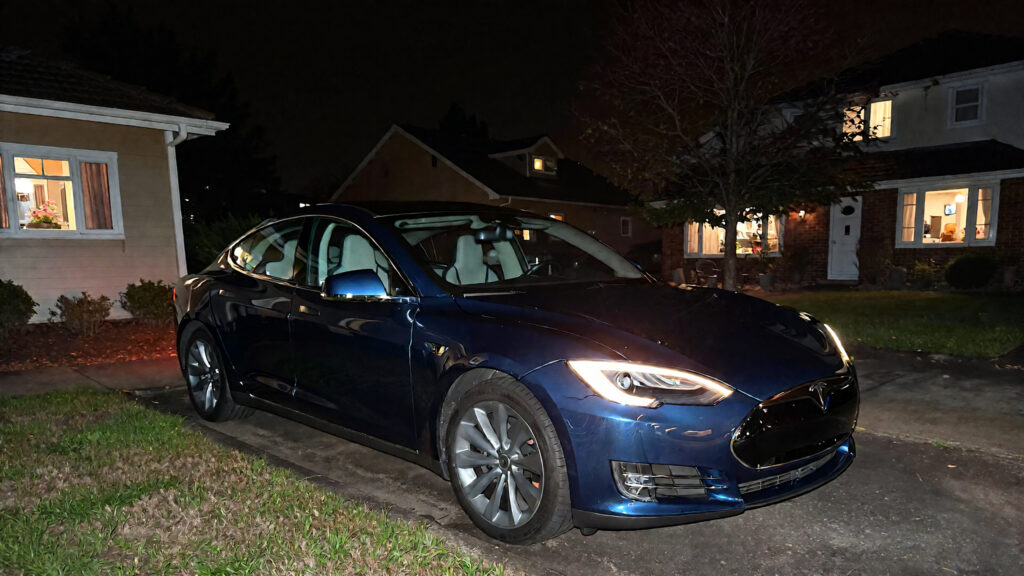
CHP dispatch logs confirm that the vehicle, a Tesla, sustained major battery damage in the crash, raising immediate concern about the possibility of battery reignition even after the initial fire was knocked down. El Dorado County Environmental Health responded to address the hazmat concern, and the El Dorado County Sheriff’s Office activated its hazmat callout procedure as a precaution.
A tow company equipped to handle damaged electric vehicle batteries was brought in once the hazard was addressed, and westbound Serrano Parkway remained closed for several hours before reopening at approximately 4:24 a.m.
It’s worth noting that early reporting attributed the fire directly to the vehicle’s lithium-ion battery, but CHP has since indicated that the precise cause of both the collision and the fire has not been confirmed and remains under investigation. This distinction matters for the families involved, since the eventual findings, whether they point to a road hazard, another driver, a mechanical or design defect, or a combination of factors, can shape the legal options available to them.
What Comparative Negligence Means for This Case
California follows a pure comparative negligence standard, meaning that even if one party is found partially at fault for a crash, it does not automatically bar claims by others who were harmed. Fault can be divided among multiple parties, including a driver, a roadway condition, or a manufacturer if a product defect is found to have contributed to the harm.
If investigators ultimately determine that the vehicle’s battery system responded unsafely to the impact, whether by igniting, reigniting, or complicating the emergency response, that finding could become relevant to any claims brought on behalf of the victims. Until that investigation concludes, it would be premature to assign a specific cause, but families are not required to wait for a final report before beginning to understand their legal options.
In practice, determining fault in a crash like this often comes down to a careful review of physical and electronic evidence. Investigators typically examine the vehicle’s event data recorder, which can capture speed, braking, and steering inputs in the seconds before impact, and the roadway itself for signs of a hazard, such as poor lighting, a blind curve, or inadequate signage.
When a vehicle catches fire after impact, the timeline of the fire, how quickly it spread, how long it burned, and how the battery behaved afterward can also become part of that evidentiary record. None of this means fault will ultimately be shared among multiple parties in this case, but California’s comparative negligence framework exists precisely so that families are not shut out of pursuing compensation simply because more than one factor may have contributed to a tragedy.
Wrongful Death and Survivor Claims Under California Law
When a crash results in a fatality, California Code of Civil Procedure Section 377.60 allows certain surviving family members, including a spouse, domestic partner, children, or other dependents, to bring a wrongful death claim against the parties responsible. These claims can address the loss of financial support, the loss of companionship, and the funeral and burial expenses that follow a sudden death.
Separately, Section 377.30 allows a decedent’s estate to pursue a survival action for damages the person could have claimed had they lived, such as pain and suffering experienced between the time of the crash and the time of death. For the occupant who survived the crash and was hospitalized, a personal injury claim may be available under the general negligence standards set out in California Civil Code Section 1714, which holds individuals and entities responsible for harm caused by a failure to exercise reasonable care.
If a government entity’s action or inaction, such as roadway design or maintenance, is found to have played a role, Government Code Section 835 governs claims against public entities and carries its own procedural requirements and shorter deadlines. Any claim of this kind is also subject to California’s statute of limitations, generally two years from the date of the incident under Code of Civil Procedure Section 335.1, though wrongful death claims run on their own separate timeline from the date of death.
How Settlement Value Is Calculated in Catastrophic Cases
In cases involving a fatality or a serious injury like the one suffered by the survivor in this crash, attorneys typically rely on one of two methods to help calculate a fair settlement range for pain and suffering. The multiplier method takes the total of a person’s economic damages, such as medical bills and lost income.
Also, multiplies that figure by a number reflecting the severity of the harm, often between 1.5 and 5, depending on factors such as the permanence of an injury or the trauma involved. The per diem method instead assigns a daily dollar value to a person’s pain and suffering and multiplies it by the number of days they are expected to experience that harm.
Neither method produces an automatic number, and the appropriate approach can depend heavily on the specific facts of a case, including medical documentation, life expectancy, and the degree to which a defendant’s conduct is found to have contributed to the outcome. Beyond the multiplier and per diem methods, the total value of a claim in a case like this typically extends well past pain and suffering alone.
Economic damages can include the full scope of medical treatment, from emergency transport and hospitalization to any long-term care a survivor may need, as well as lost wages and, in a wrongful death claim, the future income and benefits a decedent would reasonably have been expected to provide their family.
Non-economic damages account for the more personal toll: physical pain, emotional trauma, and, for surviving family members, the loss of a parent, spouse, or child’s love, guidance, and companionship. Because these cases often involve multiple potential defendants and evolving investigative findings, an experienced attorney will typically wait until medical treatment has stabilized and key facts about liability are clearer before recommending a specific settlement range, so that no family accepts less than their loss is actually worth.
Wrongful Death Settlement Calculators and How They Help Estimate Value
A wrongful death settlement calculator is an educational tool that helps families understand, in general terms, how the various losses tied to a death like this one might translate into a potential settlement range. Rather than producing a single “correct” number, these calculators walk through the categories of damages recognized under California law.
Economic losses, such as the income and benefits the deceased would have contributed to their household, and non-economic losses, such as the loss of companionship, guidance, and care experienced by surviving family members. By entering approximate figures for a person’s age, income, and family circumstances, a calculator can illustrate how those factors interact and why two cases with a similar cause of death can still result in very different settlement values.
It’s important to understand that a calculator’s output is a starting point for conversation, not a final valuation. Real settlement figures depend on facts that only emerge through investigation and negotiation, including how clearly liability can be established, whether more than one party may share responsibility, and how a jury in the relevant county might view the strength of the evidence.
Insurance companies often use their own internal formulas to minimize what they offer a grieving family, which is one reason it helps to have an attorney review a calculator’s estimate alongside the specific facts of the case before any settlement discussions begin. Used correctly, these tools give families a clearer sense of what to expect and a better foundation for evaluating whether an offer reflects the true extent of their loss. Call us now at 1-855-508-9565 to speak with the experts.
If You’ve Lost a Loved One or Been Injured in a Crash Like This
“I’ve spent over 40 years representing California families through the worst moments of their lives, and a crash like this one is exactly the kind of tragedy that leaves people feeling helpless. If you or someone you love was hurt in this accident, please don’t wait to get answers simply because the investigation is still ongoing. Evidence can change hands, memories fade, and vehicles get repaired or scrapped, so the sooner you have someone in your corner protecting your rights, the better positioned you’ll be. You don’t have to carry the financial burden of medical care and lost income while you’re also grieving or healing. Reach out to us. We’ll walk you through what happened, what it means for your case, and what accountability could look like, all at no cost to you unless we recover for you.” — Andy Gillin, Managing Partner, GJEL Accident Attorneys
No family should have to navigate a loss like this alone, especially while a cause is still being determined. GJEL Accident Attorneys has recovered more than $950 million for California families over more than 40 years, and we work on a contingency fee basis, meaning there is no cost to you unless we recover compensation on your behalf. If you have lost a loved one or been injured in this crash or one like it, call us at 1-855-508-9565 or visit Sacramento office to discuss your options with our team.
Local Resources and Assistance
Sacramento Police Department — Since two of the crash victims were from Sacramento, families may need to coordinate with local Sacramento authorities for notifications, records, or related matters. The department’s main site and services portal can be found at www.cityofsacramento.gov/police, with a dedicated Traffic Enforcement and traffic safety information page at www.cityofsacramento.gov/police/traffic-enforcement, and a portal for filing or requesting a police report at www.cityofsacramento.gov/police/police-services/file-a-police-report.
California Highway Patrol Statewide Traffic Resources — Since CHP is the lead investigating agency on this crash, its statewide site offers information on collision reports, traffic safety programs, and how to contact the agency’s statewide dispatch centers. This can be accessed at www.chp.ca.gov, with a specific portal for requesting collision reports at www.chp.ca.gov/programs-services/services-information/collision-reports-request-info.
National Highway Traffic Safety Administration (NHTSA) — Because this crash involved a Tesla with significant battery damage, families or attorneys may want to review or file a report with NHTSA, the federal agency responsible for investigating vehicle defects, battery fire hazards, and issuing recalls. Vehicle safety complaints and open investigations can be searched or filed at www.nhtsa.gov, with the vehicle complaint database specifically at www.nhtsa.gov/report-a-safety-problem.
California Department of Motor Vehicles (DMV) — For questions about vehicle records, registration, or crash-related paperwork, the California DMV’s main site is available at www.dmv.ca.gov.
El Dorado County Victim Services — Families coping with a sudden loss may also find support through the El Dorado County District Attorney’s Victim Services Unit, which provides resources, answers questions about restitution, and offers referrals for grieving families. Information can be found through the county’s main services directory at www.eldoradocounty.ca.gov.