Two drivers were killed, and a third person was hospitalized in a wrong-way driving crash, a five-vehicle collision on southbound Interstate 280 in Los Altos, on Thursday evening, October 22, 2026. In the hours after the crash, the California Highway Patrol closed the freeway while crews responded and investigators documented the scene, and southbound lanes did not reopen until around 9:30 p.m.
For many families, the news of a serious collision like this arrives suddenly and with few details, and the days that follow are often filled with uncertainty about what happened, who was involved, and what comes next. Investigators have not said why the driver crossed into oncoming traffic, and the cause remains under investigation, leaving many questions unanswered.
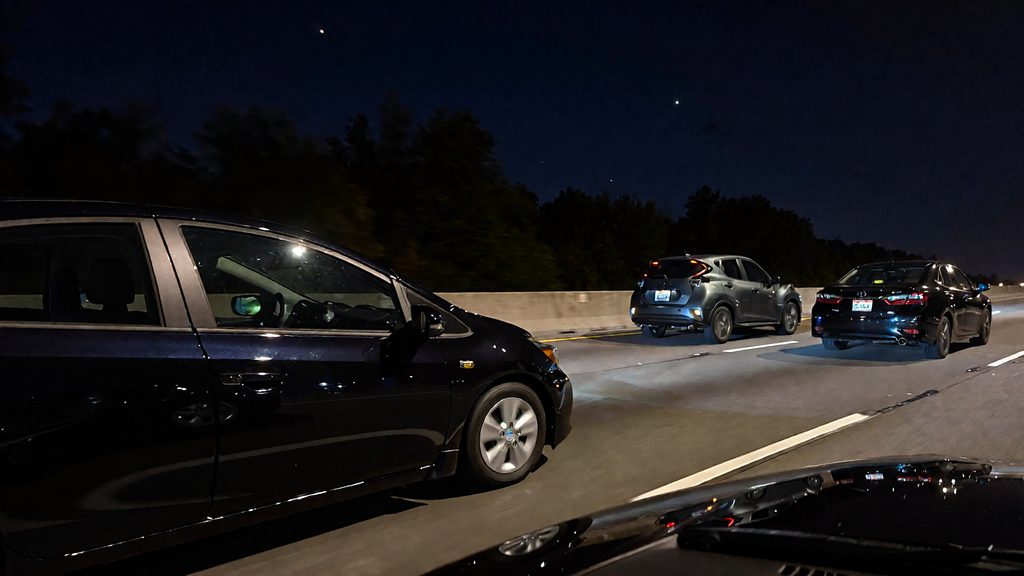
What We Know About the Wrong-Way Driving Crash
According to the California Highway Patrol, the collision happened shortly after 5:00 p.m. on southbound Interstate 280 near Foothill Expressway, when a driver traveling in the northbound lanes crossed into the southbound lanes and struck four other vehicles. Two drivers died, and a third person was taken to a hospital.
Authorities closed the freeway for several hours while crews responded and investigated, and southbound lanes reopened around 9:30 p.m. Video from the aftermath showed overturned vehicles and tow trucks working at the scene. Investigators have not said why the driver crossed into oncoming traffic, and the cause remains under investigation.
Because the collision involved five vehicles, the full sequence of impacts is not yet clear. CHP has said the northbound driver crossed into the southbound lanes and struck four other vehicles, but it has not described the order of the collisions or how each vehicle came to rest.
The agency has also not identified the two drivers who died or said whether the driver who crossed into oncoming traffic was among them, and it has not shared any information about the third person taken to the hospital beyond the fact that they were transported for care.
Video from the scene showed overturned vehicles and tow trucks working along the freeway, indicating how violent the crash was. Details like these often change as investigators complete their work, so early reports may not reflect the final findings, and families seeking answers may have to wait for the official crash report and any follow-up from the Santa Clara County Medical Examiner-Coroner.
Why Multi-Vehicle Freeway Crashes Are So Dangerous
Interstate 280 carries heavy commuter traffic through the Peninsula and South Bay, especially in the early evening. At freeway speeds, a vehicle that enters opposing lanes leaves other drivers almost no time to react. When one impact sends vehicles into others, the forces involved can cause fatal injuries, spinal cord damage, traumatic brain injuries, and complex fractures. Rollovers add further risk, particularly for occupants of smaller vehicles.
California law requires drivers to stay on the right half of the roadway under Vehicle Code section 21650, and Vehicle Code section 21651 addresses driving on divided highways. A crash in which a vehicle crosses into opposing traffic raises serious questions of fault. It also raises questions about why the vehicle left its lane, whether it was due to impairment, a medical emergency, distraction, fatigue, a mechanical failure, or something else.
Multi-vehicle freeway crashes are especially dangerous because the risks compound from the first impact. A wrong-way collision, in particular, can combine the speed of both vehicles into a single violent event, and drivers in the affected lanes often have only a moment to brake or swerve before they are struck or forced into another vehicle.
Once the first collision occurs, vehicles can be pushed into adjacent lanes, spun across the roadway, or sent into the path of drivers who had no warning, which is how a single wrong-way driver can affect four other vehicles. Heavy evening traffic on a corridor like Interstate 280 raises the odds that more people are caught up in the chain of impacts.
Occupants may suffer multiple injuries from successive collisions, including spinal cord damage, traumatic brain injuries, internal bleeding, and complex fractures, and vehicles that overturn add the risk of roof crush and ejection.
Rescue and medical response can also be slowed when several vehicles are damaged and the roadway is blocked. For survivors, the physical recovery from this kind of crash can take months or years, and the financial and emotional toll often reaches well beyond the day of the collision.
Legal Rights After a Wrong-Way or Multi-Car Crash
California’s negligence framework begins with Civil Code section 1714, which holds people responsible for injuries caused by their failure to exercise ordinary care. In a crash involving five vehicles, each driver’s conduct may need to be examined.
California follows a pure comparative fault rule, so an injured person can recover damages even if partly at fault, with the award reduced by their share of responsibility. Under Civil Code section 1431.2, each defendant is generally responsible only for their own percentage of fault for non-economic damages, such as pain and suffering.
Families who lost a loved one may have two types of claims. A wrongful death claim under Code of Civil Procedure section 377.60 can be brought by specified surviving family members, including a spouse, domestic partner, and children, and, in some cases, other dependents.
It allows recovery for losses such as financial support, household services, funeral and burial costs, and the loss of a loved one’s love, companionship, comfort, and guidance. A survival action under Code of Civil Procedure section 377.30 is brought by the decedent’s personal representative or successor in interest and covers the losses the person sustained before death, such as medical expenses and lost income.
Since January 1, 2026, survival actions generally no longer allow recovery for the decedent’s own pain and suffering, which makes the wrongful death claim even more important for many families. If the driver believed responsible was among those killed, Code of Civil Procedure section 377.40 provides that the case does not end with that driver’s death, and claims can often proceed against the driver’s insurance and estate.
Time limits matter. Most personal injury and wrongful death claims must be filed within two years under Code of Civil Procedure section 335.1. If a dangerous roadway condition is alleged to have contributed to a crash, claims against a public entity under Government Code section 835 are subject to much shorter claim-presentation deadlines, generally six months. Whether roadway conditions played any role here is unknown, and the investigation will need to determine that.
Insurance Challenges in Multi-Vehicle Collisions
When several people are hurt or killed in one crash, a single at-fault driver’s policy may not cover everything. California’s minimum liability limits are modest compared with the cost of catastrophic injuries and death, and several claimants may be competing for the same limited coverage.
If the responsible driver was uninsured or underinsured, the victims’ own uninsured and underinsured motorist coverage may become critical. Reviewing every available policy early can make a real difference in what a family can recover.
Insurance coverage can become one of the hardest parts of a multi-vehicle collision. When several people are injured or killed in the same crash, they may all be making claims against the same at-fault driver’s policy, and California’s minimum liability limits are often far lower than the true cost of catastrophic injuries or a wrongful death.
That can leave families and survivors competing for a limited pool of coverage while medical bills, funeral expenses, and lost income continue to grow. Insurers for each driver may also dispute fault, point to other vehicles in the sequence of impacts, or push for early settlements before the full extent of an injury is known, which is especially risky when a person faces long-term treatment.
If the responsible driver was uninsured or carried too little coverage, a victim’s own uninsured and underinsured motorist coverage may become an important source of recovery, and other policies, such as those covering an employer or a vehicle owner, may apply depending on the circumstances.
Because these questions are time-sensitive and the answers are not always obvious, identifying every available policy early and being careful about what is said to insurance adjusters can make a meaningful difference in the outcome.
How Settlement Value Is Evaluated
No two cases are alike, and past outcomes never guarantee a future result. In general, attorneys and insurers use two common approaches to estimate the value of a serious injury or wrongful death claim. The multiplier method totals economic losses, such as medical bills and lost income, and multiplies that figure by a number that reflects the severity of the injuries, the permanence of the harm, and the strength of the liability evidence.
The per diem method assigns a daily dollar value to pain and suffering and multiplies it by the number of days a person is expected to endure it. Both are starting points for negotiation rather than formulas that determine the outcome, and in a fatal crash, the analysis also considers the loss of the decedent’s financial support, companionship, and guidance.
Settlement value in a serious crash case is never a single number pulled from a chart, and it depends heavily on the facts of each person’s injuries and losses. Attorneys and insurers commonly start with the economic damages, which include past and future medical bills, lost income, reduced earning capacity, and out-of-pocket costs, because these can be documented with records and bills.
Non-economic damages, such as pain, suffering, and loss of enjoyment of life, are harder to measure, so two methods are often used as starting points. The multiplier method takes the total economic losses and multiplies them by a factor that reflects the severity and permanence of the injuries, the strength of the evidence of fault, and the extent to which the person’s daily life has been affected.
The per diem method assigns a daily dollar amount to the pain and limitations a person experiences and multiplies it by the number of days they are expected to endure them, which can make it useful when recovery is long but has a defined end. In a wrongful death case, the evaluation also considers the loss of the decedent’s financial support, household contributions, companionship, and guidance, along with funeral and burial costs.
Other factors can shape the final figure, including available insurance limits, the share of fault assigned to each driver under California’s comparative fault rules, and the quality of the evidence gathered early on. Past results do not guarantee future outcomes, and a careful review of the full picture is the only reliable way to determine what a claim may be worth.
How a Car Accident Lawyer Can Help
A crash of this size involves many moving parts. An experienced attorney can reconstruct the sequence of impacts, review the CHP investigation, and examine how each vehicle was involved. That work can include preserving vehicle data, requesting records, interviewing witnesses, and consulting accident reconstruction and medical professionals.
Counsel can also pursue compensation for medical care, future treatment, lost income, funeral and burial costs, loss of companionship, and other damages where applicable. A crash involving five vehicles has many moving parts, and an experienced car accident lawyer can help bring order to a situation that often feels overwhelming.
An attorney can reconstruct the sequence of impacts, review the CHP investigation and crash report, and examine how each vehicle was involved, which matters when insurers for different drivers point fingers at one another.
That work can include sending preservation letters to ensure vehicle data and other evidence are not lost, gathering photos, videos, and witness accounts, obtaining medical and billing records, and consulting accident reconstruction specialists and medical professionals when the case calls for it.
A lawyer can also identify every insurance policy and potential source of recovery, handle communication with adjusters to ensure survivors and grieving families are not pressured into making early statements or accepting low settlement offers, and track the filing deadlines applicable to each type of claim.
For those who were hurt, an attorney can pursue compensation for medical care, future treatment, lost income, and other damages, and for families who lost a loved one, an attorney can seek compensation for funeral and burial costs, loss of financial support, loss of companionship, and other damages where applicable.
Just as important, having someone manage the legal process allows people to focus on recovery and on being with their families during an extremely painful time.
Wrongful Death Settlement Calculators and Why They Matter
A wrongful death settlement calculator is an online tool that gives families a rough, informal estimate of what a claim might be worth, and it can be a helpful first step when everything feels uncertain. Most calculators ask for details such as the age of the deceased, their income and work history, how many people depended on them, and the funeral and burial costs the family has paid.
From those inputs, the tool typically estimates the economic losses, including the financial support the person would likely have provided over their working life, the value of the household services they performed, and final expenses.
It then adds a figure for non-economic harm, using a method like the multiplier approach, to reflect the loss of love, companionship, comfort, care, and guidance that family members under California law may seek in a wrongful death claim under Code of Civil Procedure section 377.60.
Seeing these categories laid out can help a grieving family understand what damages may be considered and can make early conversations with an attorney more focused. That said, a calculator is only a starting point. It cannot account for the strength of the liability evidence, the share of fault assigned to each driver under California’s comparative fault rules.
The limits of available insurance coverage, or the way different family relationships and circumstances affect a claim, and an estimate that looks high or low on a screen may change considerably once the facts are fully investigated.
For that reason, the number a calculator produces should never be treated as a guarantee or as a reason to accept an early offer from an insurer. A thorough review of the evidence by an experienced wrongful death attorney is the only reliable way to understand what a specific family’s claim may be worth. Call us now at 1-855-508-9565 to speak with the experts.
Our Commitment: No Fees Unless We Win Your Case
“After a crash like this, the physical injuries are only part of the burden. Families are dealing with medical bills, missed work, and fear about what comes next, and no one should have to face that alone. My advice is to get medical care right away, keep every record and receipt, and be careful about giving statements to an insurance company before you understand your rights. Strict deadlines apply, and the evidence in a multi-vehicle crash can disappear quickly. If you or someone you love was hurt, please call us. We handle these cases on a contingency fee basis, so you pay nothing unless we recover compensation for you, and we will do everything we can to protect you and your family while you focus on healing.” -Andy Gillin, Managing Partner, GJEL Accident Attorneys
GJEL Accident Attorneys has more than 40 years of experience representing people hurt in serious crashes across California, and the firm has recovered more than $950 million for its clients. We handle personal injury and wrongful death cases on a contingency fee basis, which means you pay no attorney fees unless we recover compensation for you. If you or someone you love was affected by this collision, call 1-855-508-9565 or visit the San Francisco office for a free consultation.
Local Resources and Agencies That Can Help
Interstate 280 is a state freeway, so the California Highway Patrol handled this investigation, but several local, county, and state agencies can help victims and families in the days ahead. Below are the agencies most likely to be useful, with their websites:
California Highway Patrol (CHP). The CHP investigates freeway collisions and is the agency to contact about the crash report. The Redwood City Area office, at 355 Convention Way in Redwood City, can be reached at (650) 779-2700, and its service area includes portions of Santa Clara County and Interstate 280. Crash reports can be requested at any CHP area office or online, and the CHP charges a nominal fee for copies. Redwood City Area office: https://www.chp.ca.gov/find-an-office/golden-gate-division/330-redwood-city/ and CHP main website: https://www.chp.ca.gov/
Los Altos Police Department. Although the freeway falls under CHP jurisdiction, the Los Altos Police Department can point residents to local services and handle police matters within the city. Its website lists ways to request police reports, report traffic complaints, and contact the department. The 24-hour non-emergency line is (650) 947-2770. Website: https://losaltosca.gov/police
Santa Clara County Office of the Medical Examiner-Coroner. This office determines the cause and manner of death in sudden or unexpected deaths and is located at 850 Thornton Way in San Jose, with a phone number of (408) 793-1900. The office does not issue death certificates to the general public. Family members can generally obtain certified copies through the funeral director around the time of death, and later requests should go to the Santa Clara County Department of Public Health, Vital Statistics Section, at 976 Lenzen Avenue in San Jose, (408) 885-2010. Website: https://mec.santaclaracounty.gov/home and death certificate information: https://mec.santaclaracounty.gov/death-certificate/death-certificates
Santa Clara County District Attorney’s Office, Victim Services Unit. If the investigation leads to criminal charges, the District Attorney’s Victim Services Unit links victims and families to local resources and helps them understand the legal process and their rights as victims. The office is at the County Government Center, West Wing, 70 West Hedding Street in San Jose. Website: https://da.santaclaracounty.gov/
California Victim Compensation Board (CalVCB). If the collision is found to involve a crime, such as drunk driving or vehicular manslaughter, injured victims and family members may be eligible for financial help with medical and dental treatment, counseling, lost income, and funeral and burial expenses. CalVCB is the payor of last resort, meaning it pays only after other sources, such as insurance, have been used. Applications can be submitted online, and CalVCB’s phone number is 1-800-777-9229. Website: https://victims.ca.gov/ and online application: https://online.victims.ca.gov/ and local victim assistance centers: https://victims.ca.gov/victims/localhelp.aspx
Caltrans District 4. Caltrans owns and maintains the state highway system, including this stretch of Interstate 280, and District 4 covers the nine Bay Area counties, including Santa Clara County. Families or attorneys with questions about roadway conditions, signage, or road work can start with the District 4 public affairs office at (510) 286-4444. For real-time freeway conditions, Caltrans QuickMap is at http://quickmap.dot.ca.gov, and 24/7 traffic updates are at https://511.org. District 4 Public Affairs: https://dot.ca.gov/caltrans-near-me/district-4/d4-programs/d4-public-affairs