Last updated August 27, 2026
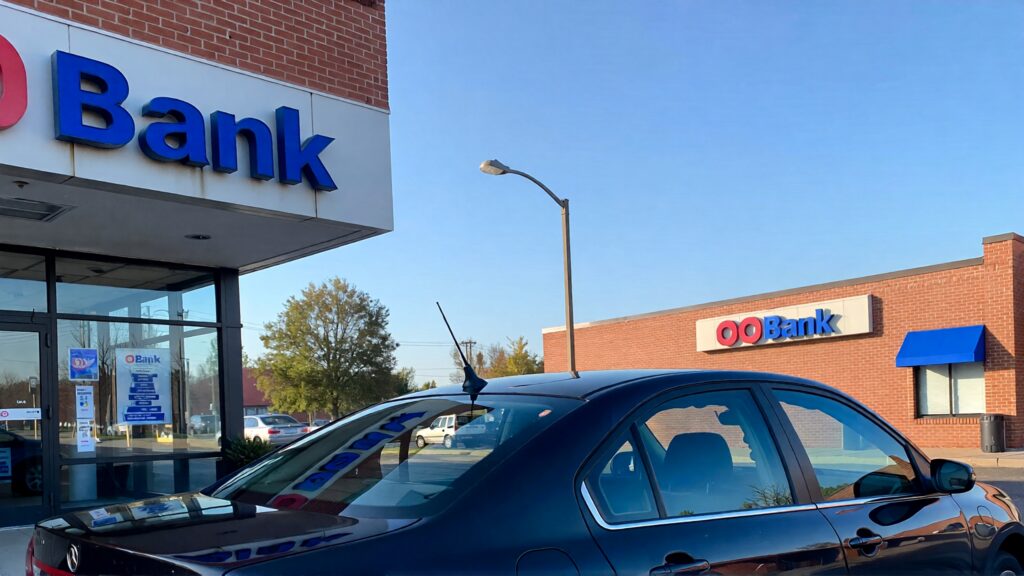
On the afternoon of Tuesday, July 28, 2026, a vehicle crashed into a bank in the Duboce Triangle neighborhood, leaving two people injured. The San Francisco Fire Department reports that the incident took place just before 2:45 p.m. at Church and Market Streets. Authorities said one occupant was able to exit the vehicle following the crash. One victim was transported to a nearby hospital, while the other was evaluated at the scene.
No other injuries were reported. The San Francisco Fire Department’s battalion chief requested that San Francisco Building Inspection assess the damage to the bank. The cause of the crash had not been determined at the time of reporting, and the investigation remains ongoing.
Our thoughts are with everyone affected by this frightening collision. When a vehicle leaves the roadway and strikes a fixed structure, the people inside that vehicle and anyone nearby can suffer serious, sometimes life-altering injuries.
What We Know About the Church and Market Streets Crash
The intersection of Church and Market Streets sits at a busy commercial corridor in the Duboce Triangle, near the entrance to the Muni Metro underground station and a heavily trafficked stretch used by pedestrians, cyclists, and drivers throughout the day.
According to fire officials, emergency crews arrived within minutes of the crash being reported and found that a vehicle had struck the bank building. One occupant managed to exit the vehicle on their own, while first responders evaluated the second occupant at the scene before transporting them to a hospital for further treatment.
Because the San Francisco Fire Department’s battalion chief called in San Francisco Building Inspection to evaluate the bank, it appears the impact raised sufficient structural concerns to warrant a formal safety assessment. This is a standard precaution after a vehicle-into-building collision, since even a low-speed impact can compromise support columns, storefront glass, or load-bearing walls.
As of this writing, investigators have not released a cause for the crash. Common factors in vehicle-into-building incidents include distracted driving, medical emergencies behind the wheel, mechanical failure such as brake or acceleration malfunctions, or driver impairment. Until the San Francisco Police Department or CHP releases further findings, the exact cause remains under investigation.
Common Injuries in Vehicle-Into-Building Collisions
Crashes in which a car strikes a building tend to produce injuries different from those in typical rear-end or intersection collisions, largely because the vehicle often comes to an abrupt, high-force stop against a rigid structure. Injuries commonly associated with these types of collisions include:
- Traumatic brain injuries from head impact with the steering wheel, dashboard, or window
- Spinal cord injuries and fractured vertebrae
- Broken ribs, collarbones, and limbs from the force of impact or airbag deployment
- Internal organ damage from seatbelt or steering column pressure
- Lacerations from broken glass or metal debris
- Soft tissue injuries, including whiplash and torn ligaments
Injuries like these often require emergency treatment, imaging, surgery, and extended physical therapy. Medical bills can accumulate quickly, and many victims are unable to work while they recover, compounding the financial burden of the crash.
Understanding Liability in a Vehicle-Into-Building Crash
Under California Civil Code §1714, every person is responsible for injuries caused by their want of ordinary care in the management of their property, including a motor vehicle. Drivers owe a duty to operate their vehicles safely and maintain control at all times, whether navigating an intersection, a parking lot, or a city street lined with storefronts.
Liability in a crash like this one typically hinges on what caused the driver to lose control. If the driver was speeding, distracted, or impaired, they may bear direct fault for the resulting injuries and property damage.
If a mechanical defect, such as sudden brake failure or unintended acceleration, played a role, the vehicle manufacturer or a negligent repair shop could share responsibility. If a medical emergency caused the driver to lose consciousness or control, liability can become more complex and may depend on whether the driver knew or should have known about a condition that made driving unsafe.
An investigation by the San Francisco Police Department or CHP, along with any available surveillance footage from nearby businesses or Muni cameras, can help establish what happened in the moments before impact. Anyone injured in this crash should consider having an attorney review the available evidence before insurance companies finalize their accounts of the events.
How Settlement Value Is Calculated in California Injury Claims
Insurance companies and attorneys generally rely on one of two methods to estimate the value of pain-and-suffering damages in a personal injury claim, in addition to calculating actual economic losses such as medical bills and lost wages.
The Multiplier Method: This approach multiplies the total of a victim’s economic damages, such as medical expenses and lost income, by a factor typically ranging from 1.5 to 5, depending on the severity of the injury. A victim with a fractured leg requiring surgery and months of physical therapy would generally warrant a higher multiplier than someone with soft tissue injuries that resolve within weeks.
The Per Diem Method: This method assigns a specific dollar value to each day a victim experiences pain and suffering, from the date of the crash until they reach maximum medical improvement, then multiplies that daily rate by the number of days affected.
Every case is different, and the appropriate method, along with the multiplier or daily rate used, depends heavily on the specific facts: the severity of the injury, the length of recovery, the impact on the victim’s daily life, and the strength of the liability evidence. An experienced personal injury attorney can help evaluate which approach best reflects the true value of a claim.
How Personal Injury Settlement Calculators Help Estimate Case Value
After a car accident, a slip-and-fall, or another injury caused by someone else’s negligence, one of the first questions victims ask is what their case might be worth. A personal injury settlement calculator offers a starting point for answering that question by estimating total compensation based on the specific details of a case, including medical expenses, lost wages, property damage, and the severity of pain and suffering.
Most calculators rely on one of two established methods: the multiplier method, which takes total economic damages and multiplies them by a factor typically between 1.5 and 5, depending on injury severity, or the per diem method, which assigns a daily dollar value to pain and suffering and multiplies it by the number of days a victim is affected.
By inputting details like medical bills, time missed from work, and the nature of the injury, a settlement calculator can generate a reasonable range for what a claim might be worth before negotiations with an insurance company even begin.
While these tools are useful for setting expectations, they are not a substitute for a full case evaluation by an experienced attorney. Settlement calculators cannot account for every factor that influences case value, such as the strength of the liability evidence, the credibility of witnesses, comparative fault issues, the specific insurance policy limits involved, or how a case might be viewed by a jury in a particular California county.
They also cannot factor in long-term or non-economic considerations like diminished earning capacity, permanent disability, or the emotional toll an injury has taken on a victim and their family. For accident victims, a settlement calculator is best used as an educational first step, one that helps clarify the scope of a claim while underscoring why a personalized consultation with a personal injury attorney is essential to pursuing full and fair compensation.
Taking the First Step Toward Justice
“A car crashing into a building in the middle of the afternoon is the kind of thing nobody expects to happen to them, whether they were inside the vehicle, working inside that bank, or simply walking by on Church Street. These crashes can leave victims with serious injuries and a long road to recovery, on top of the shock of what just happened to them. If you or someone you love was hurt in this crash, I want you to know that you don’t have to face the insurance companies or the medical bills alone. Our firm works on a contingency fee basis, which means you pay nothing unless we recover compensation for you. Call us so we can talk through what happened and what your options are.”- Andy Gillin, GJEL Accident Attorneys
If you or a loved one was hurt in this collision, or in any traffic accident in San Francisco, the attorneys at GJEL Accident Attorneys are here to help. With more than 40 years of experience and over $950 million recovered for injury victims across California, our firm understands what it takes to hold negligent parties accountable and secure the compensation victims deserve.
Contact us today at +1-866-218-3776 or visit our San Jose office for a free, no-obligation consultation. We work on a contingency fee basis, so you pay nothing unless we win your case.
Local Resources for Crash Victims in San Francisco
San Francisco Police Department
- Non-Emergency/Collision Reporting: (415) 575-4444
- Traffic Collision Report Request Portal: sanfranciscopolice.org/traffic-collision-report
- Records Management Section: 1245 3rd Street, San Francisco, CA 94158
- Note: SFPD asks that victims wait at least 5 business days after the crash before requesting a copy of the collision report, as it takes time for the responding officer’s report to be reviewed and approved for release.
California Highway Patrol (CHP)
- Request a Crash Report: chp.ca.gov/traffic/request-a-crash-report
- Collision Report Form (CHP 190) Information: chp.ca.gov/notify-chp/collision-report-chp-190
- Note: CHP typically handles collisions on freeways and state routes rather than city streets, but their crash portal is useful for confirming which agency investigated a given incident.
SFMTA / Vision Zero SF (San Francisco’s Traffic Safety Authority)
- Vision Zero SF, the city’s official traffic safety initiative coordinating SFPD, SFMTA, and the Department of Public Health: visionzerosf.org
- Maps & Data, including citywide traffic crash and fatality reports: visionzerosf.org/maps-data
- SFMTA Improving Safety and Access: sfmta.com/improving-safety-and-access
San Francisco Department of Building Inspection
- Main Website: sf.gov/departments–department-building-inspection
- Address: 49 South Van Ness Ave, San Francisco, CA 94103
- Phone: (628) 652-3200
CPMC Davies Campus Emergency Department (closest hospital to the crash site, at Castro and Duboce Streets)
- Website: sutterhealth.org/find-location/facility/cpmc-emergency-davies-campus
- Address: 601 Duboce Ave, San Francisco, CA 94114
- Phone: (415) 600-6000
Zuckerberg San Francisco General Hospital and Trauma Center (Level I Trauma Center)
- Website: zuckerbergsanfranciscogeneral.org
- Address: 1001 Potrero Ave, San Francisco, CA 94110
- Phone: (628) 206-8000
If you were injured in this crash or a similar incident, keep copies of medical records, photographs of the scene, and any correspondence with insurance adjusters. These records can play an important role in supporting a future claim.
This crash happened at Church and Market, one of the San Francisco intersections that shows up repeatedly in the city injury collision data. If you were hurt in a San Francisco crash, our San Francisco car accident lawyers can review what happened at no cost. Call (415) 986-4777.