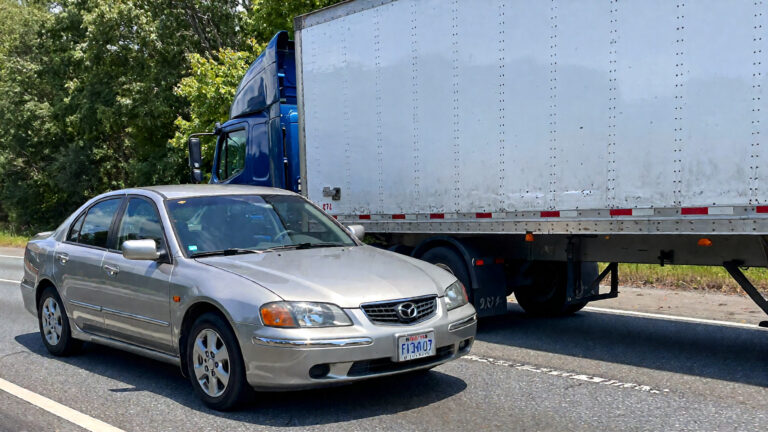
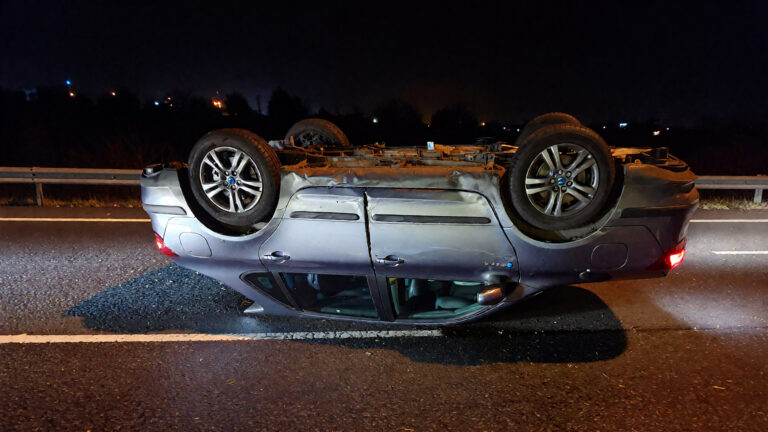
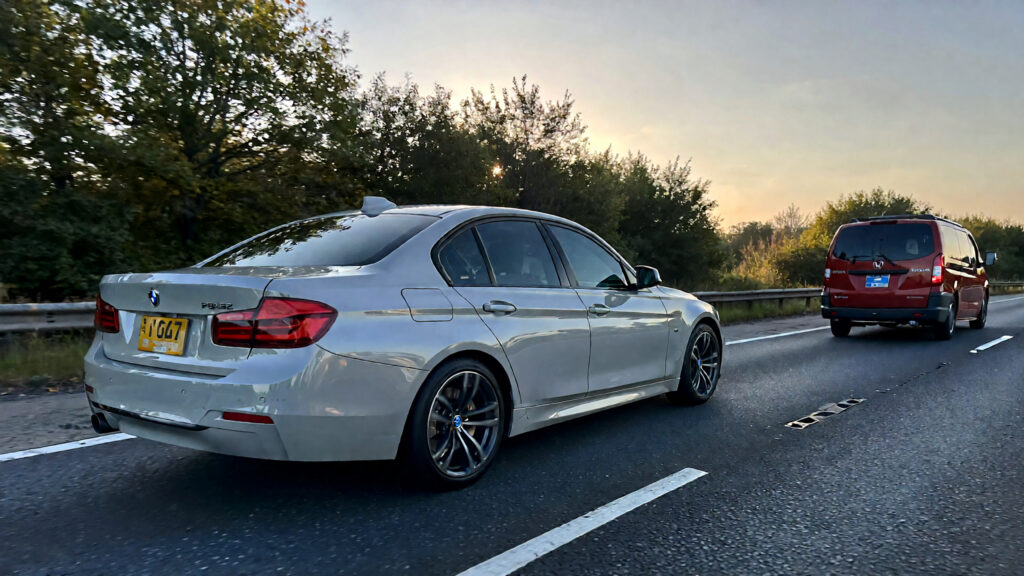
A two-vehicle traffic crash on Highway 12 near Guard Road in Lodi sent both drivers away with minor injuries early Wednesday morning, according to preliminary reports. The crash occurred at approximately 4:19 a.m. on September 16 and involved a white BMW sedan and a red Honda van. Both vehicles reportedly came to rest in the middle of the roadway after the impact.
This caused the eastbound lanes of Highway 12 to be blocked, disrupting traffic in the area for some time. This stretch of highway, which runs through San Joaquin County just north of Stockton, has seen its share of serious collisions over the years, and early morning hours in particular can present heightened risks due to reduced visibility and driver fatigue.
What We Know About the Highway 12 Collision
Details surrounding the exact cause of the crash remain limited as investigators continue to piece together what happened in the moments leading up to the collision. What is known is that the incident took place in the predawn hours, a time when traffic volume on Highway 12 is typically lower but when drivers may also be more susceptible to fatigue or diminished alertness.
The positioning of both vehicles in the roadway after the crash suggests a significant impact, and the blocked eastbound lanes point to a collision severe enough to require emergency responders to manage traffic flow while assessing the scene.
Fortunately, both drivers involved sustained only minor injuries, though anyone involved in a crash of this nature should still seek prompt medical evaluation, since some injuries, including concussions and soft tissue damage, are not always immediately apparent.
Common Causes of Early Morning Collisions on Highway 12
Highway 12 is a heavily traveled route connecting the Lodi and Stockton areas to the greater Sacramento Delta region, and it has a history of serious, sometimes fatal, collisions, particularly at intersections like Guard Road. Early-morning crashes on this corridor are often linked to driver fatigue, reduced visibility in low-light conditions, and, in some cases, impairment.
When two vehicles collide with enough force to leave both stopped in the travel lanes, factors such as speed, failure to yield, or a driver crossing into oncoming or adjacent lanes are often part of the investigation. California Highway Patrol officers will typically examine physical evidence at the scene, interview witnesses, and review any available surveillance or dash-camera footage to determine fault and contributing factors.
Fatigue is one of the most significant contributing factors to early-morning crashes, particularly for commuters and commercial drivers who may be starting shifts before sunrise or coming off overnight shifts. The body’s natural circadian rhythm dips in the pre-dawn hours, which can slow reaction times and impair judgment even in drivers who feel alert.
Poor lighting compounds the risk, as headlights alone often fail to fully illuminate road hazards, other vehicles merging or turning, or debris left in the roadway from earlier incidents. Highway 12 also carries a mix of local commuter traffic and long-haul commercial vehicles traveling between the Central Valley and the Bay Area, and the speed differential between these vehicle types can create dangerous situations when a driver misjudges the closing speed of another.
Weather can also play a role, since the Delta region is prone to seasonal fog that settles in low-lying areas near Guard Road, dramatically reducing visibility with little warning. When these conditions combine with driver error, such as failing to maintain a safe following distance or drifting out of a lane, the results can be severe even at moderate speeds.
Understanding Liability After a Two-Vehicle Accident in California
California follows a pure comparative fault system under state law, meaning that more than one party can share responsibility for a collision, and an injured driver can still recover compensation even if they were partially at fault, with their recovery reduced by their percentage of fault. This is particularly relevant in two-vehicle crashes where liability is not always immediately clear.
Under California Civil Code Section 1714, individuals are legally responsible for injuries caused by their want of ordinary care or skill in the management of their property, which includes the operation of a motor vehicle. Additionally, California Vehicle Code provisions governing lane control, speed limits, and right-of-way often come into play when determining which driver, if either, violated the rules of the road.
Injured parties generally have two years from the date of the accident to file a personal injury lawsuit under California Code of Civil Procedure Section 335.1, so timely action and early evidence preservation are important.
Establishing liability in a two-vehicle crash often comes down to a careful review of physical evidence, since two drivers rarely agree on what happened in the moments before impact. Skid marks, vehicle damage patterns, and the final resting position of both vehicles in the roadway can help investigators and accident reconstruction experts determine which driver, if either, deviated from their lane or failed to maintain control.
Witness statements and any available traffic or business surveillance footage in the area can also play a decisive role, particularly in the absence of a definitive CHP finding at the scene. Insurance companies representing each driver will typically conduct their own investigation as well, and it is not uncommon for two insurers to reach different conclusions about fault, which can delay a claim or result in an unfairly low settlement offer for an injured party.
This is one of the main reasons injured drivers benefit from having their own legal representation early on, since an attorney can independently gather evidence, consult accident reconstruction specialists when necessary, and push back against an insurer’s attempt to shift blame or minimize a claim’s value.
How Injury Claims Are Valued Following a Crash
Even when injuries are described as minor, medical costs, lost wages, and pain and suffering can add up quickly, and injured drivers deserve to understand how their claims may be valued. Attorneys and insurance adjusters commonly use one of two methods to estimate non-economic damages such as pain and suffering.
The multiplier method involves totaling a person’s economic damages, such as medical bills and lost income, and multiplying that total by a factor typically ranging from 1.5 to 5, depending on the severity of the injury, to arrive at a pain-and-suffering value. The per diem method instead assigns a specific dollar amount for each day the injured person experiences pain and disruption to their daily life.
This is from the date of the accident until they reach maximum medical improvement. Both methods provide a starting point for negotiations, though the ultimate value of a claim depends heavily on the specific facts, the strength of the evidence, and the extent of any long-term impact on the injured person’s life.
Beyond the multiplier and per diem methods, several other factors shape the ultimately value of a claim. The type and permanence of the injury matter a great deal, as a soft-tissue strain that resolves within weeks is valued very differently from an injury requiring ongoing physical therapy, follow-up imaging, or specialist care months down the line.
Insurance adjusters also weigh how consistently and promptly an injured person sought treatment, since gaps in care are often used to argue that an injury was less serious than claimed or unrelated to the crash. Documentation plays a central role as well: medical records, billing statements, wage loss verification from an employer, and even a personal journal noting pain levels and daily limitations can all strengthen a claim’s value.
It’s also worth noting that California allows injured parties to recover for both past and reasonably certain future damages, so a driver who requires ongoing treatment should not settle a claim before understanding the full scope of their recovery. Because insurance companies are motivated to close claims quickly and for as little as possible, having a clear picture of a claim’s true value, supported by thorough documentation, is one of the most important steps an injured driver can take before accepting any settlement offer.
How Personal Injury Settlement Calculators Help Estimate Claim Value
Personal injury settlement calculators are tools that give injured drivers a preliminary sense of what their claim might be worth by applying the multiplier or per diem methods to their specific damages. These calculators typically ask for inputs such as total medical expenses, lost wages, the severity and duration of the injury, and any property damage, and then generate an estimated range for pain and suffering compensation in addition to those economic losses.
While useful as a starting point, these tools have real limitations, since they cannot account for the nuances of a particular case, such as how a jury or insurance adjuster might view comparative fault, the strength of the available evidence, or the long-term impact an injury has on a person’s ability to work or enjoy daily life.
A calculator also cannot factor in California-specific legal considerations, such as how pure comparative fault might reduce an award, or how a defendant’s insurance policy limits might cap the practical recovery available regardless of the claim’s theoretical value.
For this reason, settlement calculators are best used as an educational starting point rather than as a final answer, and injured drivers are encouraged to discuss their specific circumstances with an experienced personal injury attorney who can provide a more accurate, case-specific evaluation before accepting any offer from an insurance company. Call us now at 1-855-508-9565 to speak with the experts.
Take Action Today – Get the Help You Deserve
“Being involved in a crash like this one, even when the injuries are described as minor, can leave you feeling shaken and unsure of what to do next. My advice is always the same: don’t brush off how you’re feeling just because the damage doesn’t look severe on the surface. Get checked out by a medical professional right away, keep records of everything, and don’t let an insurance adjuster rush you into a decision before you understand the full picture of your recovery. You’ve been through enough already. Let us handle the legal side so you can focus on healing.” — Andy Gillin, Managing Partner, GJEL Accident Attorneys
If you or a loved one was injured in the Highway 12 crash near Guard Road, or in any traffic collision in California, GJEL Accident Attorneys is available to help you understand your legal options.
With more than 40 years of experience and over $950 million recovered for injured clients, our firm handles every case on a contingency fee basis, meaning you pay nothing unless we win your case. Call us today at 1-855-508-9565 or visit our San Francisco office to schedule a free, no-obligation consultation with our experienced legal team.
Local Resources for Those Involved in the Crash
Anyone involved in this collision, or in a similar accident on Highway 12, may need to contact local agencies for information, documentation, or medical care. The California Highway Patrol Stockton Area office, which patrols Highway 12 and the surrounding San Joaquin County roadways, can be reached at (209) 938-4800 and is located at 2720 Wilcox Road, Stockton, CA 95215. More information on CHP services and how to request an official collision report can be found at the agency’s Stockton Area page: https://www.chp.ca.gov/find-an-office/valley-division/265-stockton-communications-center.
The Lodi Police Department can be reached at its non-emergency line at (209) 333-6727 and is located at 215 W. Elm Street, Lodi, CA 95240. Residents seeking to file a public records request for a police report connected to this or another local incident can do so directly through the department’s records request portal at https://www.lodi.gov/813/records-requests. General information about the City of Lodi and its public safety departments is available at https://www.lodi.gov.
Highway 12 falls under the jurisdiction of Caltrans District 10, which oversees maintenance, signage, and traffic operations across San Joaquin County and the surrounding region, including major routes such as I-5, SR-99, and SR-12. Caltrans District 10 can be reached for road condition reports, construction updates, or safety concerns through its official page at https://dot.ca.gov/caltrans-near-me/district-10.
Those seeking medical care in the immediate area can turn to Adventist Health Lodi Memorial, located at 975 S Fairmont Ave, Lodi, CA 95240, which can be reached at (209) 334-3411. More information about the hospital’s services is available at https://www.adventisthealth.org.