Last updated September 4, 2026
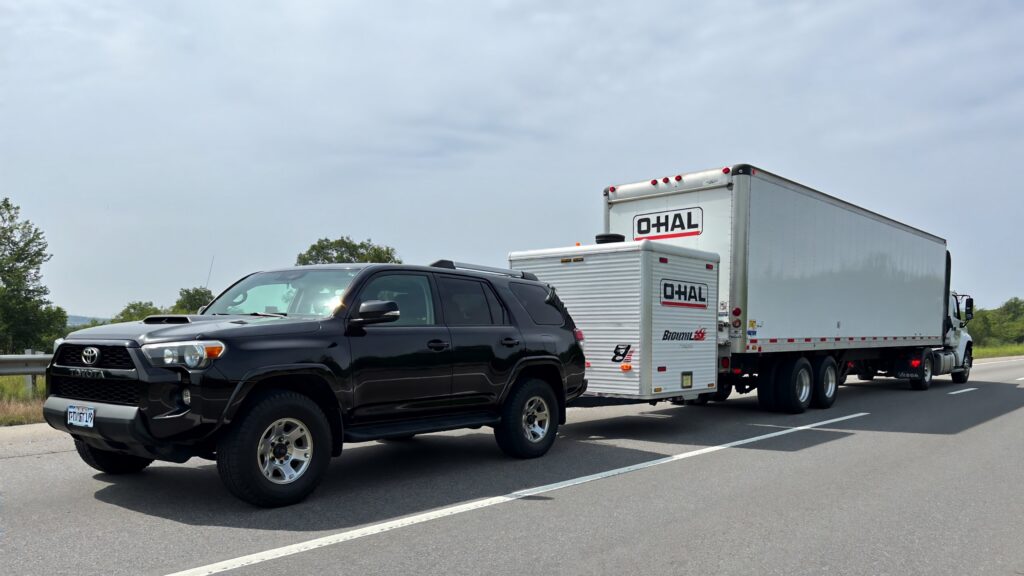
A routine afternoon commute on State Route 92 turned deadly this week when a Toyota 4Runner towing a U-Haul trailer collided with a 30-foot box truck near Industrial Boulevard in Hayward. The crash, which occurred around 3:54 p.m. on the westbound approach to the San Mateo-Hayward Bridge, claimed the life of the SUV’s driver, who was ejected from the vehicle after not wearing a seatbelt.
The unrestrained driver was transported to a local hospital, where they later died from injuries sustained in the collision. As is common in cases involving passenger vehicles and large commercial trucks, the disparity in size and weight between the 4Runner and the box truck likely played a significant role in the severity of the impact.
What We Know About the SR-92 Crash
While the full investigation is still underway, early details point to several factors that will likely shape any legal claims arising from this collision:
- The crash occurred on westbound SR-92, a heavily traveled commuter corridor that funnels traffic toward the San Mateo-Hayward Bridge
- The Toyota 4Runner was towing a U-Haul trailer at the time of the collision, which can affect vehicle handling, braking distance, and stability
- The driver of the SUV was not wearing a seatbelt and was ejected during the crash
- The other vehicle involved was a 30-foot box truck, a commercial vehicle that may be subject to additional regulations under California and federal trucking law
- The crash occurred during the height of the Bay Area afternoon commute, a time when SR-92 traffic near the bridge approach is typically heavy and slow-moving
Investigators will need to determine which driver, if either, violated the right-of-way rules or otherwise acted negligently in the moments leading up to the crash. Towing a trailer significantly alters a vehicle’s braking and maneuvering capabilities, and this will likely be an important factor in reconstructing the collision.
Understanding Liability in Bay Area Truck Collisions
Under California Civil Code Section 1714, every person is responsible for injuries caused by their failure to exercise ordinary care. This applies equally to the driver of a passenger vehicle and the driver of a commercial box truck. When a commercial vehicle is involved, however, additional layers of potential liability often come into play, including the truck driver’s employer, the trucking company that owns the vehicle, and any maintenance or leasing companies involved.
Commercial truck accident cases often require a deeper investigation than those involving typical passenger vehicles. Attorneys may need to review driver logs, company safety records, vehicle maintenance history, and whether the truck driver was operating in compliance with federal hours-of-service regulations at the time of the crash.
The fact that the SUV driver was not wearing a seatbelt does not eliminate the other driver’s potential liability if they were negligent, but it may become a factor that insurance companies raise during settlement negotiations. California follows a pure comparative negligence system, meaning a victim’s compensation can be reduced by their percentage of fault, but it is not automatically barred.
Wrongful Death Claims Under California Law
When a crash results in a fatality, surviving family members may have the right to pursue a wrongful death claim under California Code of Civil Procedure Sections 377.60 and 377.30. These statutes allow certain surviving family members, including spouses, domestic partners, children, and in some cases parents or other dependents, to seek compensation for the losses they’ve suffered as a result of their loved one’s death.
Wrongful death damages in California can include:
- Loss of financial support that the deceased would have provided
- Loss of household services and contributions
- Funeral and burial expenses
- Loss of companionship, guidance, and comfort
- Medical expenses incurred prior to death
Families generally have two years from the date of death to file a wrongful death claim under California’s statute of limitations, though certain circumstances can affect this deadline. Because evidence in truck accident cases can disappear quickly, including electronic logging device data, dash cam footage, and skid mark evidence, it’s important to act promptly to preserve what’s available.
In some cases, a wrongful death claim may be filed alongside a separate survival action. While a wrongful death claim compensates family members for their own losses, a survival action allows the deceased’s estate to recover damages the victim could have claimed had they survived, such as pain and suffering endured between the time of the crash and the time of death, along with any medical expenses incurred during that window.
These two types of claims are legally distinct, and the personal representative of the estate, who is often, but not always, the same person eligible to bring the wrongful death claim, may need to be formally appointed by the probate court before a survival action can proceed.
Because multiple family members may have overlapping or competing rights to bring a wrongful death claim, California law generally encourages eligible heirs to file jointly in a single action whenever possible, which helps avoid disputes over how any eventual settlement or award is divided.
How Wrongful Death Settlements Are Calculated
Insurance companies and attorneys often use one of two methods to help estimate the value of a wrongful death claim:
The Multiplier Method: This approach takes the total of the deceased’s calculable losses, such as lost future income, medical bills, and funeral costs, and multiplies that figure by a number typically ranging from 1.5 to 5, depending on the severity of the case and the strength of the liability evidence. A case involving clear negligence by a commercial truck company, for instance, may justify a higher multiplier.
The Per Diem Method: Less commonly used in fatality cases, this method assigns a specific dollar value to each day the family will experience loss of companionship, support, or guidance, then multiplies that figure across an estimated timeframe, such as the deceased’s expected remaining lifespan.
Neither method produces a guaranteed number, and insurance companies often start with lowball offers. An experienced wrongful death attorney can help ensure that all applicable damages are accounted for before any settlement is accepted.
Beyond the multiplier and per diem methods, the actual value of a wrongful death settlement often hinges on documentation that the family may not immediately think to gather. Pay stubs, tax returns, and employment records help establish the deceased’s earning trajectory, which matters significantly if the victim was early in their career or expected future raises and promotions.
Age, health, and life expectancy prior to the crash also factor heavily into these calculations, since a claim involving a younger victim with decades of remaining working life will typically be valued differently than one involving an older individual.
Insurance adjusters will scrutinize all of this closely, and they may attempt to undervalue non-economic losses like companionship and guidance since these damages are inherently harder to quantify than lost wages. Working with an attorney who understands how to properly document and present these harder-to-quantify losses, often through testimony from family members, friends, or even economic experts, can make a meaningful difference in the final settlement amount.
Wrongful Death Settlement Calculators and How They Help Estimate Case Value
A wrongful death settlement calculator is a tool that helps families and attorneys arrive at a preliminary estimate of a claim’s value before negotiations with an insurance company begin. These calculators typically ask for inputs such as the deceased’s age, annual income, remaining work-life expectancy, funeral and burial costs, medical expenses incurred before death, and the number and relationship of surviving family members filing the claim.
Using this information, the calculator applies a version of the multiplier method, weighting the economic losses against the severity of the case and the strength of available liability evidence, to produce a rough dollar range. While these tools can be useful for setting initial expectations and understanding how different factors influence a claim’s value, they cannot account for the nuances that often matter most.
These include the quality of the evidence against the at-fault party, comparative negligence issues, applicable insurance policy limits, and emotional testimony that can strengthen a claim for loss of companionship and guidance.
For this reason, a settlement calculator should be treated as a starting point for conversation rather than a final answer, and families are best served by reviewing their specific circumstances with an experienced wrongful death attorney who can identify damages a generic calculator may overlook entirely. Call us now at +1-866-218-3776 to speak with the experts.
Injured or Lost a Loved One? We’re Here to Help
“When a family loses someone in a crash like this one, the pain is immediate and overwhelming. I’ve spent more than 40 years representing families across California who never expected a routine drive home would end in tragedy. If you’ve lost a loved one in this collision, please know that you don’t have to face the insurance companies or navigate the legal process alone. Our team is here to help you understand your rights, hold the responsible parties accountable, and pursue the compensation your family deserves during this incredibly difficult time.”- Andy Gillin, GJEL Accident Attorneys
If you or someone you love was affected by this crash or another traffic collision in the Bay Area, GJEL Accident Attorneys is here to help. With over $950 million recovered for our clients and more than 40 years of experience representing accident victims across California, our team understands what your family is going through and what it takes to build a strong case.
We work on a contingency fee basis, which means you pay nothing unless we win your case. Call us today at +1-866-218-3776 for a free, no-obligation consultation, or visit our Concord office to learn more about how we can help.
Local Resources for Hayward Crash Victims and Families
California Highway Patrol – Hayward Area Office
This office investigates traffic collisions on SR-92 and other state highways in the area, including this crash.
2434 Whipple Road, Hayward, CA 94544
(510) 489-1500
chp.ca.gov
St. Rose Hospital
The closest full-service hospital to the crash location is providing 24-hour emergency care to the Hayward community.
27200 Calaroga Avenue, Hayward, CA 94545
(510) 264-4000
strosehospital.org
Alameda County Superior Court – Hayward Hall of Justice
Handles civil and family law matters for cases arising in the Hayward area.
24405 Amador Street, Hayward, CA 94544
(510) 690-2700
alameda.courts.ca.gov
If a crash with a box truck or another commercial vehicle on SR-92 or I-880 has hurt you or someone in your family, our Hayward truck accident lawyers can explain how a claim against the carrier works and which records have to be preserved in the first days. Families who lost someone can read how our Hayward wrongful death lawyers handle a fatal crash claim. The conversation is free.