Last updated July 17, 2026
A quiet Monday evening in Newark turned tragic when a 34-year-old woman and her small dog were struck and killed by a vehicle near the intersection of Cedar Boulevard and Joaquin Murieta Avenue. The victim has since been identified by the Alameda County Coroner’s Office. She was a Newark-area resident whose evening walk with her beloved companion ended in unimaginable tragedy.
Fatal pedestrian accidents like this one are not isolated incidents — California consistently ranks among the most dangerous states in the nation for people on foot, with the Alameda County corridor seeing its share of preventable collisions each year. The victim was only 34 years old, with her whole life ahead of her, and the loss of both her and her dog in a single moment reflects the devastating and irreversible consequences that can follow a single moment of driver negligence. Her death is a devastating reminder of the dangers pedestrians face on California roads — and of the legal rights her family may have in seeking accountability and compensation.
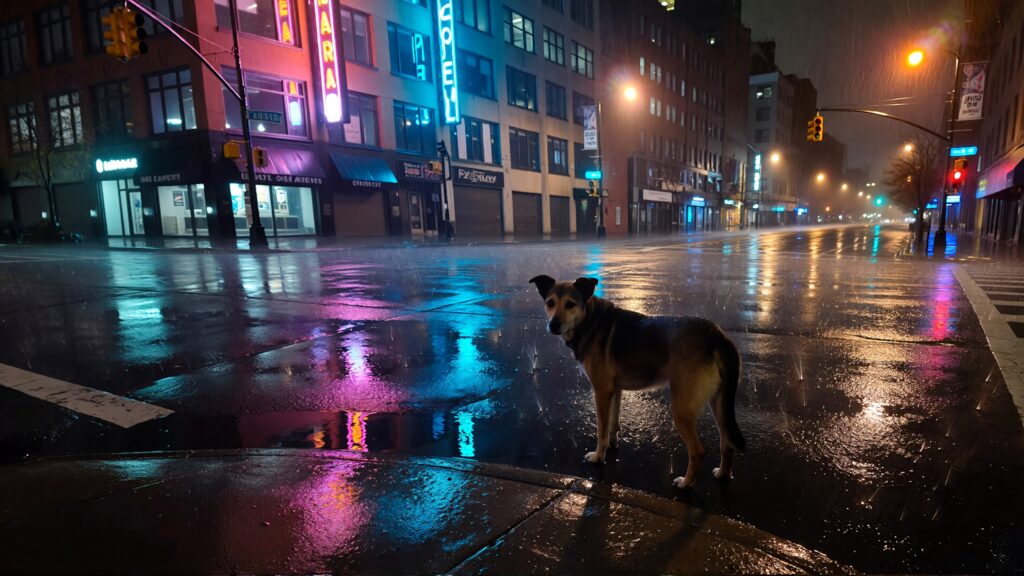
What Happened on the Fatal Pedestrian Accident
The Newark Police Department reported that officers and Alameda County Fire Department personnel responded at approximately 8:11 p.m. to the area of Cedar Boulevard and Joaquin Murieta Avenue to investigate a traffic collision involving a vehicle and a pedestrian. First responders located an unconscious woman and a small dog in the roadway and provided aid, but both succumbed to their injuries.
The driver remained at the scene and is cooperating with investigators. The cause of the collision has not yet been determined, and Newark police said it is not known at this time whether driving under the influence was a factor. The investigation remains active and ongoing.
The intersection of Cedar Boulevard and Joaquin Murieta Avenue sits within a mixed residential and commercial stretch of Newark — a city of roughly 50,000 residents in southern Alameda County, bordered by Fremont to the south and east and the shores of San Francisco Bay to the west.
Cedar Boulevard is one of Newark’s primary arterial roadways, carrying steady vehicle traffic through neighborhoods where residents regularly walk, jog, and spend time outdoors with their pets in the evening hours. At 8:11 p.m. in mid-March, daylight had already faded, reducing visibility for both drivers and pedestrians and placing an even greater burden on motorists to slow down, stay alert, and watch for pedestrians.
The circumstances of exactly how the victim and her dog came to be struck — whether in a crosswalk, along the shoulder, or elsewhere near the intersection — remain part of the active investigation. What is known is that a young woman set out for an ordinary evening with her dog and never came home, and that her family now faces the unthinkable task of rebuilding their lives in her absence. Authorities are asking anyone who witnessed the collision or has information relevant to the investigation to contact the Newark Police Department.
California Law and Pedestrian Rights
Under California Civil Code §1714, every person has a legal duty to exercise ordinary care to prevent harm to others. Drivers are held to that standard at all times — and particularly so in residential and mixed-use corridors like Cedar Boulevard, where pedestrian traffic is foreseeable.
California Vehicle Code §21950 further mandates that drivers yield the right-of-way to pedestrians in crosswalks, and requires all motorists to exercise due care for the safety of any pedestrian, regardless of location. When a driver’s failure to meet this standard results in death, surviving family members may have the right to pursue legal action under California’s wrongful death statute (CCP §377.60).
If alcohol or drug impairment is ultimately determined to be a factor in the crash, the driver may face not only civil liability, but also criminal exposure under Vehicle Code §23153 — California’s DUI causing injury or death statute. In the most serious cases, courts have applied the Watson murder doctrine, under which a driver with prior DUI knowledge can be charged with second-degree murder for a fatal DUI crash.
California law also imposes specific obligations on drivers regarding conditions that predictably reduce visibility and reaction time. Under Vehicle Code §22350 — California’s Basic Speed Law — no person shall drive a vehicle at a speed greater than is reasonable or prudent given the conditions present at the time, including darkness, traffic, and the width and character of the roadway.
This means that even if a driver was traveling at or below the posted speed limit on Cedar Boulevard, they could still be found negligent if the circumstances — diminished evening light, a residential corridor with known foot traffic, the presence of a pedestrian and her dog — demanded a slower, more cautious approach.
California courts have consistently held that the duty of care owed to pedestrians is among the highest recognized in personal injury law, reflecting the profound physical vulnerability of pedestrians when confronted with the force of a moving vehicle. In a fatal pedestrian case, attorneys will scrutinize every available piece of evidence.
This includes event data recorder readouts, tire marks, sight-line measurements, and cellphone records — to determine whether the driver met or fell short of the legal standard of care required under California law. If the evidence establishes that the driver failed in that duty, the victim’s family has a viable and potentially strong path to civil recovery.
Wrongful Death Claims and Who Can File
Under CCP §377.60, the following individuals may be eligible to file a wrongful death claim in California:
- A surviving spouse or domestic partner
- Children of the deceased
- Any person who was financially dependent on the decedent
The victim was only 34 years old. The loss of her future earnings, companionship, and support represents an enormous harm to those who loved her. A wrongful death claim allows her family to seek compensation for funeral and burial expenses, loss of financial support, loss of love and companionship (consortium), and the emotional pain of losing a family member.
It is worth understanding how the wrongful death claims process typically unfolds in California, so that the victim’s family knows what to expect if they choose to pursue legal action. Once a claim is filed, the attorney will conduct a thorough independent investigation — separate from the ongoing police inquiry — to establish the full facts of the collision.
This includes obtaining the official crash report, reviewing any available surveillance or traffic camera footage from the Cedar Boulevard corridor, interviewing eyewitnesses, and potentially engaging an independent accident reconstruction expert to determine vehicle speed, point of impact, and whether the driver had adequate time and distance to avoid the collision.
If a DUI factor is ultimately confirmed, the criminal case running parallel to the civil claim can serve as powerful supporting evidence in the wrongful death action. Insurance coverage will also be examined closely — the at-fault driver’s liability policy, any underinsured motorist coverage available to the victim’s family, and, where applicable, the potential liability of third parties such as government entities responsible for roadway lighting, signage, or signal maintenance at the Cedar Boulevard and Joaquin Murieta Avenue intersection.
Throughout this process, the family is kept informed and supported, with no financial burden placed on them until a settlement or verdict is reached. California’s statute of limitations for wrongful death claims is two years from the date of death under CCP §335.1. Acting promptly helps preserve critical evidence — surveillance footage, skid marks, vehicle data, and witness accounts can disappear quickly after a crash.
Understanding a Pedestrian Accident Settlement
There is no universal formula for what a pedestrian fatality case is worth, but attorneys typically use two approaches to calculate damages:
The multiplier method totals all economic damages — medical bills, lost income, funeral costs — and multiplies that figure by a number between 1.5 and 5, depending on the severity and permanence of the harm. In fatal crashes involving young victims, multipliers tend toward the higher end of the range.
The per diem method assigns a daily dollar value to pain and suffering from the date of the incident through the victim’s projected life expectancy — an approach that can result in substantial sums when the victim is in their thirties, as the victim was.
Beyond these two calculation methods, it is important to understand the full categories of damages that may be available to the victim’s family. Economic damages — those with a concrete dollar value — can include the cost of emergency medical treatment rendered at the scene, funeral and burial expenses, and the present value of all future income and benefits the victim would have earned over her working life.
Non-economic damages, while harder to quantify, are equally valid under California law and encompass the loss of her love, companionship, comfort, care, and moral support that her family members will carry the weight of for the rest of their lives. In cases where the driver’s conduct is found to have been especially reckless — for instance, if toxicology results confirm impairment.
California courts may also consider punitive damages, which are designed not to compensate the victim’s family but to punish particularly egregious behavior and deter others from similar conduct in the future.
Comparative fault rules under California Civil Code §1714 could affect the final amount if investigators determine the pedestrian shared any degree of responsibility for the collision. However, California is a pure comparative fault state, meaning recovery is not barred even if fault is shared — it is simply reduced proportionally.
How a Wrongful Death Settlement Calculator Can Help Families Estimate the Value of Their Claim
In the aftermath of a devastating loss like the death of the victim, one of the most pressing questions families face is a deeply practical one: What is this case worth, and how will compensation be determined? While no dollar figure can ever truly account for the loss of a loved one, California law provides a structured framework for quantifying damages, and wrongful death settlement calculators serve as a useful starting point for families trying to understand the potential financial scope of their claim before they sit down with an attorney.
A wrongful death settlement calculator is an estimating tool — available through many personal injury law firm websites, including gjel.com — that allows surviving family members to input key variables about their loved one and receive a general range of potential compensation. The core inputs typically include the victim’s age at the time of death, their annual income and expected career trajectory, the number and ages of surviving dependents, the estimated cost of funeral and burial expenses, and the presence or absence of aggravating factors such as driver impairment.
Because the victim was only 34 years old and likely had decades of earning potential ahead of her, these figures can translate into a substantial projected compensation range even before non-economic damages are factored in. It is important to understand, however, that settlement calculators provide estimates — not guarantees.
They are most valuable as an educational tool that helps families walk into their first legal consultation with a baseline understanding of what types of damages exist and how they are typically weighted. The true value of a wrongful death claim in California is shaped by a wide range of factors that no online calculator can fully account for: the specific liability evidence gathered during the investigation, the insurance policy limits held by the at-fault driver, the skill and experience of the attorney negotiating on the family’s behalf, and whether the case ultimately proceeds to trial or is resolved through settlement.
Experienced wrongful death attorneys like those at GJEL will conduct a far more precise and comprehensive damages analysis — one that draws on decades of case history, expert economic testimony, and an intimate knowledge of how Alameda County juries and courts have valued similar losses in the past. Used correctly, a wrongful death settlement calculator is not a replacement for legal counsel.
It is a first step toward understanding that the loss your family has suffered has real, measurable, and legally recoverable value. The victim’s family deserves to know that California law is on their side, that the legal system provides meaningful recourse in situations like this one, and that a seasoned legal team is ready to fight to ensure that every available dollar of compensation is pursued on their behalf.
Taking the First Step Toward Justice
“The death of the victim and her beloved dog on a simple evening walk is the kind of tragedy that stops you cold. At 34 years old, she had so much life ahead of her, and the pain her family is carrying right now is something no one should ever have to bear. As an accident attorney who has spent more than 40 years representing families in exactly these circumstances, I want the victim’s loved ones to hear this clearly: you have rights, and you do not have to face this alone. The investigation is still ongoing, and the evidence that exists right now — on that street corner, in that vehicle, on nearby cameras — will not last forever. Please do not wait. Let us step in, protect your rights, and handle every aspect of the legal process while you focus on grieving and healing. Our firm has recovered over $980 million for California families, and we will bring that same relentless commitment to yours. The consultation is free, there is no fee unless we win, and the first call costs you nothing, because the victim’s family deserves justice, and we are here to help you fight for it.” — Andy Gillin, Managing Partner, GJEL Accident Attorneys
At GJEL Accident Attorneys, we have spent more than 40 years standing beside families who have experienced exactly this kind of sudden, preventable loss. We have recovered over $980 million for injured Californians and the families of those who did not survive.
When we take a pedestrian fatality case, we act immediately — preserving evidence, obtaining police reports, engaging accident reconstruction experts, and identifying every potential source of liability and insurance coverage. We handle everything so that grieving families can focus on healing rather than paperwork and legal deadlines.
At GJEL, we ensure that all evidence is properly preserved and that all potential sources of compensation are thoroughly investigated, allowing families to focus on healing. Talk to an experienced GJEL accident attorney for a free legal consultation. Contact us at +1-866-218-3776 or visit our Concord office.
Local Resources for Newark and Alameda County Crash Victims
Families affected by the Cedar Boulevard crash or other Alameda County traffic collisions can reach out to the following agencies and services for support, documentation, and legal guidance:
Newark Police Department 8277 Cedar Blvd, Newark, CA 94560 (510) 578-4237 www.newarkca.gov/departments/police
Alameda County Fire Department 1399 Wicklow Way, Dublin, CA 94568 (925) 833-3473 www.acgov.org/fire
Alameda County Coroner’s Bureau 6701 Foothill Blvd, Oakland, CA 94605 (510) 618-3500 www.acgov.org/sheriff/coroner
Alameda County Superior Court (Fremont Courthouse) 39439 Paseo Padre Pkwy, Fremont, CA 94538 (510) 891-6000 www.alameda.courts.ca.gov
California Highway Patrol — Fremont Area 4501 Peralta Blvd, Fremont, CA 94536 (510) 489-1500 www.chp.ca.gov
Washington Hospital Healthcare System (regional trauma care) 2000 Mowry Ave, Fremont, CA 94538 (510) 797-1111 www.whhs.com