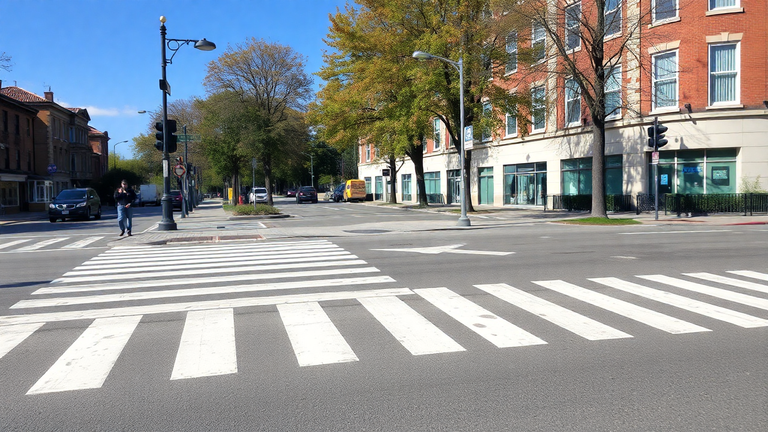
A woman has died after a vehicle collision on Saturday evening, October 17, at the intersection of El Dorado Street and Park Street in Stockton’s Civic District. The Stockton Police Department says officers responded at approximately 7:40 p.m. and found one of the drivers unresponsive. The female driver was taken to a local hospital, where she later died of her injuries.

What We Know and What Remains Unclear
Many questions are still unanswered. Police have not said how many vehicles were involved, which directions they were traveling, or what role traffic signals, visibility, speed, or driver behavior may have played. Fatal collision investigations often take weeks or months, and early information can change as investigators gather evidence.
Families who wait for official answers should know that important evidence may disappear in the meantime. Investigators have also not said whether the other driver or any passengers were hurt, whether any citations or charges are being considered, or whether factors such as speed, impairment, or distraction are part of the inquiry.
Until those details come out, it would be unfair to draw conclusions about who may have been at fault. In fatal collision investigations, officers typically document the scene, interview witnesses, and examine the vehicles, and a reconstruction can take weeks or longer to complete.
Because the crash happened in a busy downtown area, nearby businesses, public buildings, and passing drivers may have recorded video that could help explain what happened. Anyone who saw the collision or has footage from that evening is encouraged to contact the Stockton Police Department, and the victim’s family should be given time and space to grieve while the facts are established.
Why Intersection Collisions Are So Dangerous
Intersections are among the most hazardous places on California roads because vehicles cross paths from several directions at once. Red-light running, failure to yield on a left turn, distracted driving, and speeding all raise the risk of a serious crash. Evening hours add reduced visibility and driver fatigue.
California law requires every driver to use reasonable care. Under Civil Code §1714, people are generally liable for injuries caused by their failure to exercise ordinary care. Vehicle Code provisions on right-of-way at intersections, obeying traffic signals, and driving at a safe speed help define what that duty looks like on the road. When a driver breaks these rules and someone dies, the family may have grounds for a civil claim.
The way a crash happens at an intersection also helps explain why the injuries are so often severe. When two vehicles meet from opposite directions, the impact often occurs on the side, where a car offers far less protection to its occupants than in a head-on or rear-end collision. There is little room for the crumple zones and seat belts to absorb the force, and the driver’s side door can be directly in the path of the other vehicle.
Drivers also have only a split second to judge the speed and distance of oncoming traffic, and that window shrinks further when someone speeds up to beat a yellow light, turns left across traffic, or looks away from the road.
Downtown intersections add to the challenge with heavy traffic, pedestrians, parked cars that block sightlines, and a steady stream of signals and signs competing for attention. When a driver makes one wrong decision in that environment, the consequences can be devastating for everyone involved.
Wrongful Death Claims Under California Law
When a person dies because of someone else’s wrongful act or negligence, California law lets certain family members seek compensation. Code of Civil Procedure §377.60 identifies who may file a wrongful death action, including the surviving spouse, domestic partner, children, and others who depended on the person financially.
These claims can include funeral and burial costs, loss of financial support, loss of household services, and loss of love, companionship, comfort, and guidance. A separate survival action under Code of Civil Procedure §377.30 allows the decedent’s estate to recover losses the person suffered before death, such as medical expenses and lost earnings.
A single fatal crash can support both kinds of claims. Because the victim in this case was a woman who had not yet been publicly identified, it is not yet known who her surviving family members are or which of them may be eligible to bring a claim. California law is specific about who may file.
Under Code of Civil Procedure §377.60, a wrongful death action may be brought by the surviving spouse or domestic partner, the children, and the children of any deceased child, or, if none of them survive, by those who would inherit the decedent’s property under California’s intestate succession rules.
Putative spouses, stepchildren, and parents may also file if they were financially dependent on the person who died. The decedent’s personal representative can also file on behalf of the heirs. The claim is meant to compensate the family for what the death has taken from them, and it is separate from any compensation owed for what the decedent herself went through.
Recoverable losses can include the financial support she would have provided, the value of the care and household services she contributed, the loss of her love, companionship, and guidance, and reasonable funeral and burial expenses.
Since more than one relative may be entitled to recover, and the court ultimately divides any award among the eligible heirs, it is important for families to understand their rights early, before insurance companies begin contacting them to request statements.
Fault, Shared Responsibility, and Possible Public Liability
California follows a pure comparative fault system, so a person’s recovery is reduced by their percentage of fault rather than barred. This matters in intersection cases, where insurers often argue the victim shared the blame. A thorough investigation, including signal timing, surveillance or dashcam footage, vehicle data, and witness statements, is often needed to answer that argument.
In some cases, the condition of the roadway itself contributes to a crash. If a dangerous condition of public property, such as a malfunctioning signal, obscured signage, or a poorly designed intersection, played a role, Government Code §835 may allow a claim against a public entity. Those claims carry short deadlines.
A government claim for wrongful death or personal injury generally must be presented within six months of the incident, far shorter than the standard period. Determining fault in a fatal intersection crash is rarely as simple as it first appears, and more than one party can share responsibility.
In this case, investigators have not said whether either driver is believed to have violated a traffic law, so the question of fault remains open. California’s pure comparative fault rule allows a jury to assign each person a percentage of responsibility, and a family’s recovery is reduced only by the share of fault assigned to the person who died.
Insurance companies know this, and they often look for any detail suggesting the victim contributed to the crash, which makes independent evidence especially valuable. Beyond the drivers themselves, other parties may bear responsibility depending on what the investigation shows.
If a driver was working at the time of the collision, an employer may be liable for that driver’s negligence, and a vehicle or equipment failure can point toward a manufacturer or a maintenance provider. Public liability may also come into play.
Under Government Code §835, a public entity can be held responsible when a dangerous condition of its property, such as a malfunctioning signal, faded markings, an obstructed sightline, or a poorly designed intersection, contributed to a crash and the entity knew or should have known about the problem and failed to fix it.
Claims against a city, county, or other public agency must first be presented through a formal government claim, and the deadline is generally six months from the date of the incident.
Because that window closes long before the standard two-year filing period, families who suspect that road conditions played a role should speak with an attorney as soon as possible, while evidence such as signal records, maintenance logs, and prior complaints can still be preserved.
Understanding How Wrongful Death Settlements Are Valued
Families often ask how a wrongful death claim is valued. No two cases are alike, and no outcome can be promised, but attorneys commonly use two frameworks to estimate damages. The multiplier method totals economic losses, such as funeral costs, medical bills, and lost income, and multiplies that figure to account for non-economic harm, such as loss of companionship.
The multiplier depends on factors such as the strength of the evidence and the severity of the loss. The per diem method assigns a daily dollar value to the suffering and loss a family endures and projects it over a relevant period. These methods are starting points for negotiation, not guarantees. The final value depends on liability, available insurance coverage, and the family’s specific circumstances.
Valuing a wrongful death claim means putting a number on losses that can never truly be replaced, and the process considers both the financial and human sides of the loss. Economic damages are the more concrete portion and include funeral and burial costs, any medical expenses incurred before death, and the income, benefits, and household contributions the person would likely have provided over the rest of her working life and beyond.
An economist or vocational expert is often brought in to project those figures, taking into account her age, health, career path, and life expectancy. Non-economic damages are harder to measure and cover the family’s loss of love, companionship, comfort, and guidance.
Under the multiplier method, the total economic losses are multiplied by a number that reflects the severity of the loss, the closeness of the family relationships, and the strength of the liability evidence. Under the per diem method, a daily dollar amount is assigned to the family’s grief and loss and then projected across the relevant period, such as the years the decedent would have remained part of their lives.
Attorneys often run both calculations and compare the results to test whether a proposed figure is reasonable. Neither method is a formula that guarantees a particular outcome. The final value depends on how clearly fault can be proven, how much the other side shares in the blame, how much insurance coverage is available, and whether other responsible parties can be identified.
Families should be cautious about accepting an early offer from an insurance company, since those offers often arrive before the full extent of the losses and the full picture of liability are understood.
Time Limits Families Should Know
Under Code of Civil Procedure §335.1, wrongful death and personal injury actions in California generally must be filed within two years of the date of injury or death. Cases involving a government entity follow the much shorter claim deadline described above. Missing either deadline can permanently end a family’s right to recover, which is why early legal guidance matters even while the grieving process is just beginning.
Time limits are among the most important and least understood aspects of a wrongful death case, and they begin running whether or not a family is ready to consider legal action. Under Code of Civil Procedure §335.1, a wrongful death lawsuit in California generally must be filed within two years of the date of death, which in this case would be measured from October 17.
A survival action brought on behalf of the estate is subject to the same general period. When a public entity may share responsibility, the timeline is much shorter. A government claim must usually be presented to the city, county, or agency within six months of the incident, and the entity then has a set period to accept or reject it.
If the claim is rejected, the family generally has only six months from the date the rejection notice is mailed to file suit. California does allow an application to present a late claim in limited circumstances, but it must be made within a year of the incident, and the request can be denied. Missing any of these deadlines can permanently bar a family from recovering, no matter how strong the case might otherwise have been.
Evidence is also working against the clock, since surveillance footage is often overwritten within days or weeks, vehicle data can be lost once a car is repaired or salvaged, and witness memories fade. Speaking with an attorney early does not commit a family to filing a lawsuit. It simply protects their options while they take the time they need to grieve.
Wrongful Death Settlement Calculators and How They Help Estimate Case Value
A wrongful death settlement calculator is an online tool that gives families a rough starting estimate of what a claim might be worth. Most calculators work by asking for the same kinds of information an attorney would use. These typically include funeral and burial costs, medical bills incurred before death, the decedent’s age and annual income, and an estimate of how many working years she had left.
The tool then applies a method such as the multiplier or per diem approach. In the multiplier method, economic losses are totaled and multiplied by a factor reflecting the severity of the loss, while the per diem method assigns a daily value to the family’s loss and projects it over a set period.
Seeing those numbers laid out can help a grieving family understand how damages are structured and which losses are legally recoverable, and it can make a first conversation with an attorney more productive. It also gives families a reference point when an insurance company makes an early offer that seems too low.
A calculator has limits, however. It cannot account for disputed fault, shared responsibility under California’s comparative fault rule, the limits of available insurance coverage, or the strength of the evidence, all of which can move a final settlement well above or below an automated estimate.
The figure a calculator produces should be treated as an educational starting point and never as a guarantee or prediction of how a case will actually resolve. An experienced wrongful death attorney can refine that estimate by reviewing the full set of facts, consulting economists and other experts as needed, and building a valuation grounded in the specific circumstances of the family’s loss. Call us now at 1-855-508-9565 to speak with the experts.
How GJEL Accident Attorneys Can Help
“Losing someone you love in an instant, or being hurt in a crash you never saw coming, changes everything, and no one should have to face that alone. In the days after a collision like this one, you may feel pressure to speak with insurance adjusters or sign paperwork before you understand your rights. Please don’t. Evidence such as surveillance footage and vehicle data can disappear quickly, and California’s deadlines are strict, so early guidance helps protect your options. If you or someone you love has been affected by this crash, our team is here to listen, answer your questions, and handle the legal burden so you can focus on healing. There is no cost to speak with us, and we only get paid if we win your case.” – Andy Gillin, Managing Partner at GJEL Accident Attorneys
GJEL Accident Attorneys has spent more than 40 years representing families across California and has recovered over $950 million for clients. Our team thoroughly investigates fatal crashes, works to preserve critical evidence, and handles insurance companies and the legal process so families do not have to. We work on a contingency fee basis, which means you pay nothing unless we win your case.
If you have lost a loved one in a collision in Stockton or anywhere in California, call GJEL Accident Attorneys at 1-855-508-9565 or visit the Sacramento office for a free, confidential consultation. We are here to listen, to answer your questions, and to help you understand your options.
Local Resources for Those Affected
Stockton Police Department. The Stockton Police Department is the agency investigating this collision. Its official page includes non-emergency contact information, the Records Section, and instructions for submitting a request, and it is the best place to start to obtain a copy of the collision report once it is available: https://stocktonca.gov/services/police_department/. Anyone who saw the crash or has video from the evening of October 17 can call the department’s non-emergency line at (209) 937-8377.
City of Stockton Public Works, Traffic Engineering Division. This division is responsible for the city’s traffic signals, signs, pavement markings, and speed studies. Its page explains how the city manages signal timing and reviews intersection safety, which is useful for families who want to understand how an intersection is designed and maintained: https://www.stocktonca.gov/services/public_works/traffic_engineering.php.
San Joaquin County Office of the Medical Examiner. This office investigates sudden and unexplained deaths in the county, identifies the deceased, notifies next of kin, and determines the cause and manner of death. Its main page lists contact information, and its FAQ page explains what families can expect, including how to obtain a copy of the Medical Examiner report and how personal property is released: https://www.sjgov.org/department/hcs/departments/ome and https://sjgov.org/department/hcs/departments/ome/faqs. The office can be reached at (209) 468-4300.
San Joaquin County District Attorney, Victim-Witness Services. Victim advocates provide crisis support, help with questions during an investigation, and assistance for victims and witnesses if a criminal case is filed. The main page is https://sjgov.org/da/victim-witness-services, and a separate directory of victim resources, including victim notification services, is at https://sjgov.org/department/da/victim-witness-services/victim-resources. The Victim/Witness Program line listed there is (209) 468-2500.