Last updated September 9, 2026
A woman suffered non-life-threatening injuries Saturday afternoon after an electric unicycle collision while crossing the Great Highway in San Francisco, according to the San Francisco Police Department. The collision occurred around 4:21 p.m. near the intersection of Lawton Street, along the stretch of the Great Highway that has been closed to vehicle traffic and repurposed as the Sunset Dunes park and promenade.
Witnesses said the woman was crossing the roadway while pushing a stroller carrying a young child, accompanied by the child’s grandmother and a small dog on a leash, when an electric unicyclist collided with her. The rider reportedly estimated he was traveling around 25 miles per hour at the time of impact and told a bystander that the dog’s leash crossed into his path.
Only the woman was reported injured in the collision; she was described as being in significant pain before being transported for medical treatment. This incident highlights growing safety concerns along San Francisco’s car-free promenades, where pedestrians, cyclists, and riders of electric micromobility devices increasingly share space without the traditional separation afforded by a roadway.
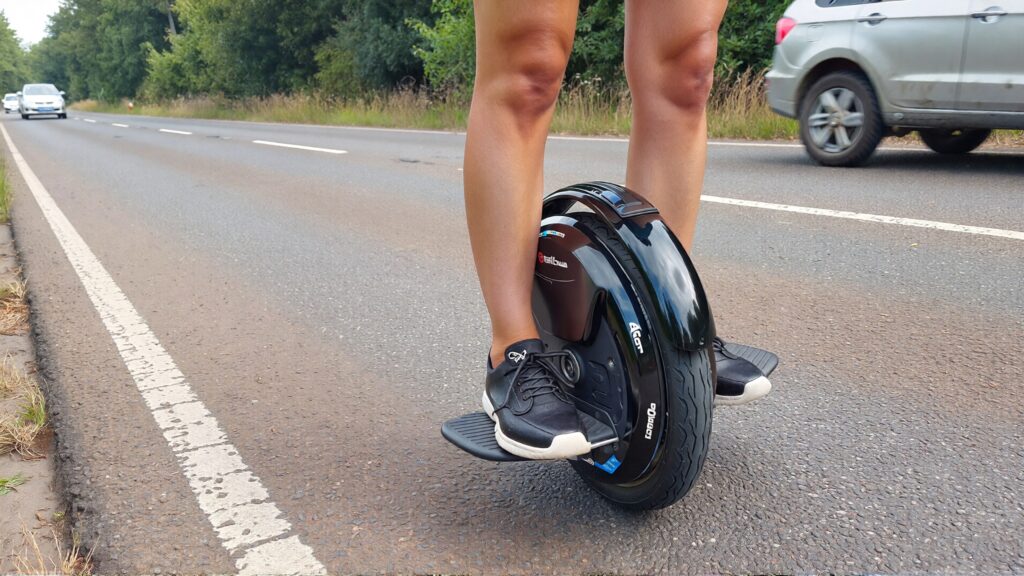
What We Know About the Great Highway Collision
According to reports, the collision took place on a section of the Great Highway that was permanently closed to automobile traffic following the passage of Measure K, a San Francisco ballot measure that converted the Upper Great Highway into an oceanfront park now known as Sunset Dunes.
While the closure was designed to make the corridor safer for walkers, joggers, and cyclists, the area has also become popular with riders of electric unicycles, e-scooters, and other motorized personal mobility devices, some of which can reach speeds far exceeding a comfortable walking pace.
In this case, the woman was reportedly crossing the promenade with her family when the unicyclist struck her. She was described as suffering non-life-threatening injuries but was in visible pain at the scene. The rider also reportedly sustained injuries in the collision.
Pedestrian Right-of-Way and Liability for Electric Mobility Device Collisions
Under California law, pedestrians generally have the right of way over other forms of traffic, including bicycles and motorized personal transportation devices, particularly in areas designed for pedestrian use.
Riders of electric unicycles, e-scooters, and similar devices owe pedestrians a duty of reasonable care under California Civil Code §1714, which establishes that everyone is responsible for injuries caused by a failure to exercise ordinary care. When a rider operates a motorized device at a speed that does not allow them to safely react to pedestrians, cyclists, or other obstacles in a shared space, that rider may be held liable for resulting injuries.
Comparative negligence can also become a factor in these cases. California follows a pure comparative negligence rule, meaning that even if a pedestrian or bystander bears some fault, such as a leash extending into a rider’s path, an injured party may still recover damages reduced by their own percentage of fault.
Determining fault in these collisions often requires a careful review of witness statements, the rider’s speed and control over the device, sightlines in the area, and whether either party violated any posted rules governing conduct in a shared-use area like Sunset Dunes.
Injured parties in California generally have two years from the date of the incident to file a personal injury lawsuit under the statute of limitations found in Code of Civil Procedure §335.1. Waiting too long to pursue a claim can result in the permanent loss of the right to recover compensation, which is why prompt legal consultation is important even when injuries initially appear minor.
Calculating a Settlement for a Pedestrian-Unicycle Collision
Settlement values in pedestrian accident cases involving electric mobility devices depend on several factors, including the severity of the injury, the length and cost of medical treatment, lost wages, and the degree of pain and suffering endured. Attorneys typically use one of two methods, or sometimes both, to estimate the value of non-economic damages, such as pain and suffering.
The multiplier method multiplies a victim’s economic damages, such as medical bills and lost income, by a number generally ranging from 1.5 to 5, depending on the severity and permanence of the injury. More severe or long-lasting injuries typically justify a higher multiplier.
The per diem method instead assigns a specific dollar value to each day the victim experiences pain and disruption to daily life, then multiplies that daily rate by the number of days the person is expected to suffer from the injury, including recovery time.
Because every case involves unique facts, from the nature of the injury to the strength of available evidence, these methods provide a starting point for negotiation rather than a guaranteed outcome. An experienced personal injury attorney can help evaluate medical records, wage documentation, and comparative fault issues to pursue a fair settlement.
Understanding Pedestrian Accident Settlement Calculators
A pedestrian accident settlement calculator is a tool that helps injured victims and their attorneys arrive at a preliminary estimate of what a claim may be worth by organizing the key financial and personal factors involved in a case. These calculators typically total economic damages, such as emergency room visits, ongoing physical therapy, prescription costs, and lost wages, and then apply either the multiplier method or the per diem method to estimate non-economic damages, such as pain and suffering.
By inputting details such as the severity of the injury, expected recovery time, degree of fault on each side, and total medical expenses, a settlement calculator can produce a reasonable range rather than a single fixed number, since every case depends on its own facts and evidence. While these tools offer a helpful starting point for understanding potential compensation, they cannot account for the nuances an experienced attorney considers.
These include issues such as how a defendant’s insurance company may argue comparative fault, the strength of available witness statements, and how a jury might view the long-term impact of an injury on a victim’s daily life. For that reason, a settlement calculator should be treated as an educational resource rather than a substitute for a full case evaluation from a personal injury attorney familiar with California law. Call us now at +1-866-218-3776 to speak with the experts.
Take Action Today – Get the Help You Deserve
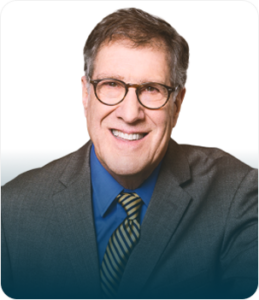
“Getting hit while crossing the street with your family should never happen, especially in a space that was supposed to be safer for pedestrians. If you’ve been hurt in a collision like this, please don’t just assume it’s a minor mishap you have to shoulder on your own. Get checked out by a doctor right away, even if you feel like you can walk it off, because injuries from these impacts don’t always show themselves immediately. Then talk to an attorney before you speak with any insurance company. You deserve to understand your rights and what your recovery might actually cost you, physically and financially. Our firm has spent over 40 years standing up for people in exactly this situation, and we do it on contingency, so it costs you nothing to find out where you stand. You’ve been through enough. Let us carry the legal weight so you can focus on healing.” – Andy Gillin, Managing Partner, GJEL Accident Attorneys
If you or someone you love was hurt by an electric unicycle, e-scooter, or any other vehicle on the Great Highway, Sunset Dunes, or anywhere in San Francisco, you don’t have to face the medical bills, lost wages, and uncertainty alone. GJEL Accident Attorneys has spent over 40 years fighting for injured Californians and their families, recovering more than $950 million along the way.
We work entirely on a contingency fee basis, which means you pay nothing upfront and owe us nothing at all unless we win compensation for you. There’s no financial risk in finding out where you stand, only the risk of waiting too long to act. Call us today at +1-866-218-3776 or visit our Sacramento office for a free, no-obligation consultation.
Local Resources for Accident Victims
San Francisco Police Department – Taraval Station
The Taraval Station covers the Sunset and Parkside neighborhoods, including the Great Highway and Sunset Dunes corridor. Contact this station to request a copy of the incident report or to follow up on an ongoing investigation.
Address: 2345 24th Avenue, San Francisco, CA 94116
Phone: (415) 759-3100
Non-Emergency Line: (415) 553-0123
Website: sanfranciscopolice.org/stations/taraval-station
San Francisco Municipal Transportation Agency (SFMTA) – Vision Zero SF
SFMTA oversees traffic safety policy, street design, and the City’s Vision Zero initiative, which aims to eliminate traffic deaths and severe injuries on San Francisco streets, including shared-use corridors like the Great Highway/Sunset Dunes promenade. Their site includes information on reporting unsafe conditions, current street safety projects, and data on high-injury corridors.
Website: sfmta.com/vision-zero-sf
General Contact: sfmta.com/getting-around/report-problem
San Francisco County Transportation Authority (SFCTA)
SFCTA funds and plans traffic safety improvements citywide, including projects addressing conflicts between pedestrians and micromobility device riders on the Vision Zero High Injury Network.
Website: sfcta.org/policies/vision-zero
Zuckerberg San Francisco General Hospital and Trauma Center
The city’s only Level I trauma center, where many serious traffic-related injuries in San Francisco are treated. Contact for medical records related to treatment following an accident.
Address: 1001 Potrero Avenue, San Francisco, CA 94110
Phone: (628) 206-8000
Medical Records: (628) 206-4432
Website: zuckerbergsanfranciscogeneral.org
Superior Court of California, County of San Francisco – Civic Center Courthouse
Handles civil personal injury filings for accidents occurring within San Francisco County.
Address: 400 McAllister Street, San Francisco, CA 94102
Phone: (415) 551-4000
Website: sf.courts.ca.gov
California Department of Motor Vehicles (DMV)
Required for filing an SR-1 collision report in certain cases involving injury, and for accessing driving record information relevant to a claim.
Website: dmv.ca.gov
Walk San Francisco
A pedestrian safety advocacy organization that tracks traffic-related injuries and fatalities citywide and advocates for safer street design, including on the Great Highway/Sunset Dunes corridor.
Website: walksf.org
The Great Highway carries fast moving traffic alongside pedestrian and cycling routes. Our San Francisco car accident lawyers handle collisions across the city, including claims involving scooters and other micromobility vehicles. Call (415) 986-4777 for a free case review.