Put your health first
Get emergency or follow-up medical care when you need it. Keep the discharge papers, visit summaries, bills, and instructions you receive. Injuries are not always obvious at the scene.

Free case review
Seriously hurt in a California car crash? Since 1972, GJEL Accident Attorneys has recovered more than $980 million for injured Californians with a 99% success rate in the cases we accept. Our trial lawyers handle every insurer conversation, preserve crash evidence early, and work on contingency, so you pay no fee unless and until we win.
4.9 on Google · 400+ reviews
A lawyer will personally review your case and call you shortly.
We’ll call from a local number and tell you when to expect us.
Every accident is different, but these five points shape many California injury claims:
You do not have to sort out every rule before you call. A GJEL lawyer can review the facts, identify questions that need answers, and explain the next step.
Get emergency or follow-up medical care when you need it. Keep the discharge papers, visit summaries, bills, and instructions you receive. Injuries are not always obvious at the scene.
Keep photos, video, the other driver’s information, witness names, the police or CHP report number, and letters from insurers. Do not repair or dispose of important evidence until you understand what may be needed.
An early offer or release can end a claim before the full effect of an injury is known. You can ask a lawyer what the paperwork means before you agree to anything.
A clear conversation comes first
Your case review is free and there is no obligation. GJEL works on a contingency-fee basis. You pay no fee unless and until we win. If the firm offers representation, the fee agreement explains the percentage, case costs, and how they are handled before you decide.
Since 1972
GJEL has represented injured Californians since 1972. The firm has recovered more than $980 million for injured Californians and has a 99% success rate across the cases it takes on.
Our lawyers and staff build the record an insurer must answer. That may include preserving vehicle and video evidence, reviewing police reports, identifying available insurance, documenting the effect of an injury, and preparing a case for negotiation or litigation when appropriate. You should be able to ask who will handle your case and who will return your calls.
GJEL has 17 offices across the Bay Area, Northern California, and the Central Valley. We handle eligible cases statewide and can meet at home or in the hospital when needed.
Every case is different. The following are published examples from cases GJEL handled, not a promise about your case. Past results do not guarantee a similar outcome.
A teenage passenger suffered a serious shoulder and nerve injury in an Alameda County accident. The published case study describes disputed facts, minor vehicle damage, four surgeries, and permanent nerve damage before the $1.1 million settlement.
Read the published resultA married couple was injured when their vehicle was pushed into other traffic on I-680. The published case involved several insurers and an out-of-state dissolved employer, and reports a combined $1 million settlement for the couple.
Read the published resultThe published case involved rear-end accidents in San Francisco and Benicia seven months apart. The insurers disputed which accident caused parts of the client’s medical expenses and wage loss before the $515,000 result.
Read the published resultAfter a Highway 24 accident in Oakland, the insurer questioned whether the impact caused the client’s concussion symptoms. GJEL’s published case study describes investigation and accident-reconstruction work before the $300,000 settlement.
Read the published resultTwo vehicles entered the client’s lane on I-680. The insurer initially questioned the injuries and made an early offer. The published case study reports a $275,000 settlement after the evidence and treatment information were developed.
Read the published resultA motorist struck a stopped Caltrans truck on I-580 near Castro Valley and suffered a traumatic brain injury and other harm. The published case study describes an initial denial of responsibility and a $250,000 settlement.
Read the published resultA rear-end impact pushed the client’s vehicle through an intersection, causing seven spinal compression fractures and time away from work. The published case study reports a $250,000 settlement after a lawsuit and depositions.
Read the published resultKnow the rules
California fault rules, updated minimum liability limits, and strict filing windows shape how much an injured driver, passenger, or family can recover after a serious crash.
| California Rule or Statute | Standard Requirement | Why It Matters for Your Claim |
|---|---|---|
| Minimum Auto Liability Limits (SB 1107 / Ins. Code § 11580.1b) | $30,000 per person / $60,000 per crash bodily injury; $15,000 property damage | Applies to policies issued or renewed on or after January 1, 2025; serious injuries still frequently exceed minimum limits. |
| Pure Comparative Fault (Civ. Code § 1714 / CACI No. 405) | Damages reduced only by your proven percentage of fault | Insurers often try to shift partial blame onto injured motorists to discount medical and wage-loss payouts. |
| Personal Injury Lawsuit Deadline (CCP § 335.1) | 2 years from the date of the crash (general rule) | Missing the civil statute of limitations permanently bars courtroom recovery against private drivers and companies. |
| Government Entity Tort Claim (Gov. Code § 911.2) | 6 months from injury to present an administrative claim | Applies when Caltrans, a city bus, a police or municipal vehicle, or a dangerous public road contributed to the crash. |
| Uninsured & Underinsured Motorist (Ins. Code § 11580.2) | Matches your liability limits unless waived in writing | Covers hit-and-run crashes (with physical contact, 24-hour police report, and 30-day statement) and underinsured drivers. |
| DMV Accident Report Form SR-1 (CVC § 16000) | Within 10 days of any injury, death, or >$1,000 damage | Required in addition to any CHP or city police collision report; failing to file can trigger license suspension. |
The driver may not be the only responsible party. Depending on the facts, a vehicle owner may have limited statutory responsibility when someone was driving with permission. An employer, rideshare or delivery company, public entity, contractor, or product maker may also be involved. California’s comparative-fault rule can divide responsibility among several people or organizations, including an injured person.
Read California’s permissive-use rulePayment may come from the responsible driver’s liability policy, another party’s policy, or uninsured or underinsured motorist coverage. Rideshare coverage depends on the driver’s status in the app. From acceptance through completion of a ride, California requires $1 million in primary liability coverage. While a passenger is in the vehicle, current law requires $60,000 per person and $300,000 per incident in passenger uninsured and underinsured motorist coverage.
Read California’s rideshare insurance ruleA claim may include medical expenses, future treatment and care, lost income, reduced earning ability, vehicle or property damage, and pain, disability, or other noneconomic harm. There is no reliable formula for a serious-injury case. The result depends on the injuries, recovery outlook, effect on work and daily life, evidence of fault, available insurance, and the people or organizations legally responsible.
Useful evidence may include scene and injury photos, police or CHP reports, 911 records, witness information, video, vehicle data, phone or app records, medical records, bills, wage records, and the damaged vehicles or parts. A traffic-law violation can create a rebuttable presumption of negligence only when every condition in Evidence Code § 669 is met. A ticket or police report does not decide a civil case by itself.
Read California’s negligence presumption ruleCalifornia generally allows two years from the injury to file a personal-injury lawsuit. A claim against a city, county, transit agency, Caltrans, or another public entity generally must be presented within six months. For a bodily-injury uninsured-motorist claim involving an unknown driver, California generally requires physical contact, a law-enforcement report within 24 hours, and a sworn statement to the insurer within 30 days. Exceptions can change these rules, so ask promptly which deadline applies.
Learn about California filing deadlinesCrash scenarios we investigate
Different collision patterns trigger different liability statutes, electronic evidence, and insurance layers across California freeways and city corridors.
High-speed chain-reaction crashes on I-80, I-580, I-880, I-680, US-101, I-5, and SR-99 often involve disputed impact order and multiple insurers blaming the car ahead. We download airbag control module data and reconstruct each impact.
Rear-end car accident claimsDrivers running red lights (CVC § 21453) or turning left across oncoming traffic without a safe gap (CVC § 21801) cause severe side-impact trauma. Signal phase logs and nearby business cameras help defeat word-versus-word denials.
Pain and suffering in CA car crashesWhen a driver carries only California's $30,000 minimum policy or flees the scene, we pursue household UM/UIM coverage, permissive-use owner liability (CVC § 17150), and employer or commercial policies.
Underinsured motorist lawyersUnmarked construction drop-offs, missing guardrails, sightline obstructions, and roof-crush or seatback failures can turn a single-car loss of control into a multi-defendant roadway or product defect case.
SUV rollover accident lawyersCrashes involving an active Uber or Lyft trip unlock up to $1 million in commercial liability coverage under Public Utilities Code § 5433, while Amazon, FedEx, and fleet vans bring corporate employer Policies into play.
California Uber & Lyft crash lawyersWhen a negligent, distracted, or impaired driver takes a family member's life, surviving heirs can pursue wrongful death and survival claims under CCP § 377.60 and § 377.30 with calm, trial-ready representation.
Fatal car accident claims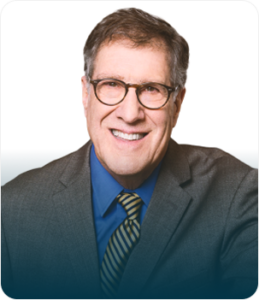
Meet founding partner
Andy Gillin co-founded GJEL in 1972. Learn more in his GJEL profile.
View Andrew Gillin’s profileGJEL handles serious-injury car accident cases throughout California, with 17 offices across the Bay Area, Silicon Valley, Sacramento, and the Central Valley. Start with the local page for the city where the crash happened:
General information, not legal advice
Content updated November 15, 2026.
This page provides general information, not legal advice. The law and the facts of a particular accident can change the answer.
Not every minor fender-bender requires a lawyer. Speaking with a California car accident lawyer is important when you have emergency treatment, fractures, head or spinal symptoms, missed work, disputed fault, a commercial or government vehicle, or an insurance offer that will not cover ongoing care. GJEL's case review is free.
Under Senate Bill 1107 (Insurance Code section 11580.1b), California's standard minimum auto liability limits increased on January 1, 2025 to $30,000 for bodily injury or death to one person, $60,000 per accident for two or more people, and $15,000 for property damage. When hospital bills exceed those limits, GJEL investigates employer policies, commercial coverage, roadway defects, and your own underinsured motorist (UIM) policy.
California follows pure comparative fault under Civil Code section 1714. Even if you share a percentage of responsibility, you can still recover compensation reduced by your assigned share. Because insurers use comparative fault to cut settlement offers, preserving dashcam video, Event Data Recorder downloads, and independent witness statements early matters.
California Code of Civil Procedure section 335.1 generally gives injured adults two years from the crash date to file a personal injury lawsuit. However, if a city, county, transit agency, or Caltrans may be responsible, Government Code section 911.2 generally requires a formal administrative claim within six months. Unknown-driver uninsured motorist claims also carry strict 24-hour police-report and 30-day insurer-notice rules.
Yes. California Vehicle Code section 16000 requires drivers (or their lawyer or insurer) to submit Form SR-1 to the DMV within 10 days whenever a crash in California causes any injury, death, or property damage above $1,000, even if CHP or local police wrote a traffic collision report.
Your own Uninsured/Underinsured Motorist (UM/UIM) policy can pay medical bills, lost wages, and pain and suffering when an at-fault driver flees or lacks enough coverage. For a hit-and-run UM bodily-injury claim under Insurance Code section 11580.2, California requires physical contact with the vehicle, a police report within 24 hours, and a statement to your insurer within 30 days.
You have no obligation to give a recorded statement to the other driver's insurance adjuster, and signing an early release closes your claim permanently even if an MRI later shows a herniated disc or concussion. Have a lawyer review the policy limits and medical outlook before signing anything.
Nothing upfront. GJEL handles California car accident cases on a contingency fee basis, meaning we advance litigation costs and you pay no attorney fee unless and until we win compensation for you.
Free, confidential, no obligation
Tell us what happened. A GJEL lawyer can review your situation, explain your options, and tell you honestly whether the firm can help. Free, confidential, no obligation. No fee unless and until we win.
Call (415) 986-4777Call NowA lawyer will personally review your case and call you shortly.
We’ll call from a local number and tell you when to expect us.