A 66-year-old Vacaville woman lost her life early Sunday morning in a devastating wrong-way DUI head-on crash after a suspected drunk driver traveled the wrong way on Interstate 505. The tragedy underscores the catastrophic and often preventable consequences of impaired driving, and it has left a family and community searching for answers in the aftermath of an entirely avoidable loss.
How the Wrong-Way DUI Head-On Crash Unfolded
The collision occurred at approximately 12:40 a.m. on southbound I-505, just south of Putah Creek Road. California Highway Patrol dispatchers first learned of the crash via an automated iPhone crash-detection alert before a wave of incoming calls confirmed the incident involved multiple vehicles. That combination of automated technology and human witnesses helped first responders arrive quickly at a scene that investigators would soon determine was far more serious than a routine collision.
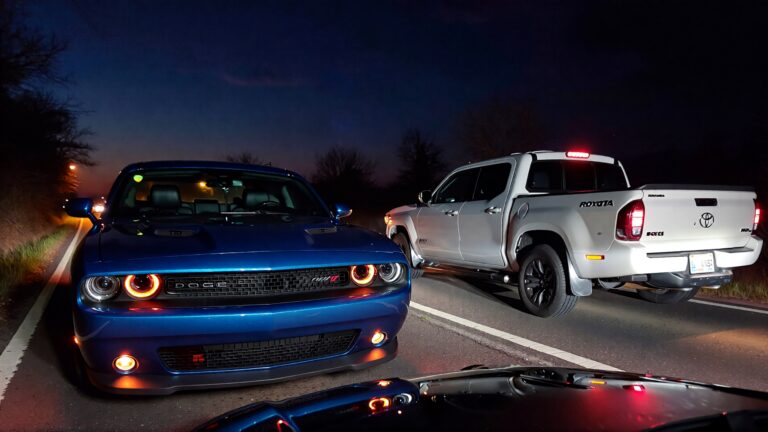
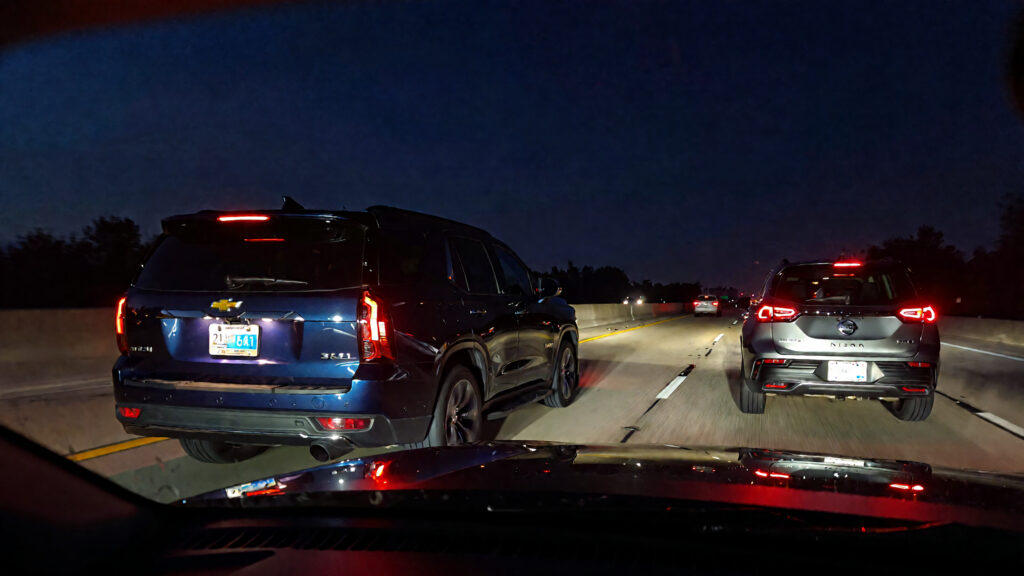
According to CHP’s preliminary investigation, a 45-year-old Vallejo man driving a 2021 Chevrolet Tahoe missed his intended exit and made a U-turn on the freeway. Investigators believe that due to a high level of suspected intoxication, the driver mistakenly believed he was on a two-way county road rather than a divided freeway. He then proceeded northbound directly into the southbound lanes of traffic, setting the stage for a head-on collision with a 2026 Nissan Kicks traveling in the correct direction.
The driver and sole occupant of the Nissan, the 66-year-old Vacaville woman, was pronounced dead at the scene. The force of a head-on impact between vehicles traveling in opposite directions on a freeway is almost always catastrophic, and wrong-way crashes consistently rank among the deadliest categories of collision on California roadways, specifically because neither driver has a meaningful opportunity to react or avoid the impact.
The driver of the Tahoe, also the sole occupant of his vehicle, sustained only minor injuries. He was taken into custody at the scene on suspicion of felony driving under the influence and will be booked into the Solano County Jail once he is medically cleared. Three additional vehicles sustained damage after striking debris that scattered across the roadway following the initial impact, a reminder that the danger from a crash of this magnitude often extends well beyond the vehicles directly involved.
Emergency Response and Roadway Closure
Southbound traffic on I-505 was diverted at Putah Creek Road while CHP officers investigated the scene and worked to clear debris and wreckage from the roadway. The freeway was fully reopened to traffic at approximately 4:20 a.m., roughly three and a half hours after the initial 911 calls came in.
The CHP Solano Area office has since issued a renewed reminder to motorists about the severe and often irreversible consequences of driving under the influence, and it is asking anyone with additional information about the crash to come forward. The lengthy closure, while disruptive to overnight travelers, reflects the thoroughness required when a fatal collision involves a wrong-way driver and a debris field spanning multiple lanes.
Investigators typically need to document skid marks, vehicle positioning, and impact points before any wreckage can be moved, since this evidence is often critical in both criminal prosecution and subsequent civil litigation. Solano County dispatchers also had to coordinate with tow operators and Caltrans crews to safely clear the additional vehicles damaged by roadway debris.
This process that can take considerably longer than a standard two-vehicle crash. For drivers who found themselves detoured that night, the inconvenience of a diversion is a small price compared to the alternative of encountering a wrong-way vehicle head-on, and it illustrates why CHP prioritizes a complete and careful scene investigation over a faster reopening.
Understanding Wrong-Way DUI Collisions Under California Law
Wrong-way crashes caused by impaired drivers raise both criminal and civil legal questions that operate on separate tracks. On the criminal side, a suspected DUI resulting in death can lead to charges ranging from felony DUI to vehicular manslaughter or even murder under California’s Watson murder rule, depending on the driver’s prior record and the specific facts developed during the investigation.
On the civil side, the surviving family of a victim killed in a crash like this one may pursue a wrongful death claim independent of whatever happens in criminal court, since the standard of proof and the purpose of each proceeding are fundamentally different.
California Civil Code Section 1714 establishes the basic legal duty every driver owes to operate a vehicle with reasonable care and to avoid causing injury to others, a duty that is unambiguously violated when someone chooses to drive after drinking.
When a driver’s intoxication and subsequent decision to travel the wrong way on a freeway cause a fatal collision, that conduct typically satisfies the negligence, and often the recklessness, required to support both compensatory and punitive damages in a civil action.
California Code of Civil Procedure Section 377.60 allows specific surviving family members, including a spouse, domestic partner, or children, to bring a wrongful death claim to recover for the loss of their loved one.
A related provision, CCP Section 377.30, allows a decedent’s estate to pursue a survival action for damages the victim would have been entitled to recover had she survived, such as pain and suffering experienced between the moment of impact and death.
Both of these claims are subject to California’s statute of limitations under CCP Section 335.1, which generally requires a wrongful death lawsuit to be filed within two years of the date of death, though certain circumstances can affect that timeline, making it important for families to consult an attorney promptly rather than assume they have unlimited time to act.
Because the crash also involved three additional vehicles struck by roadway debris, comparative fault principles under California’s pure comparative negligence doctrine may apply if any dispute arises over contributing factors. Under this doctrine, a party can recover damages even if partially at fault, with any recovery reduced in proportion to their own share of responsibility.
Given the facts described here, however, the evidence points overwhelmingly toward the wrong-way driver bearing primary responsibility for the collision and its ripple effects.
Calculating the Value of a Wrongful Death Claim
Attorneys evaluating a wrongful death claim typically rely on one of two established methodologies to help quantify non-economic damages such as loss of companionship and emotional suffering. The multiplier method takes the total of a family’s economic damages, including funeral and burial expenses, lost financial support, and lost household services, and multiplies it by a factor that reflects the severity of the loss and the strength of the supporting evidence.
The per diem method instead assigns a specific dollar value to each day the surviving family members are expected to endure the loss of their loved one’s companionship and support, then multiplies that daily figure across a calculated life expectancy. Neither method produces an automatic number, and both require a detailed, case-specific analysis of the family’s circumstances, the decedent’s earning capacity, and the strength of the liability evidence.
Economic damages in a case like this can include the decedent’s lost future income and benefits, the value of household services she would have provided, and funeral and burial costs.
Non-economic damages account for the loss of love, companionship, comfort, and guidance that a surviving spouse, children, or other qualifying family members will no longer receive. When the underlying conduct involves DUI, punitive damages may also be available in the civil case to punish especially reckless behavior and deter similar conduct in the future.
Wrongful Death Settlement Calculators and How They Help Determine Compensation
Families grieving the sudden loss of a loved one often want to understand, as early as possible, what a wrongful death claim might realistically be worth, and this is where settlement calculators can offer a helpful starting point.
These tools take the multiplier and per diem methodologies described earlier and translate them into a more tangible estimate by combining a family’s documented economic losses, such as the decedent’s projected lifetime earnings, lost benefits, and funeral expenses, with an assessment of the non-economic harm suffered, including the loss of companionship, guidance, and emotional support that the family will never fully recover.
A wrongful death settlement calculator applies these inputs against comparable case outcomes and jury verdict data to produce a preliminary range rather than a guaranteed figure, since no two families’ circumstances and no two juries are ever identical.
The real value of a settlement calculator lies not in delivering a precise number but in providing grieving families with a realistic framework for evaluating whether an insurance company’s initial offer reflects the true scope of their loss, which matters enormously because insurers frequently open negotiations with lowball figures designed to resolve claims quickly and cheaply.
An experienced wrongful death attorney uses these calculations as a starting point, then refines them further by weighing case-specific factors such as the decedent’s age and health, the strength of the liability evidence, the defendant’s insurance coverage limits, and whether the underlying conduct, such as driving while intoxicated, may support an award of punitive damages.
For a family already navigating profound grief, having a clear and defensible estimate of what their claim may be worth can relieve at least one source of uncertainty during an already overwhelming time. Call us now at 1-855-508-9565 to speak with the experts.
Taking the First Step Toward Justice
“No family should have to receive a phone call telling them that a loved one was killed by a driver who chose to get behind the wheel after drinking. Wrong-way crashes are among the most senseless tragedies we see, precisely because they are entirely preventable. Our hearts go out to this woman’s family, and we want them to know that pursuing accountability through the civil justice system is not about vengeance. It’s about making sure the responsible party, and not the victim’s family, bears the financial burden of this tragedy.” – Andy Gillin, GJEL Accident Attorneys
At GJEL Accident Attorneys, we understand that no legal action can undo the loss of a loved one, but we also know that families deserve answers and financial security in the wake of a preventable tragedy caused by someone else’s decision to drive drunk.
With over $950 million recovered for our clients and more than 40 years of experience handling catastrophic and fatal accident cases across California, our firm is prepared to thoroughly investigate this crash, hold the responsible driver accountable, and pursue every available avenue for compensation on behalf of the surviving family.
We work on a contingency fee basis, which means families pay nothing upfront and owe us nothing unless we recover compensation on their behalf. If you have lost a loved one in this crash or a similar wrong-way DUI collision, call us today at 1-855-508-9565 or visit our San Jose office to schedule a free, no-obligation consultation.
Local Resources and Agency Contacts
For families and community members seeking more information about this crash or general roadway safety in Solano County, the following agencies and organizations can provide direct assistance:
California Highway Patrol, Solano Area Office — The investigating agency for this collision, responsible for traffic enforcement and crash investigations across Solano County’s freeways, including I-505, I-80, and I-680. Visit https://www.chp.ca.gov/find-an-office/golden-gate-division/365-solano/ for office hours, contact information, and additional traffic safety resources.
Solano County Sheriff’s Office — Oversees countywide law enforcement, custody operations, and coroner’s services, including the Justice Center Detention Facility where the suspect is being held. Visit https://www.solanocounty.gov/government/sheriff-coroner for inmate information, booking status inquiries, and victim services.
Vacaville Police Department — The local law enforcement agency for the victim’s home city, offering crime reporting tools, victim resources, and community support services. Visit https://www.cityofvacaville.gov/government/police-department for department contacts, online reporting, and the Family Resource Center.
California Department of Transportation (Caltrans), District 4 — Manages highway infrastructure, roadway signage, and traffic incident data for the greater Bay Area and Solano County, including I-505. Visit https://dot.ca.gov/caltrans-near-me/district-4 for current road conditions, closures, and infrastructure safety information.
Solano County Behavioral Health Services — Provides crisis counseling and mental health support for families coping with sudden traumatic loss. Visit https://www.solanocounty.gov/depts/mhs for program details and access line information.
Mothers Against Drunk Driving (MADD), California — A national nonprofit offering victim advocacy, court accompaniment, and support groups specifically for families affected by drunk driving crashes. Visit https://www.madd.org/california/ for victim services, local chapter contacts, and resources on navigating the DUI criminal justice process.
California DMV, Office of Traffic Safety — Publishes statewide DUI enforcement data, public safety campaigns, and information on driver’s license consequences following a DUI arrest. Visit https://www.ots.ca.gov for statistics and prevention resources.
Solano County Superior Court — Handles the criminal proceedings against the driver and publishes case information, court dates, and the countywide bail schedule. Visit https://www.solano.courts.ca.gov for case lookup tools and courtroom information.