Two elderly pedestrians were seriously injured in a hit-and-run crash on the night of Wednesday, October 7, 2026, after a driver struck them in a crosswalk in Berkeley and fled the scene. According to the Berkeley Police Department, officers responded at around 9:00 p.m. to the intersection of University Avenue and Eighth Street.
Officers who arrived at the scene found a 78-year-old man and a 75-year-old woman with serious injuries, and Berkeley Fire Department personnel transported both of them to a hospital. Police said a preliminary investigation indicated the pair were crossing University Avenue in the eastern crosswalk when a dark-colored sedan traveling eastbound struck them.
The driver did not stop to help or wait for officers, and police had no description of the driver or further details about the vehicle in the immediate aftermath. KTVU reported that police described both pedestrians as being in critical condition. For the families of the victims, the hours after a crash like this are often defined by uncertainty, as they wait for updates from doctors while investigators work to identify the person responsible.
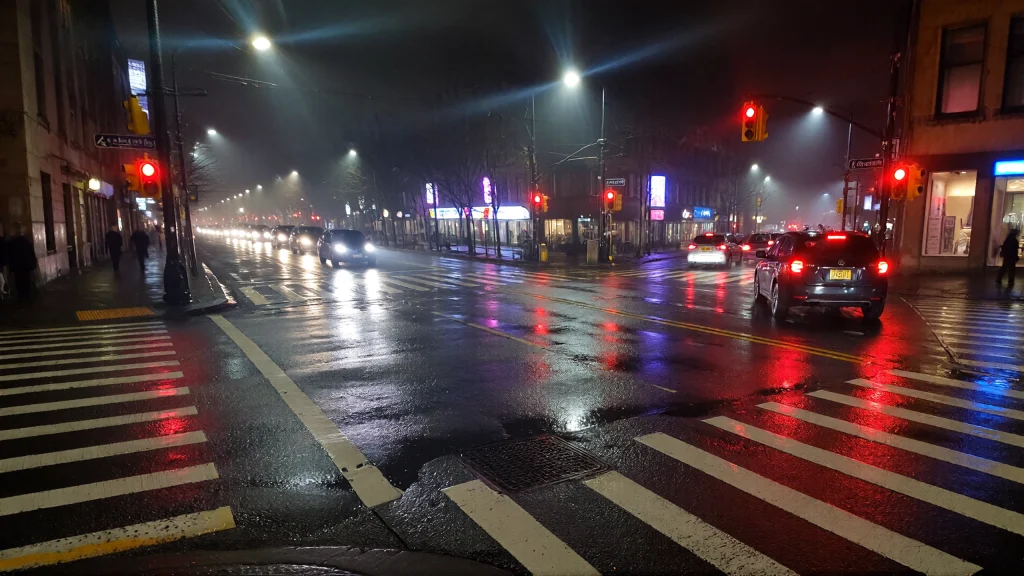
What Police Say Happened
Officers arrived to find a 78-year-old man and a 75-year-old woman suffering from serious injuries. Berkeley Fire Department personnel transported both pedestrians to a hospital. KTVU reported that police described the pair as being in critical condition.
A preliminary investigation indicated that the pair were crossing University Avenue in the eastern crosswalk when a dark-colored sedan traveling eastbound struck them. Police said the driver fled before officers arrived. No further information about the driver or the vehicle was immediately available, and the investigation remains ongoing.
Many details about the crash remain unknown, and police have not released a description of the driver or any further identifying information about the dark-colored sedan. Investigators in hit-and-run cases commonly rely on surveillance footage from nearby businesses, traffic cameras, doorbell and dashcam video, and witness accounts to establish a timeline and trace the vehicle, and University Avenue is a busy corridor where such evidence may exist.
Because the crash happened around 9:00 p.m., when visibility is limited, even a partial description of the car, a piece of debris left at the scene, or a few digits of a license plate could help narrow the search. Police have asked anyone with information to contact the Berkeley Police Department traffic unit at 510-981-5980, and anyone who was in the area of University Avenue and Eighth Street on the night of October 7 may hold a detail that proves important. Authorities have not announced an arrest, and the case remains under active investigation.
Why Crosswalk Crashes Are So Dangerous for Older Pedestrians
A person on foot has no protection in a collision with a vehicle, and older adults are especially vulnerable. Bones are more fragile, recovery takes longer, and injuries that a younger person might survive with a short hospital stay can become life-altering for someone in their seventies. Fractures, head trauma, and internal injuries can lead to extended hospitalization, rehabilitation, and a permanent loss of independence.
California law places a clear duty on drivers in these situations. Under Vehicle Code §21950, a driver must yield the right-of-way to a pedestrian crossing in a marked or unmarked crosswalk. A driver who strikes a pedestrian must also stop, provide identifying information, and render reasonable assistance under Vehicle Code §20003. Leaving the scene of a crash that injures someone is a hit-and-run under Vehicle Code §20001, which can be charged as a felony or a misdemeanor depending on the circumstances.
Legal Options When the Driver Cannot Be Found
A hit-and-run does not mean the victims are left without recourse. When the driver is identified, injured pedestrians may pursue a personal injury claim under California Civil Code §1714, which establishes a general duty of reasonable care. If a loved one dies as a result of a crash like this, family members may bring a wrongful death action under Code of Civil Procedure §377.60, and the estate may pursue a survival action under §377.30 for the damages the person could have recovered had they lived.
When the driver is never found, other sources of compensation may be available. Many pedestrians can turn to the uninsured motorist coverage on their own auto policy, which in California can apply to hit-and-run collisions under Insurance Code §11580.2. These policies often carry notice and police-report requirements, so speaking with an attorney early matters. Victims of certain violent or felony crimes may also be eligible for help through the California Victim Compensation Board, which can assist with medical bills and related expenses.
Timing is critical. Most California personal injury claims must be filed within two years of the date of injury under Code of Civil Procedure §335.1. Claims involving a government entity, such as those involving a dangerous roadway condition, are subject to much shorter notice deadlines under Government Code §911.2.
How Fault Is Determined in California
California follows a pure comparative fault system, meaning an injured person can recover damages even if they were partly responsible, with the award reduced by their percentage of fault. In a case like this one, where the pedestrians were reportedly in a crosswalk, the facts point toward the driver. Even so, insurers sometimes try to shift blame onto the pedestrian. Surveillance footage, nearby traffic cameras, witness statements, and the vehicle’s damage patterns can all help establish what really happened.
Determining fault after a pedestrian crash in California starts with the question of who failed to act with reasonable care, and the answer often depends on the evidence gathered in the days after the collision. Under Vehicle Code §21950, drivers must yield the right-of-way to pedestrians in a crosswalk, and even when a pedestrian has some duty of care of their own, a driver is still required to exercise due care to avoid a collision.
California follows a pure comparative fault system, which means an injured person can recover compensation even if they are found partly responsible, with the award reduced by their percentage of fault. According to police reports so far, the two pedestrians were crossing in the eastern crosswalk when they were struck.
This points toward the driver, but insurers and defense attorneys sometimes still try to argue that a pedestrian was distracted, crossed against a signal, or was hard to see at night. Surveillance and traffic camera footage, witness statements, the signal timing at the intersection, and the damage and debris left by the vehicle can all help establish what actually happened and counter efforts to shift blame onto the victims. In a hit-and-run, where the driver has not yet been identified, preserving this evidence quickly is especially important because video is often overwritten within days and memories fade.
How Serious Injury Claims Are Valued
Insurance companies rarely offer fair value on their own, so it helps to understand how claims are evaluated. The multiplier method starts with documented medical expenses and lost income, then multiplies that figure, often by a number between one and five depending on the severity and permanence of the injuries, to account for pain and suffering.
The per diem method assigns a daily dollar amount to the pain and limitations a person experiences and multiplies it by the number of recovery days. As a purely hypothetical illustration, a daily value of $300 over a 400-day recovery would produce $120,000 in non-economic damages before any other losses are added.
For catastrophic injuries, these formulas are only a starting point. Future surgeries, long-term care, loss of independence, and reduced life expectancy can raise the value of a claim well beyond the early numbers. A thorough evaluation should account for what the next several years of care will actually cost.
How Hit-and-Run Settlement Calculators Help Estimate the Value of Your Claim
A hit-and-run settlement calculator is an online tool that gives injured victims a rough estimate of what their claim may be worth before they speak with an attorney or an insurance adjuster. Most calculators use the same building blocks as real claim evaluations.
The user enters economic damages, such as medical bills, future treatment costs, lost wages, and property damage, and the tool applies a method to account for non-economic damages, such as pain and suffering and loss of enjoyment of life.
The multiplier method takes the total economic losses and multiplies them by a factor, often between 1 and 5, depending on factors such as the severity and permanence of the injury. The per diem method assigns a daily dollar value to the pain and limitations a person experiences and multiplies it by the number of recovery days.
As a purely hypothetical example, $80,000 in medical bills and lost income multiplied by three would suggest about $240,000 in total value, while a $250 daily rate over a 300-day recovery would add $75,000 in non-economic damages to the economic losses. Running the numbers both ways gives victims a realistic range and helps them recognize when an early insurance offer falls far short of what their losses actually amount to.
In a hit-and-run, a calculator is useful for a second reason: it can help victims see how the source of compensation affects the numbers. When the driver is identified, the claim may be limited by that driver’s liability coverage, but when the driver is never found, compensation often comes from the victim’s own uninsured motorist coverage, which has policy limits that cap recovery.
A calculator can show whether the estimated value of a claim is likely to exceed those limits, which is important information when deciding how to proceed. It is important to remember that these tools produce estimates, not guarantees. They cannot account for disputed fault, gaps in treatment, pre-existing conditions, future surgeries, or the strength of the available evidence, all of which can move a claim’s value up or down.
For that reason, a calculator is best used as a starting point for understanding your claim, and an experienced California hit-and-run attorney can provide a far more accurate evaluation based on the full facts of your case. Call us now at 1-855-508-9565 to speak with the experts.
Speak With a California Pedestrian Accident Attorney
“Our hearts go out to the two people injured in this crash and to the families who are waiting for answers right now. When a driver strikes someone in a crosswalk and drives away, victims are often left feeling alone and unsure where to turn. If you or someone you love has been hurt in a hit-and-run, please know that you may still have options, even if the driver has not been found. Your own uninsured motorist coverage may apply, and evidence like surveillance video can disappear quickly, so it is important to act sooner rather than later. Focus on your health and your recovery, and let us handle the legal side.” – Andy Gillin, Managing Partner, GJEL Accident Attorneys
At GJEL Accident Attorneys, we have more than 40 years of experience representing people seriously hurt in pedestrian and hit-and-run collisions, and we have recovered over $950 million for our clients. We work on a contingency fee basis, which means you pay nothing unless we win your case. If you or a loved one was injured in a crash in Berkeley or anywhere in California, call us at 1-855-508-9565 or visit our Orinda office for a free consultation.
Local Resources for Berkeley Pedestrian Crash Victims
Berkeley Police Department: The Berkeley Police Department is the agency investigating this hit-and-run, and its Traffic Bureau handles collision investigations and enforcement of the California Vehicle Code within city limits. Witnesses and anyone with video of the crash can reach the Traffic Unit at 510-981-5980. Department information, divisions, and contact details are available at https://berkeleyca.gov/your-government/about-us/departments/police-department
Berkeley Police Department Records Unit: Victims and their representatives can request a copy of a police report from the Records Unit, which maintains the city’s official incident reports. Reports are important evidence for insurance and injury claims, and the page for requesting one can be reached from the main Police section of the city website at https://berkeleyca.gov/safety-health/police/crime-data
BPD Transparency Hub, Traffic Safety Page: The Berkeley Police Department invites community members to flag dangerous intersections and request traffic enforcement through an interactive map, and the Traffic Bureau uses these submissions to plan safety operations. Residents concerned about crossings near University Avenue can submit a traffic safety concern at https://bpd-transparency-initiative-berkeleypd.hub.arcgis.com/pages/traffic-safety
City of Berkeley Public Works, Request Traffic Calming: The Public Works Transportation Division reviews neighborhood requests for traffic calming studies, including concerns about pedestrian safety, speeding, and cut-through traffic. Residents can find the request form and process at https://berkeleyca.gov/city-services/livable-neighborhoods/request-traffic-calming [VERIFY live URL before publishing, since the page was confirmed on the city’s development site]
California Victim Compensation Board (CalVCB): CalVCB is a state program that provides financial assistance to victims of qualifying crimes, and hit-and-run is listed among the covered crimes. It can help with expenses such as medical treatment, counseling, income loss, and funeral and burial costs, and it serves as the payor of last resort after other sources, such as health insurance, have been used. The main website is https://victims.ca.gov, and applications can be started at https://online.victims.ca.gov
CalVCB Local Victim Assistance Directory: Victims who need help completing a compensation application can find a local victim advocate through the CalVCB directory at https://victims.ca.gov/victims/localhelp.aspx
Alameda County District Attorney, Victim Witness Assistance Division: Trained victim advocates guide victims and families through the criminal justice process, assist with CalVCB applications and restitution, help with victim impact statements, and provide referrals to community services. Services are free, and language assistance is available. Learn more at https://da.alamedacountyca.gov/victim-witness/