A motorcycle crash in Forestville has claimed one life, according to the California Highway Patrol. The crash happened around 6:09 p.m. on October 9, 2026, at the intersection of Mirabel Road and Davis Road in unincorporated Sonoma County.
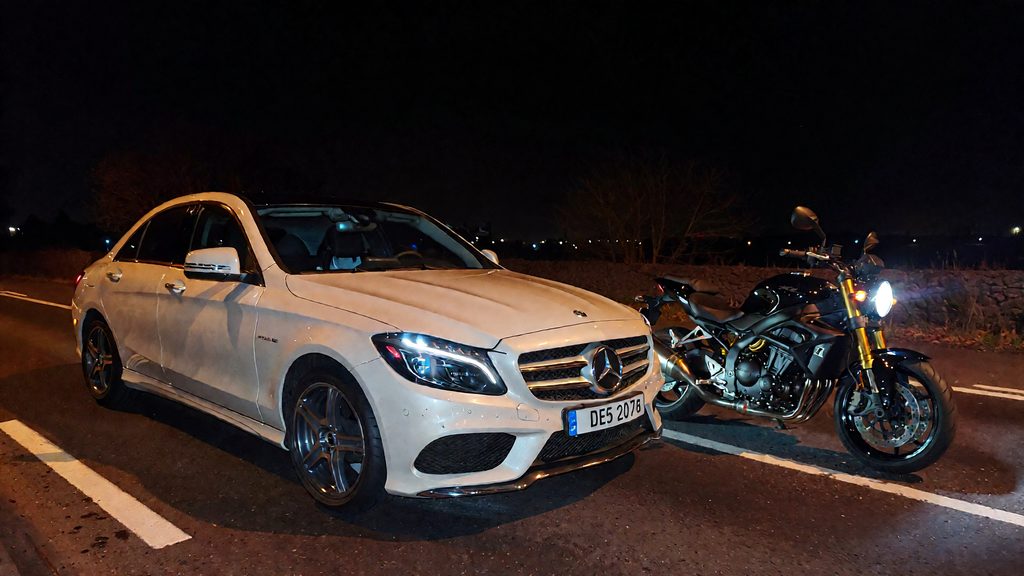
The CHP reports that a Mercedes-Benz and a motorcycle were involved in the collision, which blocked the intersection. Firefighters and paramedics responded shortly after the first reports came in. One person was killed in the crash. Both vehicles were towed from the scene.
Why Intersections Are So Dangerous for Motorcyclists
Intersections are among the most dangerous places on the road for riders. A motorcycle has a much narrower profile than a car, making it harder for other drivers to judge its speed and distance. Drivers who turn across a rider’s path or pull out from a stop often report that they never saw the motorcycle, even when the rider had the right of way.
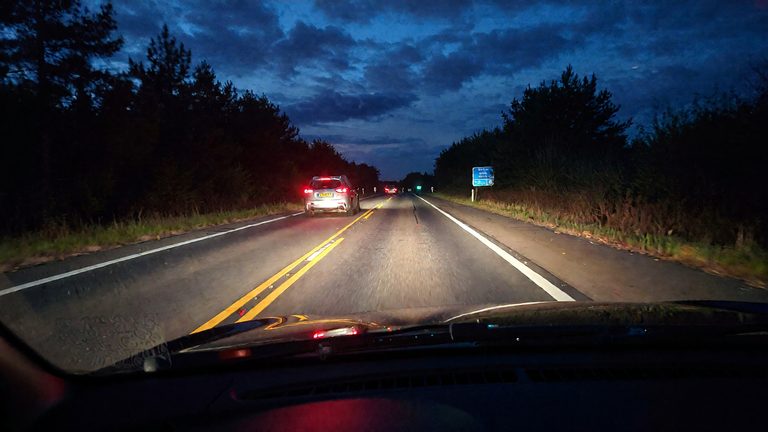
Under California law, every driver owes a duty of reasonable care to others on the road. Vehicle Code section 21800 sets out right-of-way rules at intersections, and Vehicle Code section 22350 prohibits driving at a speed unsafe for conditions. When a driver fails to yield, misjudges a gap, or looks without truly seeing, the consequences for a motorcyclist can be catastrophic. Rural intersections in western Sonoma County pose additional challenges, including limited sightlines, shifting light at dusk, and higher speeds on roads that wind through wooded and agricultural areas.
Determining Fault After a Fatal Collision
Investigators in a crash like this one generally examine the point of impact, the position of the vehicles at rest, skid and gouge marks, traffic controls at the intersection, witness statements, and any available video or vehicle data. The findings shape both the CHP’s conclusions and any later civil claim.
California follows a pure comparative fault system. Under that doctrine, a person’s compensation is reduced by their percentage of responsibility but is not eliminated, even if they were partly to blame. Insurers sometimes lean on stereotypes about motorcyclists to push more fault onto a rider.
A thorough, independent investigation helps counter that. Where a road defect, such as poor signage or obstructed visibility, contributed to the crash, Government Code section 835 may allow a claim against a public entity. Those claims have short-notice deadlines, often six months, so early action matters.
Beyond the CHP’s findings, families often benefit from an independent investigation that begins as early as possible, because key evidence can disappear quickly. In a collision involving a Mercedes-Benz and a motorcycle, an attorney can work to preserve data from the car’s event data recorder.
This may capture speed, braking, and steering inputs in the seconds before impact, and can seek any nearby surveillance or doorbell footage before it is overwritten. Accident reconstruction specialists can use roadway measurements, the final resting positions of the vehicles, and damage patterns to determine how the collision unfolded, including whether a driver failed to yield at the intersection or misjudged the motorcycle’s speed and distance.
Witness accounts matter as well, since people who saw the crash or arrived moments afterward can describe the lighting, traffic flow, and driver behavior around 6:09 p.m., when dusk can reduce visibility at rural intersections. At this stage, the CHP has not publicly said what caused the collision, and no one should assume who was at fault until the investigation is complete.
When a rider dies and cannot give their own account, insurance companies may be quick to suggest the motorcyclist was speeding or riding recklessly. Gathering objective evidence is the best way to ensure that the full story, rather than an assumption, determines who is held responsible.
Legal Options for Families After a Wrongful Death
When a person dies because of another party’s negligence, California law gives surviving family members a path to hold that party accountable. Code of Civil Procedure section 377.60 identifies who may bring a wrongful death action, which generally includes the spouse or domestic partner, children, and certain other dependents or heirs.
Code of Civil Procedure section 377.30 allows the decedent’s personal representative or successor in interest to pursue a survival action for losses the person suffered before death.
Civil Code section 1714 establishes the general principle that people are responsible for injuries caused by their failure to exercise ordinary care. In most cases, the deadline to file is two years from the date of death under Section 335.1 of the Code of Civil Procedure. Waiting can make it harder to preserve evidence such as surveillance footage, vehicle data, and witness recollections, so families benefit from speaking with an attorney early.
Recoverable damages in a wrongful death claim can include funeral and burial expenses, the financial support the person would have provided, the loss of household services, and the loss of love, companionship, comfort, and guidance. A survival action may add medical expenses and the person’s pain and suffering before death.
How Wrongful Death Claims Are Valued
No two cases are alike, but attorneys and insurers commonly use two methods to estimate the value of non-economic damages. The multiplier method takes the total economic losses, such as funeral costs, lost income, and medical bills, and multiplies them by a factor that reflects the severity of the loss and the strength of the liability evidence. The per diem method assigns a daily dollar value to the suffering and loss endured and multiplies it across the relevant period.
Neither method is a formula that guarantees a result. They are starting points that help organize a claim and support negotiation. Factors such as available insurance coverage, the age and earning capacity of the deceased, the number of dependents, and comparative fault all influence the outcome. California’s minimum liability limits are modest, so cases involving serious losses often require a careful look at every possible source of recovery, including umbrella policies, employer coverage, and uninsured or underinsured motorist coverage.
Motorcycle Accident Settlement Calculators and Why They Matter in Estimating Claim Value
A motorcycle accident settlement calculator is an online tool that gives injured riders and grieving families a rough starting estimate of what a claim may be worth. Most calculators work by combining economic damages, such as medical bills, future treatment costs, lost wages, reduced earning capacity, and property damage, with a figure for non-economic damages, such as pain and suffering and loss of enjoyment of life.
Many rely on the multiplier method, which multiplies total economic losses by a factor reflecting the severity of the injuries and the strength of the liability evidence, while others use the per diem method, which assigns a daily dollar value to the suffering endured and multiplies it over the recovery period.
Because motorcycle crashes so often cause catastrophic injuries such as traumatic brain injuries, spinal cord damage, amputations, and fatal wounds, these calculations can involve substantial long-term costs that are easy to underestimate. A calculator can help a person see which categories of loss belong in a claim, understand how insurers frame their valuations, and recognize when an early settlement offer may fall short of what the full picture supports.
It is important to remember that a calculator provides an estimate, not a guarantee, and it cannot account for everything that shapes a real outcome. Under California’s pure comparative fault system, a rider’s recovery is reduced by their percentage of responsibility, and insurers sometimes use common stereotypes about motorcyclists to argue for a higher share.
Available insurance coverage, the credibility of the evidence, the age and earning capacity of the injured person, and the number of dependents in a wrongful death case also influence the final value, and none of these are captured by a simple online form. For that reason, a calculator is best used as a starting point for an informed conversation rather than a substitute for legal advice.
An experienced accident attorney can review the medical records, the crash investigation, and the insurance policies involved to build a far more accurate valuation and can negotiate with the insurance company on behalf of the injured person or grieving family. Call us now at 1-855-508-9565 to speak with the experts.
Taking the First Step Toward Justice
“I am so sorry for the loss and pain this crash has caused. When a motorcycle collision turns a family’s life upside down, the last thing anyone should be doing is dealing with insurance adjusters on their own. If you or someone you love was hurt in a crash like this, get medical care first, keep any records and photos you have, and be careful about giving a recorded statement to an insurance company before you understand your rights. California law gives you a limited window to act, and evidence can disappear quickly, so please do not wait. Our job is to carry that weight for you while you focus on healing, and we are here to listen whenever you are ready.” – Andy Gillin, Managing Partner at GJEL Accident Attorneys
If you have lost a loved one in a motorcycle crash in Forestville or anywhere in California, GJEL Accident Attorneys can help you understand your rights. With more than 40 years of experience and over $950 million recovered for clients, the firm has guided families through some of the most difficult moments of their lives.
There is no fee unless we recover compensation for you, because we handle these cases on a contingency fee basis. Call 1-855-508-9565 or visit the Sacramento office for a free, confidential consultation.
Local Resources for Those Affected
Law Enforcement and Crash Reports
The California Highway Patrol Santa Rosa Area office serves most of Sonoma County and is the agency reporting on this collision. It is located at 6100 LaBath Avenue, Rohnert Park, CA 94928, is open Monday through Friday from 8:00 a.m. to 5:00 p.m., and can be reached at (707) 806-5600. Office details are available at https://www.chp.ca.gov/find-an-office/golden-gate-division/360-santa-rosa.
A driver, passenger, vehicle owner, parent or guardian of a minor, insurance company with a valid claim, or other proper party of interest may request a copy of a CHP crash report online through the CHP Crash Portal, or by submitting form CHP 190 in person or by mail to the nearest Area office. Instructions and the form are available at https://chp.ca.gov/traffic/request-a-crash-report/. Reports in a fatal crash may take time to finalize, so families should call the Area office to ask when one will be available.
The Sonoma County Sheriff’s Office provides law enforcement for the unincorporated areas of the county. Its main office is at 2796 Ventura Avenue, Santa Rosa, CA 95403, and its phone number is (707) 565-2511. The Sheriff’s website offers online options to request copies of reports and public records at https://www.sonomasheriff.org.
Coroner Information for Families
The Coroner Bureau is part of the Sheriff’s Office and handles death investigations in Sonoma County, including death notifications and autopsies. Families seeking information about a loved one’s case can find the Bureau’s overview, forms, and contact details at https://www.sonomasheriff.org/about-coroner-unit. Facility and location details for the Sheriff’s Office, including the Coroner’s Office, are listed at https://sonomasheriff.org/locations.
Victim Support Services
The Sonoma County District Attorney’s Victim Services Division offers crisis intervention, emergency assistance, counseling referrals, court support, and help with California Victim Compensation applications. Services are free, and no citizenship requirement applies. Advocates can be reached at the Victim Witness Assistance Center at (707) 565-8250. Full details are available at https://da.sonomacounty.ca.gov/divisions/victim-services, and the list of available services is at https://da.sonomacounty.ca.gov/divisions/victim-services/services-available.
Road Conditions and Infrastructure Concerns
Sonoma County’s roads division, now part of Sonoma Public Infrastructure, maintains county roads in unincorporated areas and accepts reports of non-emergency hazards such as damaged signs, obstructed sight lines from overgrown vegetation, and pavement defects through the SoCo Connect service request app. Its offices are at 400 Aviation Boulevard, Suite 100, Santa Rosa, CA 95403. Reporting a hazard can also help create a record of conditions near an intersection. More information is available at https://sonomacounty.ca.gov/development-services/sonoma-public-infrastructure/divisions/roads/services/road-maintenance/roadside-vegetation.
Court and Legal Self-Help Resources
The Superior Court of California, County of Sonoma maintains a Civil Self-Help Center that provides free legal information to people without attorneys. The Civil Clerk’s Office is located at 3055 Cleveland Avenue, Santa Rosa, CA 95403. The Court’s website is https://www.sonoma.courts.ca.gov, and the self-help page is https://www.sonoma.courts.ca.gov/self-help/civil-self-help-center-shc.