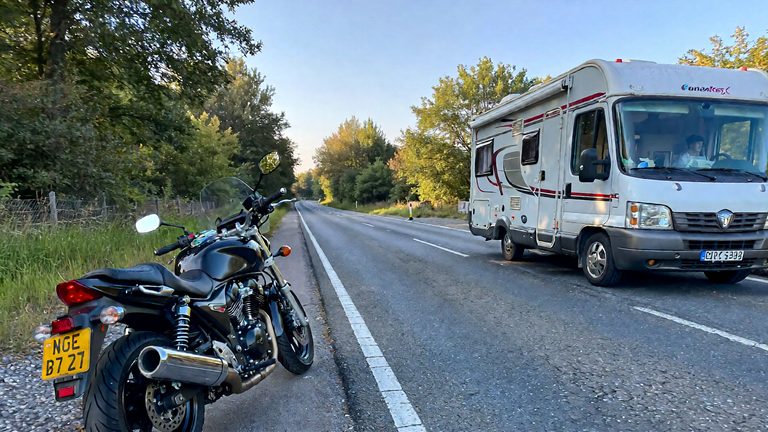
A two-vehicle crash involving a motorcycle left a rider seriously injured on Indian Creek Road near Jacobs Way in Happy Camp, a small community in Siskiyou County. The collision is a reminder of how quickly an ordinary evening drive or ride can change in a rural Siskiyou County community like Happy Camp.
Crashes on roads like Indian Creek Road, where side streets such as Jacobs Way meet the main route, often unfold in seconds, leaving little time for either driver to react. For a motorcyclist, the consequences can be severe even when the crash appears to involve only moderate speeds, because the rider takes the full force of the impact with no protective vehicle structure around them.
In smaller communities, an injury of this kind also affects more than the rider. Families, employers, and neighbors often feel the impact as the injured person faces medical treatment, time away from work, and an uncertain recovery, and the seriousness of the rider’s injuries makes clear why a careful, fact-based review of what happened matters.
What We Know About the Happy Camp Collision
The crash occurred on the evening of October 7th at approximately 5:36 p.m., according to the California Highway Patrol (CHP). Emergency responders arrived to find the motorcycle rider with serious injuries.
Authorities reported that the rider was transported to Rogue Valley Medical Center with a broken arm. The motorcycle was removed from the scene by a friend of the rider, so a tow service was not needed.
The CHP has not released any details about the second vehicle involved. It remains unclear whether anyone else was hurt. The investigation is ongoing, and law enforcement is asking any witnesses to come forward with information.
Why Motorcycle Crashes Often Cause Serious Injuries
A motorcyclist has no frame, airbags, or seat belt to absorb the force of a collision. Even at moderate speeds, a rider can be thrown from the bike or struck directly by the other vehicle. A broken arm may sound manageable, but fractures in the arm and shoulder frequently require surgery, plates or pins, extended physical therapy, and weeks or months away from work.
Injuries that look limited at the scene can also hide deeper problems, including nerve damage, internal injuries, or head trauma that only emerge in the days that follow. Rural roads like Indian Creek Road add their own complications.
Limited lighting at dusk, narrow lanes, driveways, and intersections with side roads such as Jacobs Way can all reduce the time a driver has to notice a motorcycle. Many collisions involving motorcycles happen because another driver failed to see the rider or misjudged the rider’s speed or distance.
Beyond the lack of physical protection, the way a motorcyclist is injured in a crash often compounds the harm. A rider who is struck or thrown can suffer several injuries in a single event, including the initial impact with the vehicle, a second impact with the pavement, and further contact with road debris, guardrails, or roadside objects.
This is why fractures, road rash, and head or spinal trauma so often appear together rather than alone. Protective gear such as a helmet, riding jacket, gloves, and sturdy boots can reduce the severity of some injuries, but it cannot fully offset the forces involved when a motorcycle collides with a much larger vehicle.
Recovery can also be slow and demanding. A rider with a broken arm, for example, may be unable to work, drive, or handle everyday tasks for weeks while healing, and those with physically demanding jobs may face a longer or more uncertain return. For many families, the medical bills, lost income, and disruption that follow can be as difficult as the injury itself, which is why understanding the full extent of a crash’s impact is so important.
How Fault Is Determined in a California Motorcycle Accident
California law holds every driver responsible for using reasonable care. Under California Civil Code §1714, a person is generally responsible for injuries caused by their lack of ordinary care. In a motorcycle case, that can include a driver who turns across a rider’s path, pulls out from a side road, drifts out of a lane, or fails to yield.
California follows a pure comparative fault system. Fault can be shared between drivers, and an injured rider can still recover compensation even if partly responsible, though the amount is reduced by their percentage of fault. Insurance companies sometimes use this rule to shift blame onto riders, pointing to speed, lane position, or helmet use.
Under Vehicle Code §27803, motorcyclists are required to wear a helmet, and an insurer may raise the issue, but it does not automatically bar a claim. A thorough investigation of the facts is the best protection against unfair blame.
Determining fault in a motorcycle crash is rarely as simple as reading a police report. Investigators and insurance adjusters look at the full picture, including the physical evidence at the scene, vehicle damage, skid marks, road and lighting conditions, witness statements, photographs, and any available dash camera or surveillance footage.
The CHP’s findings can be an important starting point, but they are not the final word, and an insurance company may reach its own conclusions about who was responsible and by how much. This matters because California’s pure comparative fault system reduces a rider’s recovery by the percentage of fault assigned to them, which gives insurers a strong incentive to point to the rider’s speed, lane position, or visibility.
In cases where the second vehicle has not been identified, as in this crash, the evidence can be even harder to piece together, and witness accounts and early documentation take on added importance. Gathering and preserving that evidence promptly gives an injured rider the best chance of having fault assigned accurately and fairly.
What if the Other Driver Cannot Be Identified?
The CHP has shared no information about the second vehicle. If a rider is injured by a driver who cannot be identified, or by a driver without adequate insurance, the rider’s own uninsured and underinsured motorist coverage may help cover medical bills and other losses. Reviewing the rider’s policy early is important because these claims carry their own notice requirements and deadlines.
When the driver of the second vehicle cannot be identified, an injured rider still may have options. California law allows many insurance policies to include uninsured and underinsured motorist coverage, which can help cover medical care, lost income, and other losses when the at-fault driver cannot be located or does not carry sufficient insurance.
Under Insurance Code §11580.2, these claims are generally brought through the rider’s own insurer, and policies often contain specific requirements, such as prompt notice to the insurance company and, in some situations, a report to law enforcement. The CHP has not said why details about the second vehicle remain unavailable, so it is too early to draw conclusions about what happened.
Still, a rider in this position should review their own policy as soon as possible, including any medical payments coverage that may apply regardless of fault. Because these claims depend heavily on evidence, any witness accounts, photographs of the scene, and records from responding agencies can play a major role. Speaking with an attorney early can help an injured rider understand which coverage applies and avoid missing a deadline that could limit their options.
Compensation Available to Injured Motorcyclists
A rider injured through another party’s negligence may pursue economic damages, such as emergency care, surgery, rehabilitation, prescription costs, and lost income, along with non-economic damages for pain, suffering, and loss of enjoyment of life. When a rider cannot return to the same work, future lost earning capacity may also be part of the claim.
Insurers and attorneys commonly estimate the value of non-economic damages in two ways. The multiplier method takes the total medical expenses and multiplies them by a factor, typically based on the severity and permanence of the injury.
As an illustration only, a case with $50,000 in medical bills and a multiplier of 3 would suggest non-economic damages of approximately $150,000. The per diem method assigns a daily dollar value to the pain and recovery period and multiplies it by the number of recovery days. Neither formula is a guarantee, and actual outcomes depend on the facts, the evidence, available insurance coverage, and each party’s share of fault.
Compensation in a motorcycle accident case is meant to address the full range of losses a rider experiences, not just the bills that arrive first. Economic damages cover measurable financial costs, including ambulance and emergency room care, surgery, hospital stays, follow-up appointments, physical therapy, prescription medication, and any assistive equipment needed during recovery.
They also include income lost while the rider is unable to work, and when an injury limits the ability to return to the same job, future loss of earning capacity may be part of the claim. Property damage is also recoverable and may include the repair or replacement of the motorcycle and damaged riding gear, such as a helmet, jacket, or gloves.
Non-economic damages address the harm that does not come with a receipt, such as physical pain, emotional distress, scarring, and the loss of the ability to enjoy daily life, hobbies, and time with family. For injuries that require ongoing treatment, a claim may also account for the cost of future medical care, which is why it is important to understand the full course of recovery before agreeing to any settlement.
In rare cases involving especially reckless conduct, such as driving under the influence, California law may allow punitive damages under Civil Code §3294. The amount a rider can recover depends on the severity of the injuries, the strength of the evidence, the insurance coverage available, and any share of fault assigned to the rider, so each case must be evaluated on its own facts.
Time Limits to File a Claim
Under California Code of Civil Procedure §335.1, most personal injury lawsuits must be filed within two years of the date of injury. Claims that involve a government entity, such as a dangerous road condition, are subject to a much shorter claim-filing window under Government Code §911.2, generally six months, and the entity’s liability is governed by Government Code §835.
Waiting too long can permanently end a claim, so early legal guidance matters. California law sets strict deadlines for injury claims, and missing one can end a rider’s right to recover compensation no matter how strong the case may be. Under Code of Civil Procedure §335.1, most personal injury lawsuits must be filed within two years of the date of the injury, which in this case would run from the October 7, 2026 crash.
Claims for damage to a motorcycle or other property generally follow a longer period under Code of Civil Procedure §338. Shorter timelines apply in some situations. If a government entity may share responsibility, for example, because of a roadway defect or hazardous condition, a written claim generally must be presented within six months.
Under Government Code §911.2, a lawsuit must typically follow within a limited window after the claim is rejected. Insurance policies can also include their own requirements, such as prompt notice of the crash and specific steps for uninsured motorist claims, which matter when the second vehicle has not been identified.
Because evidence such as witness memories, surveillance footage, and vehicle data can disappear well before a legal deadline arrives, acting early protects both the claim and the facts that support it. An injured rider who is unsure which deadlines apply should speak with an attorney as soon as possible rather than waiting until the clock is nearly out.
Steps Injured Riders Can Take After a Crash
Seeking prompt medical care protects both a rider’s health and the record of the injury. Riders should keep all medical paperwork, photograph the scene and their injuries when possible, save any damaged gear, and avoid giving recorded statements to the other driver’s insurance company before understanding their rights. Witness names and contact information can be especially valuable on a rural road where few people may have seen what happened.
The hours and days after a motorcycle crash can shape how well a rider recovers, both physically and financially. Getting prompt medical attention is the most important step, even when injuries seem limited at first, because conditions like internal injuries, nerve damage, or concussions can take time to show symptoms, and a documented medical record creates a clear link between the crash and the harm.
Riders who are able should photograph the scene, the vehicles, the road conditions, and their injuries, and collect names and contact information from anyone who saw what happened, which is especially valuable on a rural road where witnesses may be few. The motorcycle itself and any damaged gear, including the helmet, jacket, and gloves, should be kept in their current condition rather than repaired or discarded, since they can show how the collision occurred.
In this case, the motorcycle was removed from the scene by a friend, so making sure it is stored safely and left unaltered is a sensible precaution. Riders should also report the crash to their own insurance company as required, but they should be cautious about giving recorded statements to the other driver’s insurer or accepting a quick settlement offer before the full extent of their injuries is known.
Posting about the crash or recovery on social media can also be used against an injured person, so it is wise to avoid it. Keeping a running record of medical appointments, expenses, missed work, and daily limitations makes it easier to document the full impact of the injury, and speaking with an attorney early can help a rider protect their rights while they focus on healing.
Motorcycle Accident Settlement Calculators and Why They Matter
A motorcycle accident settlement calculator is an online tool that gives an injured rider a rough estimate of what a claim might be worth and can be a helpful starting point for understanding how settlement values are determined. Most calculators rely on the same two methods that attorneys and insurance adjusters use.
The multiplier method adds up economic damages, such as medical bills and lost wages, and multiplies the medical portion by a factor that generally reflects the severity, pain, and duration of the injury. As an illustration only, $40,000 in medical expenses and a multiplier of 3 would suggest about $120,000 in non-economic damages, which would then be added to the economic losses.
The per diem method assigns a reasonable dollar amount to each day of pain and recovery, then multiplies it by the number of days it takes the rider to reach maximum recovery. Running the numbers both ways helps a rider see how medical costs, time away from work, and the length of recovery all affect value, and it can show why documenting every expense and symptom matters.
A calculator also has real limits. It cannot account for the strength of the evidence, the insurance policy limits available, disputes over who caused the crash, or any share of fault assigned to the rider under California’s pure comparative fault rule, all of which can raise or lower a final settlement.
Injuries that require future surgery or ongoing care are especially difficult to capture in a simple tool, since the full cost may not be known for months. For these reasons, a calculator is best used as an educational estimate rather than a guarantee of a claim’s value, and an injured rider should speak with an experienced California motorcycle accident attorney who can evaluate the specific facts before accepting any settlement offer. Call us now at 1-855-508-9565 to speak with the experts.
Take Action Today: You Won’t Pay Unless We Win
“A motorcycle crash can change a rider’s life in an instant, and the injuries are often more serious than they first appear. Our hearts go out to the rider and everyone affected by this collision. If you or someone you love has been hurt in a crash like this, please do not wait to learn where you stand. Evidence disappears, deadlines are strict, and insurance companies are not looking out for your best interests. An experienced attorney can protect your rights while you focus on healing, and with our contingency fee model, you owe nothing unless we recover compensation for you.” – Andy Gillin, Managing Partner, GJEL Accident Attorneys
GJEL Accident Attorneys has more than 40 years of experience and has recovered over $950 million for injured clients. We handle motorcycle accident cases on a contingency fee basis, which means you pay no attorney fees unless we recover compensation for you. If you or someone you love was injured in a motorcycle crash in Siskiyou County or anywhere in California, call 1-855-508-9565 or visit our Concord office for a free consultation.
Local Resources and Agencies for Injured Riders in Siskiyou County
The following agencies can provide crash information, road safety details, and assistance to riders, families, and witnesses affected by this collision:
California Highway Patrol, Yreka Area Office. The CHP is the lead agency investigating this crash and is the best point of contact for witnesses who want to share information. The Yreka Area office can be reached at (530) 842-0530.
https://www.chp.ca.gov/find-an-office/northern-division/145-yreka
CHP Yreka Communications Center. This center dispatches for the Happy Camp resident post and can be reached 24 hours a day at (530) 841-6000.
https://www.chp.ca.gov/find-an-office/northern-division/145-yreka-communications-center
CHP Crash Report Requests. Drivers, passengers, vehicle owners, and other parties of interest may request a copy of a CHP crash report online or by submitting form CHP 190 to the nearest Area office. Fees and eligibility requirements apply.
https://chp.ca.gov/traffic/request-a-crash-report/
https://crashes.chp.ca.gov
Siskiyou County Sheriff’s Office. The Sheriff’s Office headquarters is located at 305 Butte Street in Yreka. Administrative calls go to (530) 842-8300, records to (530) 842-8301, and non-emergency dispatch to (530) 841-2900.
https://siskiyoucounty.gov/police/custom-contact-page/police-contact-information
Siskiyou County Department of Public Works. Publicly maintained roads in unincorporated areas of the county fall under this department. Anyone who wants to report a county road hazard, such as damaged pavement, missing signage, or poor drainage, can contact the main office at (530) 842-8250 or the Happy Camp road district at (530) 493-2354.
https://www.siskiyoucounty.gov/publicworks/page/roads-bridges
Caltrans District 2. Caltrans maintains the state highways that run through Siskiyou County. Its District 2 office is at 1657 Riverside Drive in Redding and can be reached at (530) 225-3426. Current road conditions and closures are available at the website below or by phone at (800) 427-7623.
https://dot.ca.gov/contact-us
https://roads.dot.ca.gov/
California DMV, Report of Traffic Accident (SR-1). California requires a driver to file an SR-1 with the DMV within 10 days when a crash causes any injury, however minor, or property damage over $1,000. This is required in addition to any report made to the CHP or an insurance company.
https://www.dmv.ca.gov/portal/dmv-virtual-office/accident-reporting/
2-1-1 Siskiyou. Injured residents and families who need help finding community services, including food, housing, and transportation assistance during recovery, can dial 2-1-1 or visit the website below.
https://211norcal.org/siskiyou/