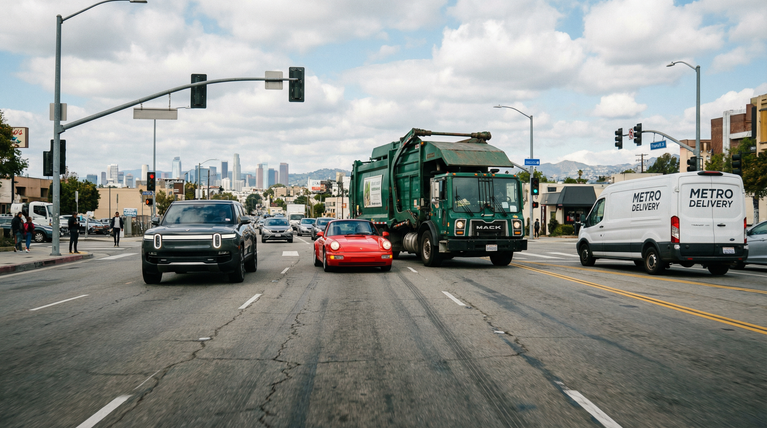
A two-vehicle collision on Monday evening at the intersection of East Cherokee Road and North Ashley Lane in Stockton left at least one person with minor injuries and one vehicle with major front-end damage. Even when injuries are described as minor, a collision like this can lead to medical bills, lost work, and insurance disputes that few families expect.

What Happened on East Cherokee Road
The collision occurred on Nov. 16 at about 6:47 p.m., just south of Waterloo, when a white GMC Sierra and a white Toyota Tacoma collided, according to the CHP. Both vehicles were damaged, and the GMC Sierra suffered major front-end damage. The right-hand shoulder was temporarily closed while emergency responders worked at the scene.
Authorities have not released the names of the drivers or occupants, and the CHP has not said what led to the collision or whether any citations were issued. The report notes that the GMC Sierra took the brunt of the impact, with major front-end damage, while the Toyota Tacoma also sustained damage.
Because the crash happened on a Monday evening, the closure of the right-hand shoulder came at a time when many commuters were heading home along the East Cherokee Road corridor.
The details above are based on the CHP’s initial incident information, and updates may follow as the investigation continues. Anyone who witnessed the collision or has photos or video of the scene is encouraged to contact the CHP Stockton Area office, since independent accounts can help clarify what happened.
Emergency Response and Reported Injuries
Emergency units were dispatched promptly after the collision was reported. The Stockton Fire Department took precautionary measures at the scene shortly afterward. The CHP reports that at least one person suffered minor injuries and was attended to on site. The cause of the crash has not been released, and no information has been made public about fault or citations.
The CHP has not said how many people were in the two vehicles, and it has not released the identity, age, or condition of the person who was hurt beyond describing the injuries as minor. No information has been made public about whether anyone was taken to a hospital for further evaluation.
Prompt dispatch and on-scene care are important in any collision, but they are only a first step. A person treated at the scene should still follow up with a doctor or urgent care provider in the days afterward, because pain, stiffness, headaches, and dizziness can appear well after the crash.
Passengers and anyone who declined treatment at the scene should do the same. The CHP’s initial report may be updated, so those involved should consider requesting the official collision report once it is available.
Why Minor Injuries Deserve Serious Attention
Injuries labeled minor at the scene can develop into something more serious in the hours and days that follow. Soft tissue injuries, whiplash, concussions, and back strain often do not show their full effect right away because adrenaline can mask pain immediately after a crash.
Anyone involved in a collision should be evaluated by a medical professional, even if they feel fine. Prompt care protects your health and creates a medical record linking your injuries to the crash, which is important if you later pursue a claim.
A collision that occurs in the evening hours in mid-November, when daylight has faded, can also raise questions about visibility, lighting, and driver attentiveness. Investigators and insurers typically consider speed, right-of-way, signaling, distraction, and roadway conditions when determining how a crash occurred.
How Fault Is Determined in California
California follows a pure comparative fault system. Under this doctrine, an injured person can recover compensation even if they were partly responsible for the crash, but the award is reduced by their percentage of fault. A driver found 20 percent at fault, for example, would see their recovery reduced by 20 percent. Drivers owe other motorists a duty of ordinary care under California Civil Code §1714, and a driver who breaches that duty and causes harm can be held liable for the resulting damages.
When a crash involves a dangerous roadway condition, such as poor signage, a faulty signal, or a poorly designed intersection, a public entity may share responsibility under Government Code §835. Claims against government entities are subject to strict deadlines, including a short window to file an administrative claim, so early legal guidance is important in those situations.
Deadlines That Affect Your Right to Recover
Under California Code of Civil Procedure §335.1, a lawsuit for personal injury generally must be filed within two years of the date of the injury. Claims for property damage, such as repairs to a vehicle like the Tacoma or Sierra in this crash, generally have a longer statute of limitations under Code of Civil Procedure § 338.
Missing a deadline can end a claim entirely, no matter how strong the evidence is. If a death results from a collision, wrongful death claims are governed by Code of Civil Procedure §§377.60 and 377.30 and carry their own rules about who may bring the case.
California law also requires drivers involved in a collision involving injury or significant property damage to exchange information and, in many cases, report the crash to the DMV within the time allowed by the Vehicle Code. Failing to follow these requirements can create problems with your license and your insurance coverage.
How Injury Claims Are Valued
Settlement value depends on the facts of each case, and no two claims are alike. Attorneys and insurers commonly use two approaches to estimate non-economic damages such as pain and suffering. The multiplier method takes the total of a person’s economic losses, including medical bills and lost wages, and multiplies it by a factor that reflects the severity of the injury and its impact on daily life.
The per diem method assigns a daily dollar value to the pain and disruption a person experiences, then multiplies it by the number of recovery days. As a simple illustration, a daily value of $100 over a 60-day recovery period would equal $6,000 in non-economic damages under this method. Actual values vary widely, and insurers often undervalue claims where injuries were first described as minor.
What to Do After a Collision
Move to a safe location if you can, call 911, and accept medical attention. Photograph the vehicles, the roadway, visible injuries, and any traffic signals or signs nearby. Collect the names, contact information, and insurance details of everyone involved, along with contact information for witnesses.
Avoid speculating about fault at the scene, and be cautious about giving recorded statements to an insurance adjuster before you understand your rights. Keep every medical record, bill, and repair estimate, and write down how the injuries affect your sleep, work, and daily routine.
Personal Injury Settlement Calculators: What They Can and Cannot Tell You
Online personal injury settlement calculators are tools that estimate the possible value of a claim based on information you enter, such as medical expenses, lost income, the type of injury, and the length of recovery.
Most rely on the multiplier method, which sums economic losses and multiplies the total by a factor reflecting the severity and lasting impact of the injury, or on the per diem method, which assigns a daily dollar value to pain and disruption and multiplies it by the number of days of recovery. These calculators can be a helpful starting point for understanding how compensation is structured, but they have real limits.
They cannot account for how fault is divided under California’s pure comparative fault rules, the limits of available insurance coverage, the strength of the evidence, future medical needs, or how an insurer is likely to dispute the claim.
Injuries that initially appear minor can become more costly over time, meaning an early estimate may fall far short of the true value of a case. For that reason, a calculator is best treated as an educational guide rather than a prediction, and anyone injured in a collision should speak with a qualified personal injury attorney who can evaluate the full picture before accepting any settlement offer. Call us now at 1-855-508-9565 to speak with the experts.
Our Commitment: No Fees Unless We Win Your Case
“If you were hurt in this crash, even if the injuries seemed minor at the scene, please don’t brush them off. I have seen too many people wait, hoping the pain would pass, only to find themselves facing mounting medical bills and an insurance company that is already building its case. Get checked by a doctor, keep every record, and be careful about what you say to an adjuster before you understand your rights. California gives you only two years to file most injury claims, and the evidence is easiest to preserve now. You should never have to worry about how to pay for your recovery while you are trying to heal. We will listen, explain your options in plain terms, and handle your case on a contingency fee basis, so you pay nothing unless we win.” — Andy Gillin, Managing Partner, GJEL Accident Attorneys
GJEL Accident Attorneys has more than 40 years of experience representing injured Californians and has recovered over $950 million for clients. We handle personal injury cases on a contingency fee basis, which means you pay no attorney fees unless we win your case. If you or a loved one was hurt in a collision in Stockton or anywhere in San Joaquin County, call us at 1-855-508-9565 or visit gjel.com for a free consultation.

Related California legal resources: California car accident lawyers and Stockton personal injury lawyers.