A 22-year-old Redding man died, and two others were injured, including a 15-year-old boy, following a fatal head-on collision late Friday night on Dersch Road west of Mossom Lane. The California Highway Patrol continues to investigate the collision, which also resulted in a felony DUI arrest. The rural stretch of Dersch Road where the crash occurred is a two-lane road with no center divider, the kind of roadway common throughout Shasta County where a single moment of impairment or inattention can carry catastrophic consequences.
Late-night hours on unlit rural roads like this one already present heightened risks for head-on collisions, and those risks multiply sharply when a driver is suspected of being under the influence of alcohol or drugs. For the family of the young man who lost his life and for the teenager left with serious injuries, the crash represents the kind of sudden, preventable tragedy that reshapes a family’s life in a single instant.
What Happened in the Head-On Collision
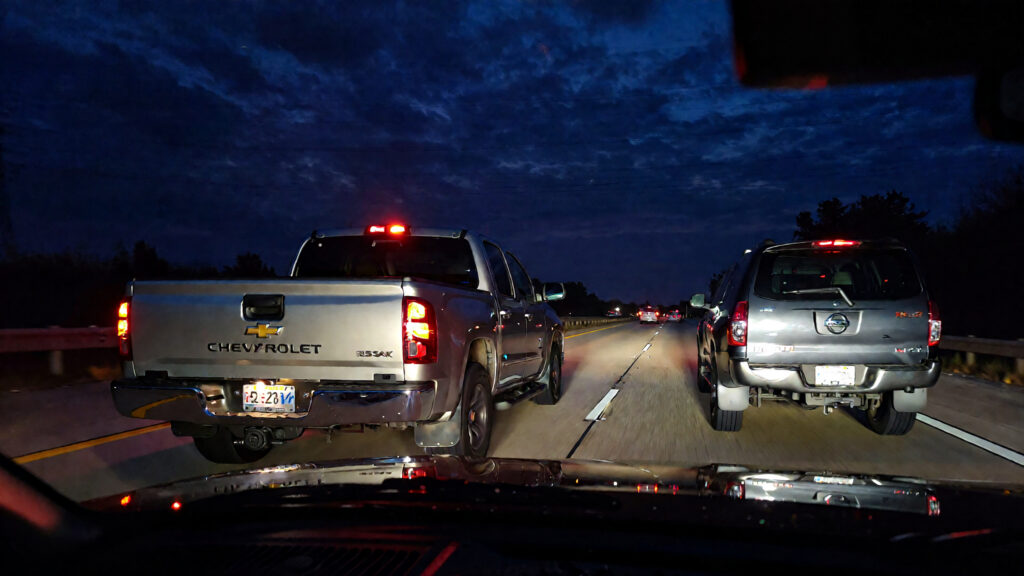
According to the CHP, the crash occurred around 11:45 p.m. on September 25 when a Chevrolet Silverado traveling eastbound on Dersch Road crossed into the westbound lane and struck a Nissan Xterra head-on. The force of the impact sent both vehicles off the roadway, where they came to rest on the north shoulder.
The Nissan caught fire shortly after the collision, engulfing the vehicle before all occupants could be confirmed clear of the wreckage. The driver of the Nissan, a 22-year-old Redding man whose name is being withheld pending next-of-kin notification, was pronounced dead at the scene. A 15-year-old Redding boy who was riding as a passenger managed to escape the vehicle before the fire spread, though he suffered a broken wrist and a broken clavicle in the crash.
CHP has identified the driver of the Silverado as a 23-year-old from Redding. He got out of his vehicle and away from the fire but suffered a broken leg in the collision. He was arrested at the scene, and investigators believe alcohol and drugs were factors in causing the crash. The CHP’s investigation into the exact cause and any resulting charges remains ongoing.
The Legal Reality of Suspected DUI Crashes in California
When a driver is suspected of operating under the influence of alcohol or drugs and causes a crash that kills or seriously injures another person, California law treats the resulting civil case differently than an ordinary traffic accident. Under California Civil Code Section 1714, every person is responsible for injuries caused by a lack of ordinary care, but courts and juries generally view intoxicated driving as an especially reckless departure from that standard.
In cases involving DUI, injured victims and surviving family members may be entitled to pursue punitive damages in addition to compensatory damages, a remedy intended to punish egregious conduct and deter similar behavior in the future. A criminal case against the driver, which may result in charges ranging from DUI causing injury to vehicular manslaughter, proceeds separately from any civil claim victims or families choose to file.
A criminal conviction is not required for a civil case to succeed, and the standard of proof in civil court is lower than in criminal proceedings, meaning families can pursue accountability even if criminal charges are delayed, reduced, or resolved in ways that leave victims unsatisfied. Beyond the driver’s own liability, California law also allows injured victims and families to look at where the alcohol or drugs came from in certain circumstances.
Under Business and Professions Code Section 25602.1, a bar, restaurant, or other licensed establishment that serves alcohol to an obviously intoxicated minor, or to any minor at all, can be held civilly liable if that person later causes injury to someone else while driving. If the investigation into this crash reveals that the suspect has obtained alcohol from a licensed establishment shortly before the collision, that establishment’s conduct could become relevant to the broader civil case.
Separately, a driver arrested on suspicion of DUI in California faces an administrative license suspension through the DMV that runs independently of any criminal court process, and the outcome of that administrative hearing can become part of the evidentiary record that a civil attorney reviews when building a case.
Toxicology results, field sobriety test documentation, and the CHP’s collision report will all likely play a central role in establishing exactly how alcohol or drugs contributed to the crash, and preserving that evidence early is one of the most important steps a family can take while the criminal case is still unfolding.
Wrongful Death Claims Under California Law
The family of the 22-year-old Redding man killed in this crash may have grounds to pursue a wrongful death claim under California Code of Civil Procedure Sections 377.60 and 377.30. These statutes allow a decedent’s surviving spouse, children, or other qualifying heirs to seek compensation for the financial and emotional losses caused by their loved one’s death, including lost future income, loss of financial support, funeral and burial expenses, and loss of companionship and guidance.
Because the young man was the driver of the vehicle he was riding in, questions about the ability to pursue certain claims will depend on the specific facts developed during the investigation, including whether any evidence points to fault on the part of the other driver, which appears to be the case here given the CHP’s account that the Silverado crossed into oncoming traffic.
California generally applies a two-year statute of limitations to wrongful death and personal injury claims arising from vehicle collisions, though this deadline can shift depending on the circumstances, making it important for families to understand their rights and timeline as early as possible.
Injuries to the 15-Year-Old Passenger
The teenage passenger who survived the fire and suffered a broken wrist and clavicle faces his own recovery process, and his family may be entitled to pursue a personal injury claim on his behalf. Because he is a minor, any settlement related to his injuries will typically require court approval to ensure the terms adequately protect his long-term interests.
Orthopedic injuries like a broken clavicle and wrist can involve extended healing time, physical therapy, and, in some cases, lingering effects into adulthood, all of which should be accounted for when evaluating the true value of a claim. Beyond the physical injuries, a young passenger who escapes a burning vehicle after a fatal crash often carries an emotional weight that can be just as significant as the broken bones themselves, particularly if the two were riding together as friends or family.
California law recognizes that psychological trauma, including anxiety, sleep disturbances, and lasting fear connected to the crash, can be a legitimate component of a personal injury claim alongside physical damages. Because the passenger is a minor, California’s statute of limitations for personal injury claims is generally tolled, or paused, until he turns 18, giving his family additional time to evaluate the full scope of his recovery before any claim must be resolved.
In the meantime, a parent or legal guardian can act on his behalf to begin gathering medical records, documenting the impact of his injuries on school and daily life, and ensuring that any insurance conversations or settlement discussions properly account for his long-term well-being rather than only the immediate cost of his broken wrist and clavicle.
How California Injury Settlements Are Calculated
Attorneys and insurance adjusters typically rely on one of two methods to help estimate the value of pain and suffering damages in a personal injury or wrongful death case: the multiplier method and the per diem method. The multiplier method takes the total of a victim’s economic damages, such as medical bills and lost wages, and multiplies it by a factor reflecting the severity of the injury, often ranging from 1.5 for relatively minor harm to 5 or higher for catastrophic or life-altering injuries.
The per diem method instead assigns a specific dollar value to each day the victim experiences pain and suffering, then multiplies that daily rate by the number of days the person is expected to be affected by their injuries. Neither method produces an automatic or guaranteed outcome, and the appropriate approach can depend on the nature of the injuries, the strength of the available evidence, and the specifics of California’s comparative fault rules found in Government Code Section 835 and related case law, which can reduce a victim’s recovery in proportion to any fault attributed to them.
These calculation methods are only useful, however, to the extent that a case actually has access to funds sufficient to pay a fair settlement, which is why identifying every available source of insurance coverage matters as much as the math itself. A driver’s auto insurance policy limits can cap what a family ultimately recovers regardless of how a settlement is calculated.
This makes it important to investigate whether the suspect carried an umbrella policy, whether any commercial or dram shop liability applies, and whether the victims’ own uninsured or underinsured motorist coverage could supplement a shortfall. Medical liens are another factor that can significantly affect the final amount a victim or family actually receives, since health insurers, Medi-Cal, and treating hospitals often have a legal right to be reimbursed out of any settlement or verdict for the cost of care they provided.
An experienced attorney can negotiate these liens down in many cases, but doing so requires a clear accounting of every dollar owed before a settlement is finalized, which is one of several reasons families are often better served by professional guidance than by trying to value a claim on their own.
Fatal Accident Settlement Calculators and How They Help Estimate Value
Families searching for guidance after a loss like this one will often come across online settlement calculators designed specifically for wrongful death cases, and while these tools cannot replace a full legal evaluation, they can offer a helpful starting point for understanding what factors go into a claim’s value.
A fatal accident settlement calculator typically begins with the decedent’s economic contributions, including lost future income based on age, occupation, and expected career trajectory, as well as the value of lost benefits, retirement contributions, and household services the person would have provided over a lifetime.
From there, the calculator layers in non-economic losses such as the surviving family’s loss of companionship, guidance, and emotional support, figures that are inherently harder to quantify but that California law still recognizes as compensable. Many calculators also apply an adjustment for the specific circumstances of the crash, since a death caused by an especially reckless act, such as driving under the influence of alcohol or drugs, often supports a higher valuation than a case involving simple negligence.
It’s important for families to understand that these tools produce only a rough estimate rather than a guaranteed outcome, since the actual settlement or verdict in any given case depends on the strength of the evidence, the degree of fault the law ultimately assigns to each party, the insurance coverage and other assets available to pay a claim, and how a judge or jury weighs the specific facts at trial.
Used as a first step rather than a final answer, a settlement calculator can help a grieving family get a general sense of what may be at stake before sitting down with an attorney who can evaluate the full picture. Call us now at 1-855-508-9565 to speak with the experts.
Take Action Today: You Won’t Pay Unless We Win
“Losing a loved one or watching your child go through a painful recovery because of someone else’s reckless decision to drive impaired is one of the hardest things a family can face. In moments like this, it’s easy to feel like you have no control over what happens next, but you do have rights, and you have time to understand them before making any decisions. Our team has spent more than 40 years helping California families hold negligent drivers accountable and secure the resources they need to heal, and we never charge a fee unless we win your case. If you or someone you love was hurt in this crash, please reach out. You don’t have to navigate this alone, and you don’t have to figure it out today.”- Andy Gillin, GJEL Accident Attorneys
If you or a loved one was injured, or if you lost a family member in the Dersch Road crash near Anderson, GJEL Accident Attorneys is available to help you understand your legal options. Our firm has recovered more than $950 million for injury victims and their families across California, and we work on a contingency fee basis, meaning you pay nothing unless we win your case. Call us today at 1-855-508-9565 or visit our San Jose office for a free, no-obligation consultation.
Local Resources for the Anderson Community
Anyone with information about this crash or who needs assistance in its aftermath can contact the following agencies. Each listing includes the agency’s official website, address, and phone number, so residents can find the right department without having to search:
California Highway Patrol, Redding Area Office
This is the office handling the ongoing investigation into the Dersch Road crash. The CHP’s Redding office page includes information on requesting a copy of the traffic collision report once it becomes available, VIN verifications, and general traffic safety programs for Shasta County.
Website: https://www.chp.ca.gov/find-an-office/northern-division/offices/(135)-redding
Address: 2503 Cascade Blvd., Redding, CA 96003
Phone: (530) 225-0500
Shasta County Sheriff’s Office
The Sheriff’s Office patrols the unincorporated areas of the county, including rural roads like Dersch Road outside city limits, and its website includes access to the Secret Witness tip line, victim and witness information, and the county’s emergency notification sign-up.
Website: https://www.shastacounty.gov/sheriff
Address: 300 Park Marina Circle, Redding, CA 96001
Phone: (530) 245-6025 (non-emergency); (530) 245-6000 (general information)
Anderson Police Department
The Anderson Police Department serves the city of Anderson directly and maintains an online crime map, a tip submission portal, and a dedicated page for residents to request additional traffic enforcement in areas of concern.
Website: https://www.andersonpolice.org
Traffic enforcement requests: https://andersonpolice.org/traffic/
Address: 2220 North Street, Anderson, CA 96007
Phone: (530) 378-6600
CHP Northern Division (Traffic Authority for Shasta County’s Highways and Rural Roads)
The Northern Division oversees CHP operations, traffic enforcement policy, and roadway safety programs across Shasta County and 13 surrounding counties, including the rural highway and county road network where this crash occurred.
Website: https://www.chp.ca.gov/find-an-office/northern-division
Address: 2485 Sonoma Street, Redding, CA 96001
Phone: (530) 242-4300
Mercy Medical Center Redding (Level II Trauma Center)
Mercy Redding is the region’s designated Level II Trauma Center and the hospital most likely to treat serious crash injuries throughout Shasta County, including those sustained in this collision.
Website: https://www.dignityhealth.org/north-state/locations/mercy-redding
Address: 2175 Rosaline Ave., Redding, CA 96001
Phone: (530) 225-6000
Shasta County Crime Victims Assistance Center
This office is designated by the Shasta County Board of Supervisors as the county’s primary provider of victim and witness services. Staff can help families understand the criminal justice process following a DUI arrest, apply for financial assistance through the California Victim Compensation Board, and register for automatic notifications about an offender’s custody status through the VINE system.
Website: https://www.shastacounty.gov/node/2391
Address: 1355 West Street, Redding, CA 96001
Phone: (530) 225-5220
Shasta County District Attorney’s Office
The District Attorney’s Office decides what charges to file in connection with suspected DUI collisions and can provide information about the criminal case timeline, restitution, and a victim’s right to be heard during court proceedings.
Website: https://www.shastacounty.gov/district-attorney
Phone: (530) 245-6300