Last updated July 13, 2026
A devastating traffic accident on Elsie Avenue in Sacramento has claimed the life of a pedestrian and left multiple vehicles damaged, highlighting the catastrophic consequences when drivers disregard traffic signals. According to the California Highway Patrol, the collision occurred just east of Stockton Boulevard shortly after 4 p.m., when an SUV driver ran a red light at the intersection of Mack Road and Elsie Avenue, triggering a chain of events that would ultimately involve seven vehicles and result in a fatality.
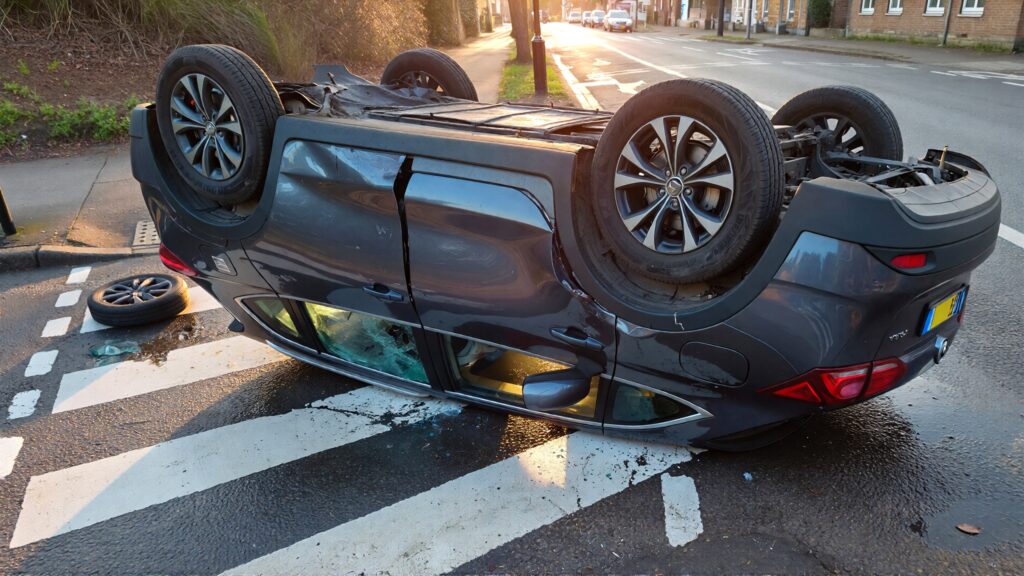
The sequence of events paints a harrowing picture: after speeding through the red light, the SUV struck another vehicle with such force that it lost control. In the chaos that followed, the out-of-control SUV struck a pedestrian who was standing on the center island at the intersection—presumably in what should have been a safe location. The impact proved fatal, and the pedestrian was pronounced dead at the scene. The SUV didn’t stop there; it continued forward, sideswiping five additional vehicles before finally coming to rest on its roof on Elsie Avenue. The SUV driver sustained minor to moderate injuries and was transported to a local hospital for treatment.
As investigators work to determine whether alcohol or drugs played a role in this tragedy, families affected by this crash face difficult questions about legal rights, financial recovery, and justice for their loved ones. Understanding California traffic laws, liability in multi-vehicle accidents, and the legal options available to victims and their families is crucial during this challenging time.
Understanding the Intersection: Elsie Avenue and Mack Road
The intersection where this tragedy occurred is located in a busy commercial corridor of Sacramento, where Elsie Avenue meets Mack Road, just east of Stockton Boulevard. This area experiences significant traffic volume throughout the day, with vehicles traveling between residential neighborhoods and commercial districts. The intersection features traffic signals designed to manage the flow of vehicles and protect pedestrians crossing multiple lanes of traffic.
Center islands, like the one where the victim was standing, are specifically designed as pedestrian refuges—safe zones where people can wait between crossing different directions of traffic. These islands are meant to provide protection, making this fatality particularly tragic. When a pedestrian is killed in what should be a protected space, it underscores the severity of the initial driver’s negligence and the powerful forces involved in high-speed collisions.
The fact that the SUV driver ran a red light at the Mack Road intersection before entering Elsie Avenue suggests excessive speed and a complete disregard for traffic control devices. Red light violations are among the most dangerous traffic infractions because they place vehicles directly in the path of cross-traffic that has the legal right-of-way, creating T-bone collisions and other severe accident configurations.
The Devastating Chain Reaction: How One Driver’s Actions Affected Seven Vehicles
This crash demonstrates how a single driver’s reckless decision can create a domino effect that endangers everyone in the vicinity. The collision sequence reveals the extent of the devastation:
Initial Impact: The SUV ran the red light and struck another vehicle at the intersection, creating the first collision. This impact was forceful enough to cause the SUV to lose control, indicating substantial speed at the point of contact.
Fatal Pedestrian Strike: After the initial collision, the out-of-control SUV struck the pedestrian on the center island. Pedestrians have virtually no protection against multi-ton vehicles, and even moderate-speed impacts often prove fatal. The victim in this case had no opportunity to escape, as center islands offer limited space, and the collision happened suddenly.
Multiple Vehicle Sideswipes: The SUV continued its destructive path, sideswiping five additional vehicles before coming to a stop. These secondary collisions, while likely less severe than the initial impacts, still caused property damage and potentially injured additional victims. Vehicle sideswipe collisions can cause vehicles to lose control, particularly if they’re sideswiped at speed or struck in a way that affects steering.
Vehicle Rollover: The SUV ultimately came to rest on its roof, indicating either extremely high speed, a significant change in direction, or contact with other objects that caused the vehicle to flip. Rollover crashes are particularly dangerous and often result in serious injuries or fatalities for vehicle occupants.
Each vehicle involved represents not just property damage, but potentially injured individuals, traumatized families, and lives disrupted by someone else’s negligence.
California Vehicle Code Violations: Red Light Running and Reckless Driving
The SUV driver’s actions appear to violate multiple sections of the California Vehicle Code, each carrying both criminal and civil liability implications:
California Vehicle Code Section 21453(a) requires drivers to stop at red lights and remain stopped until the signal shows green. Running a red light isn’t just a traffic infraction—it’s evidence of negligence in civil cases and can support criminal charges when it results in injury or death. Red light violations demonstrate a fundamental failure to observe basic traffic safety rules that all drivers are expected to follow.
California Vehicle Code Section 23103 defines reckless driving as operating a vehicle “in willful or wanton disregard for the safety of persons or property.” Speeding through a red light, causing multiple collisions, and killing a pedestrian would likely meet this legal standard. If convicted of reckless driving, the defendant faces up to 90 days in county jail and fines up to $1,000 for a first offense—penalties that increase substantially when serious injury or death results.
California Vehicle Code Section 22350 establishes the “Basic Speed Law,” which requires drivers to operate at speeds that are reasonable and prudent given current conditions. Even if a posted speed limit allows higher speeds, drivers must slow down when conditions require it. Approaching an intersection controlled by signals demands reduced speeds that allow for safe stopping.
If the investigation reveals that alcohol or drugs impaired the SUV driver, additional serious charges would apply under California Vehicle Code Section 23152 (driving under the influence) and potentially Section 191.5 (vehicular manslaughter while intoxicated). These charges carry severe criminal penalties, including substantial prison time, particularly when a death results from impaired driving.
The Investigation Process: What Authorities Will Examine
The California Highway Patrol is conducting a thorough investigation into this fatal collision, examining multiple aspects of the crash to determine precisely what happened and whether criminal charges are warranted:
Physical Evidence at the Scene: Investigators documented skid marks, vehicle debris patterns, final vehicle positions, and damage to all involved vehicles. This physical evidence helps reconstruct the collision sequence and estimate the speeds involved. In a complex, multi-vehicle crash like this one, understanding the precise sequence of events is crucial for determining liability.
Traffic Signal Analysis: Investigators will examine the traffic signal timing and operation to confirm it was functioning correctly and that the SUV driver indeed ran a red light. Modern traffic signals often have data logging capabilities that can provide timestamps for signal changes, creating objective evidence of violations.
Witness Interviews: Given the time of day (shortly after 4 p.m.) and the busy commercial location, multiple witnesses are likely to have observed the crash. Witness statements help corroborate physical evidence and provide details about driver behavior before the collision, such as whether the SUV was speeding or driving erratically before running the red light.
Toxicology Testing: The CHP indicated it’s unknown whether alcohol or drugs were factors. The SUV driver’s blood will be tested for intoxicants, with results typically taking several weeks to process. If toxicology reveals impairment, it would dramatically affect both criminal charges and civil liability.
Vehicle Examination: The SUV will be inspected for mechanical defects that may have contributed to the crash; however, the fact that the driver ran a red light suggests driver error rather than vehicle malfunction. However, thorough investigations examine all possibilities.
Pedestrian Position Analysis: Investigators will document exactly where the pedestrian was standing on the center island to confirm they were in a lawful location and not in the travel lanes. This confirms the pedestrian bears no fault for being struck.
This investigation will take time, but the evidence gathered will be crucial for both criminal prosecution and civil litigation seeking compensation for victims and the deceased pedestrian’s family.
Legal Rights of the Deceased Pedestrian’s Family: Wrongful Death Claims
The family of the pedestrian killed in this tragedy has legal rights under California law to pursue compensation through a wrongful death claim. These claims recognize that when someone is killed due to another person’s negligence, their family members suffer profound losses that deserve legal recognition and financial compensation.
Who Can File a Wrongful Death Claim: Under California Code of Civil Procedure Section 377.60, wrongful death claims can be brought by the deceased person’s surviving spouse, domestic partner, children, or, if none exist, by other surviving dependents or the deceased’s personal representative on behalf of the estate. Each eligible family member has their own claim for the losses they personally suffered due to the death.
Damages Available in Wrongful Death Cases: California law allows recovery for both economic and non-economic damages in wrongful death cases:
Economic damages include funeral and burial expenses, medical bills incurred before death, loss of the deceased’s future financial support and contributions to the household, loss of gifts and benefits the deceased would have provided, and loss of the deceased’s future earnings that would have benefited the family.
Non-economic damages compensate for the loss of companionship, love, affection, guidance, and moral support the deceased provided. These damages recognize that family relationships have inherent value beyond mere financial contributions. For parents who lose a child or children who lose a parent, these emotional and relational losses are profound and lasting.
The Standard of Proof: Unlike criminal cases that require proof “beyond a reasonable doubt,” civil wrongful death cases use the “preponderance of the evidence” standard—meaning it’s more likely than not that the defendant’s negligence caused the death. This lower burden of proof means families can achieve justice through civil litigation even if criminal charges aren’t filed or don’t result in a conviction.
No Time Limit on a Life’s Value: While California law imposes a two-year statute of limitations for filing wrongful death claims, the value of a lost life isn’t diminished by time. Some families need months to emotionally process their loss before they’re ready to engage with legal proceedings. An experienced wrongful death attorney can ensure that claims are filed promptly while respecting the family’s grieving process.
Rights of Other Accident Victims: Personal Injury Claims
The occupants of the six other vehicles involved in this collision—the car initially struck, and the five vehicles sideswiped by the out-of-control SUV—all have legal rights to compensation for their injuries and losses. Even those in cars that were “only” sideswiped may have sustained significant injuries, as side-impact collisions can cause whiplash, head injuries, and other trauma.
Types of Injuries Common in Multi-Vehicle Collisions: Victims of this type of crash often sustain:
- Whiplash and soft tissue injuries from sudden impact and changes in direction
- Traumatic brain injuries from heads striking windows, dashboards, or other surfaces
- Broken bones and fractures from impact forces
- Spinal cord injuries that can result in temporary or permanent paralysis
- Internal organ damage from blunt force trauma
- Lacerations and contusions from broken glass and twisted metal
- Psychological trauma, including post-traumatic stress disorder, anxiety, and depression
Even victims who initially feel “fine” should seek immediate medical evaluation. Adrenaline and shock can mask injury symptoms that become apparent hours or days later. Delaying medical care not only jeopardizes your health but can also complicate insurance claims, as insurers may argue injuries weren’t serious or weren’t caused by the accident.
Recoverable Damages for Injured Victims: California law allows accident victims to recover:
- All past and future medical expenses related to injuries
- Lost wages from missed work during recovery
- Lost earning capacity if injuries prevent returning to your previous occupation
- Property damage to repair or replace your vehicle
- Pain and suffering compensation for physical discomfort and limitations
- Emotional distress damages for the psychological impacts of the trauma
- Loss of enjoyment of life if injuries prevent activities you previously enjoyed
Multiple Liable Parties: In this case, the SUV driver bears clear liability for running the red light and causing the chain reaction. However, depending on the investigation findings, other parties might share liability:
- If the SUV driver was working at the time, their employer might be liable under the respondeat superior doctrine
- If vehicle defects contributed to the crash or injuries, vehicle manufacturers could be liable
- If poor intersection design or signal timing created unsafe conditions, government entities responsible for road maintenance might share liability.
- If the SUV driver was served alcohol at a bar or restaurant before driving impaired, that establishment might face dram shop liability.
Identifying all potentially liable parties is crucial because it affects the total compensation available to victims and ensures everyone who contributed to the tragedy is held accountable.
Insurance Issues in Multi-Vehicle Accidents
Multi-vehicle accidents present complex insurance issues, particularly when a single at-fault driver causes damage to multiple vehicles and injuries to several people. Understanding how insurance works in these situations helps victims navigate the claims process.
California’s At-Fault Insurance System: California follows an “at-fault” or “tort” system for auto insurance, meaning the driver who causes an accident is legally responsible for resulting damages. The at-fault driver’s insurance should compensate victims, but problems arise when damages exceed the driver’s policy limits.
Minimum Insurance Requirements: California requires drivers to carry minimum liability insurance of:
- $15,000 for injury/death to one person
- $30,000 for injury/death to multiple people in one accident
- $5,000 for property damage
These minimums are woefully inadequate for serious crashes. With seven vehicles involved, one fatality, and multiple potential injuries, the at-fault driver’s insurance limits will almost certainly be exhausted quickly, leaving many victims undercompensated.
Policy Limits and Multiple Claimants: When multiple victims have valid claims against a single insurance policy and the total damages exceed the policy limits, the insurer typically distributes the available funds proportionally among the claimants. This means even victims with severe injuries might receive only a fraction of their actual damages from the at-fault driver’s insurance.
Underinsured Motorist Coverage: This is where your own underinsured motorist (UIM) coverage becomes critical. If the at-fault driver’s insurance is insufficient to cover your damages, your UIM coverage can make up the difference, up to your policy limits. Many Californians are unaware of this valuable coverage or struggle to understand how to utilize it.
Uninsured Motorist Coverage: If the at-fault driver has no insurance—a situation that’s unfortunately common—your uninsured motorist (UM) coverage provides compensation. California requires insurers to offer UM/UIM coverage, though drivers can waive it in writing. Given the prevalence of underinsured and uninsured drivers, waiving this coverage is a risky decision.
First-Party Claims vs. Third-Party Claims: You’ll likely deal with both types of claims after this accident. Your first-party claim is with your own insurance for vehicle repairs and medical payments coverage. Your third-party claim is against the at-fault driver’s insurance for all your damages. An experienced attorney can manage both simultaneously to maximize your recovery.
The Role of Pedestrian Infrastructure and Public Safety
This tragedy raises essential questions about pedestrian safety infrastructure. While no amount of safety engineering can fully protect against a driver who runs a red light at high speed, effective infrastructure design can reduce both the frequency of such violations and their consequences when they occur.
Center Islands as Safety Features: Pedestrian refuge islands serve multiple safety functions. They break long crossings into shorter segments, allowing pedestrians to focus on one direction of traffic at a time. They provide a waiting space for pedestrians who can’t complete the full crossing during one signal phase. They also create physical barriers that can slow vehicles and make pedestrians more visible to drivers.
However, refuge islands can only protect against typical traffic patterns—they cannot shield pedestrians from out-of-control vehicles leaving the roadway. The pedestrian in this case was using the infrastructure exactly as designed, in a location that should have been safe, yet was killed anyway because of another person’s recklessness.
Traffic Signal Timing and Red Light Compliance: Jurisdictions can improve red light compliance through several mechanisms:
- “All-red” phases, where signals show red in all directions briefly during transition, create a buffer against red light runners
- Leading pedestrian intervals that give pedestrians a head start before vehicles get a green light
- Red light cameras that automatically ticket violators, though these remain controversial
- Improved signal visibility and placement to ensure drivers can clearly see signals before entering intersections
Speed Management Near Intersections: Many severe intersection crashes occur due to excessive speed. Traffic calming measures, such as lane narrowing, raised crosswalks, and speed tables, can encourage lower speeds as drivers approach intersections, giving them more time to react to signals and reducing the severity of crashes when collisions do occur.
Vision Zero Initiatives: Many California cities have adopted “Vision Zero” goals—the commitment that no traffic deaths are acceptable and that street design should account for human error. Sacramento has a Vision Zero program, though implementation remains incomplete. Every pedestrian death should prompt an examination of whether infrastructure improvements could prevent similar tragedies.
Criminal vs. Civil Justice: Understanding Both Processes
The SUV driver in this case faces potential criminal charges and civil liability—two separate legal processes with different standards, procedures, and outcomes. Understanding both helps victims and families know what to expect.
Criminal Prosecution: The Sacramento County District Attorney will review the CHP investigation and decide whether to file criminal charges. Potential charges could include:
- Vehicular manslaughter under Penal Code Section 192(c) if the driver’s ordinary negligence caused the death
- Gross vehicular manslaughter under Penal Code Section 192(c)(1) if gross negligence was involved
- Vehicular manslaughter while intoxicated under Penal Code Section 191.5 if the driver was impaired
- Multiple counts of reckless driving causing bodily injury under Vehicle Code Section 23104
Criminal cases seek to punish wrongdoing and protect public safety through incarceration, fines, license suspension, and probation conditions. However, criminal proceedings don’t directly compensate victims or families—that requires civil litigation.
Civil Litigation: Wrongful death and personal injury lawsuits are civil proceedings where victims seek financial compensation from the at-fault party. These cases use the lower “preponderance of the evidence” standard rather than the criminal “beyond a reasonable doubt” standard, making them easier to prove.
Civil cases can proceed regardless of the outcome of criminal cases. Even if criminal charges aren’t filed or result in an acquittal, victims can still pursue civil claims. Conversely, a criminal conviction for vehicular manslaughter or reckless driving creates robust evidence of negligence in civil cases.
Timing Differences: Criminal cases often take months or years to resolve, particularly if they go to trial. Civil cases can sometimes be resolved more quickly, especially if liability is clear and insurance coverage is available. However, many attorneys recommend waiting for criminal proceedings to conclude, as criminal evidence can strengthen civil claims.
Restitution Orders: In some criminal cases, judges order defendants to pay restitution to victims for out-of-pocket expenses. While this sounds beneficial, restitution orders typically cover only direct economic losses and don’t address pain and suffering or other significant damages. Additionally, defendants who are sent to prison often have no means to pay restitution, rendering these orders uncollectible.
For comprehensive compensation, civil litigation is essential. This doesn’t mean victims should ignore criminal proceedings—attending hearings and providing victim impact statements ensures the justice system hears about the actual human cost of the defendant’s actions.
Why Legal Representation Matters in Complex Multi-Vehicle Cases
Multi-vehicle accidents with fatalities and multiple injuries are among the most complex personal injury cases. The intersection of numerous insurance policies, potential criminal proceedings, complicated liability questions, and devastating damages makes professional legal representation not just helpful but essential.
Investigation and Evidence Preservation: Immediately after a serious crash, evidence begins disappearing. Skid marks fade, debris gets cleared, witnesses’ memories become less precise, and vehicles get repaired or scrapped. An experienced attorney will immediately preserve evidence by:
- Hiring accident reconstruction experts to document the scene before conditions change
- Obtaining surveillance footage from nearby businesses before it’s recorded over
- Identifying and interviewing witnesses while events are fresh in their minds
- Preserving vehicles for inspection by mechanical and safety experts
- Securing police reports, medical records, and other documentation
Dealing with Multiple Insurance Companies: This crash involved seven vehicles, meaning potentially seven different insurance companies, each with their own adjusters, policies, and claims procedures. Insurance companies are businesses focused on minimizing payouts. They may:
- Offer quick, lowball settlements before you understand the full extent of your injuries
- Request recorded statements and use your words against you
- Claim that the insured isn’t at fault or that you share liability for the accident
- Delay payment, hoping you’ll give up or accept less
- Argue that your injuries weren’t caused by the accident or aren’t as severe as claimed
An experienced attorney is familiar with these tactics and knows how to counter them. They handle all communication with insurers, protecting your rights while you focus on recovery.
Calculating True Damages: Many accident victims dramatically underestimate their damages, particularly long-term medical costs, future lost earnings, and appropriate compensation for pain and suffering. Attorneys work with medical experts, economists, and life care planners to calculate the full value of your claim, including:
- Future medical treatment costs, including surgeries, rehabilitation, and ongoing care
- Long-term or permanent disability impacts on earning capacity
- Home and vehicle modifications needed to accommodate disabilities
- The monetary value of pain, suffering, and reduced quality of life
Accepting an insurance settlement means giving up your right to pursue additional compensation later, even if you discover you need more extensive treatment than initially expected. An attorney ensures settlement offers truly reflect your damages.
Wrongful Death Case Expertise: Wrongful death cases involve unique legal procedures, evidentiary requirements, and damage calculations. The emotional devastation of losing a loved one makes handling legal proceedings yourself nearly impossible. An attorney manages all legal aspects of the case, communicates with insurers and courts on your behalf, and fights for compensation that acknowledges the actual value of your loss.
No Upfront Costs: Personal injury and wrongful death attorneys typically work on contingency, meaning they charge no fees unless they recover compensation for you. This arrangement allows you to have experienced legal representation without upfront costs or hourly billing. You pay only if and when your attorney recovers compensation—typically a percentage of the total recovery.
The Emotional Aftermath: Resources for Accident Victims and Families
The physical injuries and property damage from this crash are only part of the story. Victims and the deceased pedestrian’s family face profound emotional and psychological trauma that deserves recognition and support.
Traumatic Grief: Losing a loved one suddenly and violently creates a unique form of grief. Unlike anticipated deaths from illness, traumatic deaths leave families without preparation or closure. The pedestrian in this case was simply standing on a safety island, doing nothing wrong, when they were killed. The randomness and preventability of such deaths can be especially difficult to process.
Professional grief counseling specializing in traumatic loss can help families navigate their emotions, develop healthy coping strategies, and find ways to honor their loved one’s memory. Many communities offer support groups specifically for families who have lost loved ones to traffic violence.
Post-Traumatic Stress Disorder: Witnesses to and survivors of serious crashes often develop PTSD, experiencing intrusive memories, nightmares, anxiety, hypervigilance, and avoidance of situations that remind them of the trauma. Simply driving near the crash site or through similar intersections can trigger intense anxiety.
PTSD is a recognized medical condition that deserves treatment and can support damage claims in injury cases. Therapies like cognitive processing therapy (CPT) and eye movement desensitization and reprocessing (EMDR) have strong evidence for treating trauma. Don’t dismiss psychological symptoms as weakness—they’re normal responses to abnormal events that deserve professional attention.
Survivor’s Guilt: Some accident survivors, particularly those who escaped serious injury, experience guilt about surviving when others didn’t or about not being able to prevent the tragedy. This guilt is irrational but emotionally powerful. Speaking with a mental health professional who understands trauma can help survivors process these feelings.
Impact on Children: If children witnessed this crash or lost a family member, they need age-appropriate support to process the trauma. Children’s responses to trauma vary by age and developmental stage, and professional child psychologists can help families support children through this difficult time.
Remember that seeking mental health treatment doesn’t diminish your legal claims—it strengthens them. Documentation of psychological injuries supports compensation claims for emotional distress and demonstrates the full impact of the accident on your life.
Understanding Settlement Values in Fatal Multi-Vehicle Crashes
While no amount of money can restore a lost life or undo serious injuries, financial compensation serves essential purposes: it provides for families who lost a breadwinner, covers extensive medical treatment, and holds responsible parties accountable. Understanding how settlement values are calculated helps victims and families evaluate whether settlement offers are fair.
Economic Damages Are Calculable: Some damages have clear monetary values that can be calculated with precision:
- Medical bills already incurred and future medical costs projected by medical experts
- Lost wages documented by employment records and tax returns
- Lost earning capacity calculated by vocational experts considering your age, education, skills, and career trajectory
- Funeral and burial expenses are supported by actual costs incurred
- Property damage reflected in repair estimates or vehicle replacement values
These economic damages form the foundation of any settlement calculation, but they’re only part of the picture.
Non-Economic Damages Require Expertise: Compensation for pain, suffering, emotional distress, loss of companionship, and reduced quality of life doesn’t have inherent monetary value. How do you calculate the worth of a life or the value of being free from chronic pain? These calculations require an understanding of how courts and juries have valued similar losses in past cases.
Factors that affect non-economic damage calculations include:
- The severity and permanence of injuries
- The deceased person’s age and relationship with surviving family members
- The pain and suffering experienced before death (conscious pain and suffering)
- Whether the accident involved particularly egregious conduct like intoxication or extreme recklessness
- The impact on the victim’s or the family’s daily life and future plans
California’s Lack of Damage Caps: Unlike some states, California doesn’t cap compensatory damages in most personal injury and wrongful death cases. (There are caps in medical malpractice cases, but not traffic accident cases.) This means juries can award whatever they determine is appropriate compensation based on the evidence, and settlement negotiations aren’t artificially limited by statutory caps.
Punitive Damages in Egregious Cases: In cases involving particularly reckless conduct—such as extreme speeding, street racing, or driving under the influence—California law allows punitive damages under Civil Code Section 3294. These damages aren’t meant to compensate victims but to punish defendants and deter similar conduct by others. If the SUV driver is found to be intoxicated or engaged in knowing or reckless conduct, punitive damages may be available.
Insurance Policy Limits as a Practical Constraint: While damages might be substantial, recovery is limited by available insurance coverage and the defendant’s personal assets. If the at-fault driver had only minimum insurance coverage ($15,000/$30,000), that policy would be quickly exhausted among multiple claimants. This makes identifying all other potential sources of recovery—including your own underinsured motorist coverage—crucial to achieving fair compensation.
Settlement vs. Trial: Most personal injury and wrongful death cases settle rather than going to trial, but a credible threat of trial is essential to negotiating fair settlements. Insurance companies offer fair settlements only when they believe that taking the case to trial would be more costly. An attorney with a strong trial record and willingness to litigate when necessary achieves better settlements than attorneys who always settle quickly.
GJEL Accident Attorneys: Four Decades of Experience in Complex Collision Cases
At GJEL Accident Attorneys, we’ve spent more than 40 years representing victims of catastrophic traffic accidents and families who have lost loved ones to driver negligence. Multi-vehicle crashes with fatalities, like this tragic Elsie Avenue collision, require legal representation with the resources, expertise, and commitment to pursue justice against all responsible parties.
Our Experience With Multi-Vehicle Fatal Accidents: We understand the unique challenges these cases present. Our attorneys have successfully handled numerous multi-vehicle accidents involving:
- Red light violations are causing chain-reaction collisions
- Pedestrian fatalities in crosswalks and safety zones
- Drunk driving crashes resulting in multiple casualties
- High-speed collisions involving vehicle rollovers
- Complex liability scenarios with multiple at-fault parties
This experience enables us to identify the evidence to preserve, determine the experts to consult, manage simultaneous interactions with multiple insurance companies, and develop compelling cases that insurance companies take seriously.
Investigation and Expert Resources: Serious accident cases require substantial investigation and expert analysis. We work with:
- Accident reconstruction specialists who use physical evidence, vehicle damage, and engineering principles to determine precisely how crashes occurred
- Biomechanical engineers who analyze injury mechanisms and demonstrate how crash forces cause victims’ injuries
- Economists and vocational experts who calculate lost earning capacity and lifetime financial losses
- Medical experts who explain injuries to juries and project future medical needs
- Mental health professionals who document psychological trauma
These expert resources are expensive, but they’re essential for proving damages and achieving fair compensation. We advance all case costs, meaning you never pay upfront for investigation and expert fees.
Maximizing All Available Recovery Sources: In multi-vehicle accidents where the at-fault driver has minimal insurance, creative lawyering makes the difference between minimal recovery and fair compensation. We thoroughly investigate all potential sources of recovery:
- The at-fault driver’s liability insurance
- The at-fault driver’s personal assets, if substantial
- Your own underinsured/uninsured motorist coverage
- Employment-related liability if the driver was working
- Government liability if road design or maintenance contributed to the crash
- Product liability if vehicle defects played any role
Our goal is to identify every party that bears responsibility and every insurance policy that might provide coverage, maximizing total compensation for our clients.
Trial Lawyers Who Actually Try Cases: Many personal injury attorneys market themselves as aggressive advocates, but rarely take cases to trial. Insurance companies are aware of which attorneys are likely to accept lowball settlement offers to avoid litigation, and they adjust their offers accordingly. GJEL attorneys have achieved numerous multi-million dollar verdicts and settlements because insurance companies know we’re ready, willing, and able to present cases to juries when settlement offers are inadequate.
No Recovery, No Fee: We represent accident victims and wrongful death families on a contingency fee basis, meaning:
- No upfront retainer or consultation fees
- No hourly billing or monthly invoices
- No out-of-pocket costs for investigation, experts, or litigation expenses
- You pay attorney fees only if we recover compensation for you
- If we don’t win your case, you owe us nothing
This arrangement enables families facing devastating losses to pursue justice without financial stress, ensuring that your attorney’s interests align perfectly with yours—we succeed only when you do.
Fatal Pedestrian Accident Settlement Calculators: Understanding Your Case’s Value
While no calculator can truly quantify the value of a human life, fatal pedestrian accident settlement calculators serve as essential educational tools that help grieving families understand the various components that comprise wrongful death claims. These calculators consider multiple factors, including the deceased’s age, income, life expectancy, and the number of dependents left behind, as well as funeral expenses, medical bills incurred before death, and the profound loss of companionship, guidance, and support that surviving family members will experience for the rest of their lives.
However, it’s crucial to understand that these tools provide only rough estimates—they cannot account for the unique circumstances of each case, such as particularly egregious negligence, the specific dynamics of family relationships, or California’s allowance for substantial non-economic damages without statutory caps. In cases like this, the Elsie Avenue tragedy, where a pedestrian was killed while standing in what should have been a safe refuge area due to another driver’s reckless red-light violation, the settlement value depends on thorough investigation, expert testimony, and skilled legal representation. A settlement calculator can help families understand what types of damages they may be entitled to pursue.
Still, an experienced wrongful death attorney is essential to ensure that insurance companies don’t use simplified formulas to minimize compensation. At GJEL Accident Attorneys, we conduct comprehensive case evaluations that consider every aspect of your loss, working with economists, medical experts, and life care planners to build a complete picture of your family’s damages and fight for compensation that genuinely reflects the devastating impact of losing your loved one. Call us now at +1-866-218-3776 to speak with our experts.
A Message from Andy Gillin: You Deserve Justice and Compensation
“When a driver runs a red light and causes this kind of devastating chain reaction, every person affected deserves to be made whole—not just the most seriously injured. If you were in any of the seven vehicles involved in this crash, even if you think your injuries are ‘minor,’ please get medical attention immediately and document everything. Adrenaline can mask serious injuries, and insurance companies will use any delay in treatment against you. The driver who caused this tragedy is responsible for every single injury and every bit of damage that resulted from their reckless decision to speed through that red light. You have rights, and you shouldn’t have to fight insurance companies alone while you’re trying to heal. We handle everything on a contingency basis, which means you pay nothing unless we recover compensation for you. Your focus should be on recovery—let us handle the legal fight to ensure you receive every dollar you’re entitled to.”— Andy Gillin, Managing Partner, GJEL Accident Attorneys
The pedestrian killed in this Elsie Avenue crash was doing everything right—standing in a designated safety zone, not in the roadway, following all traffic laws. Yet they lost their life because another driver chose to speed through a red light. The other victims in this collision were simply driving through an intersection where they had the right of way, yet found themselves caught in a violent chain reaction they didn’t cause and couldn’t prevent.
If you lost a loved one in this crash, I want you to know that your loss matters. The legal system cannot bring your family member back or undo the trauma you’ve experienced. Still, it can provide some measure of justice by holding the responsible party accountable and securing financial compensation that addresses your needs. A wrongful death claim isn’t about greed—it’s about ensuring that someone who recklessly killed another person faces real consequences and that your family doesn’t suffer financial devastation on top of emotional devastation.
If you were injured in this collision, your injuries deserve recognition and compensation, even if you weren’t in the initially struck vehicle. Pain, medical expenses, lost wages, and reduced quality of life are all real damages that the at-fault driver should compensate. Don’t let insurance companies minimize your injuries or pressure you into quick settlements that don’t reflect the actual impact of this collision on your life.
We understand that some families hesitate to pursue legal claims, feeling uncomfortable with litigation or worried about costs. I want to address these concerns directly: litigation is often the only path to fair compensation because insurance companies rarely offer adequate settlements without the pressure of a potential trial. And you’ll never pay us a penny unless we recover compensation on your behalf. We advance all costs and take all financial risk because we believe in your case and your right to justice.
The days, weeks, and months after a tragic accident are overwhelming. You’re dealing with grief, pain, insurance companies, medical appointments, and countless practical challenges. Let us handle the legal fight so you can focus on healing and supporting your family. We’re here to help, and there’s no obligation to speak with us—call +1-866-218-3776 or visit our Hayward office for a free, confidential consultation about your rights and options.
Sacramento Resources for Accident Victims and Families
If you or a loved one were affected by this tragic collision, numerous local resources can provide support during this difficult time:
California Highway Patrol – Sacramento Area Office
3521 Canal Drive
North Highlands, CA 95660
(916) 348-2300
Website: www.chp.ca.gov
For accident reports and investigation information
Sacramento Police Department
5770 Freeport Boulevard, Suite 100
Sacramento, CA 95822
Non-Emergency: (916) 808-5471
Emergency: 911
Website: www.sacramentopolice.org
For police reports and general traffic incident assistance
Sacramento Area Council of Governments (SACOG)
1415 L Street, Suite 300
Sacramento, CA 95814
(916) 321-9000
Website: www.sacog.org
Regional transportation planning agency working on traffic safety initiatives
Sacramento Department of Public Works – Traffic Engineering
915 I Street, Room 2000
Sacramento, CA 95814
(916) 808-5883
Website: www.cityofsacramento.org/public-works/transportation
For reporting traffic signal issues or roadway safety concerns
Sacramento County Coroner’s Office
4800 Broadway
Sacramento, CA 95820
(916) 874-9320
Website: www.saccounty.net
For information regarding the deceased pedestrian
UC Davis Medical Center
2315 Stockton Boulevard
Sacramento, CA 95817
(916) 734-2011
Website: www.ucdmc.ucdavis.edu
Level I Trauma Center providing emergency and ongoing care for seriously injured victims
Sutter Medical Center, Sacramento
2801 L Street
Sacramento, CA 95816
(916) 454-3333
Website: www.sutterhealth.org
Emergency and acute care services for accident victims
Mercy General Hospital
4001 J Street
Sacramento, CA 95819
(916) 453-4545
Website: www.dignityhealth.org/sacramento/mercy-general
Emergency trauma care and rehabilitation services
Victims of Crime Resource Center
1900 Point West Way
Sacramento, CA 95815
(916) 924-2000
Toll-free: 1-800-842-8467
Website: www.1800victims.org
Provides information, referrals, and advocacy for crime victims, including vehicular crimes
Sacramento Victim Witness Assistance Center
Sacramento County District Attorney’s Office
901 G Street
Sacramento, CA 95814
(916) 874-5750
Website: www.sacda.org/victim-services
Offers support services for crime victims navigating the criminal justice system
California Department of Motor Vehicles – Sacramento
4700 Broadway
Sacramento, CA 95820
(800) 777-0133
Website: www.dmv.ca.gov
For driver records, license suspension information, and reporting dangerous drivers
Walk Sacramento
909 12th Street, Suite 118
Sacramento, CA 95814
(916) 446-9255
Website: www.walksacramento.org
Pedestrian advocacy organization working to improve pedestrian safety infrastructure.
Grief Support Groups – Sutter Health
Various locations
(916) 733-8174
Website: www.sutterhealth.org/services/grief-support
Free grief support groups for those who have lost loved ones
The Compassionate Friends – Sacramento Chapter
Support for families who have lost a child
(916) 392-4992
Website: www.compassionatefriends.org
Monthly meetings and peer support for bereaved parents and siblings
National Alliance on Mental Illness (NAMI) Sacramento
1410 Arden Way, Suite 130
Sacramento, CA 95815
(916) 925-2300
Website: www.namisacramento.org
Mental health resources, support groups, and referrals for trauma and PTSD
Kaiser Permanente Sacramento Medical Center
2025 Morse Avenue
Sacramento, CA 95825
(916) 973-5000
Website: www.kp.org
For Kaiser members requiring ongoing medical treatment
California Victim Compensation Board
P.O. Box 350
Sacramento, CA 95812-0350
(800) 777-9229
Website: www.victims.ca.gov
May provide financial assistance for crime-related expenses, including funeral costs, mental health treatment, medical bills, and lost wages
Sacramento Transportation Authority
801 12th Street
Sacramento, CA 95814
(916) 808-5730
Website: www.sacta.org
County transportation planning and funding agency
Sacramento Regional Transit District (SacRT)
1400 29th Street
Sacramento, CA 95816
(916) 321-2877
Website: www.sacrt.com
Alternative transportation options for those unable to drive after accidents
Legal Aid Organizations:
Legal Services of Northern California
515 12th Street
Sacramento, CA 95814
(916) 551-2150
Website: www.lsnc.net
Free legal assistance for low-income residents (income restrictions apply)
Sacramento County Bar Association – Lawyer Referral Service
901 H Street, Suite 101
Sacramento, CA 95814
(916) 564-6099
Website: www.sacbar.org
Attorney referral services for various legal needs
Disability Rights California
1831 K Street
Sacramento, CA 95811
(916) 504-5800
Toll-free: (800) 776-5746
Website: www.disabilityrightsca.org
Advocacy and legal services for individuals with disabilities resulting from accidents
Sacramento Steps Forward (Homeless Services)
(916) 577-9770
Website: www.sacramentostepsforward.org
For families facing housing instability after the loss of income due to fatal accidents
211 Sacramento
Dial 211 or (916) 498-1000
Website: www.211sacramento.org
Comprehensive resource and referral service connecting residents to community services including crisis intervention, emergency assistance, and counseling
These resources can provide critical support as you navigate the aftermath of this devastating collision, from immediate medical care to long-term grief counseling and legal advocacy.