Last updated July 17, 2026
A fatal two-vehicle collision on eastbound Highway 4 claimed at least one life in the early morning hours of June 9, 2026, bringing tragedy to the Brentwood community and closing a major East Bay corridor for several hours. GJEL Accident Attorneys extends its deepest condolences to the family and loved ones affected by this devastating crash.
Highway 4 is one of the primary arteries connecting the East Bay’s inland communities — including Brentwood, Oakley, and Antioch — to the broader Contra Costa County corridor. At 1:43 in the morning, traffic is sparse, and drivers traveling at highway speed often have little time to react when something goes wrong ahead of them.
A crash of this severity, one violent enough to overturn a full-size pickup truck and scatter debris across every eastbound lane, speaks to the tremendous forces involved in high-speed collisions. For the Brentwood community, which has seen its share of serious crashes along this stretch of SR-4, Tuesday’s tragedy is a painful reminder of how quickly lives can change on familiar roads.
What We Know About the Fatal Two-Vehicle Collision
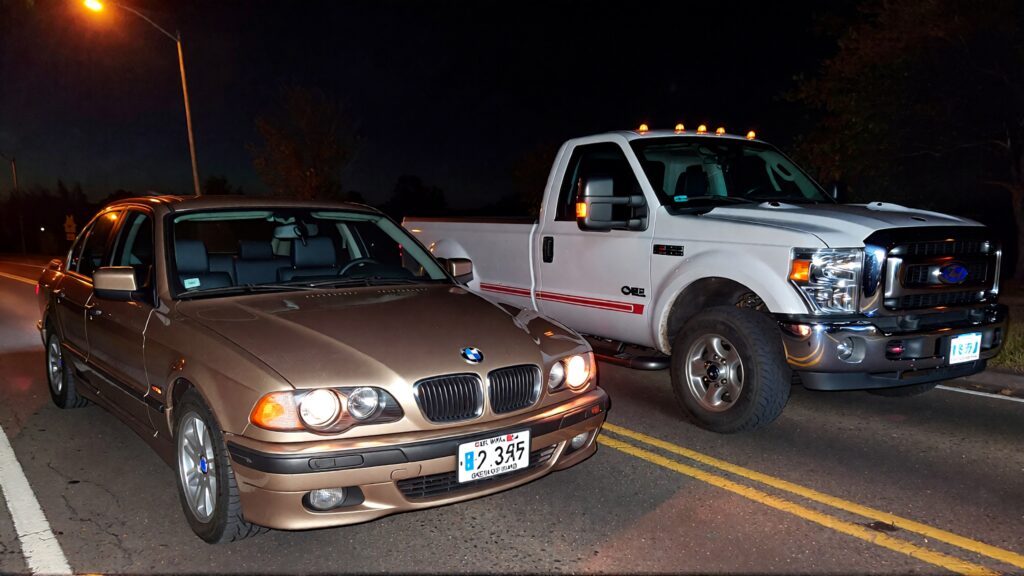
The incident occurred at approximately 1:43 a.m. on eastbound State Route 4, just west of Balfour Road, in Contra Costa County, involving an older BMW sedan and a Ford F250 pickup truck carrying landscaping equipment. The collision caused significant debris to scatter across all eastbound lanes. The Ford pickup overturned and blocked the slow lane, while the BMW came to rest in a grassy area on the right side of the highway.
Emergency responders, including the California Highway Patrol and the Contra Costa County Fire Department, were dispatched to the scene. A witness reported seeing a male driver exit his vehicle and sit on the ground with possible injuries. Despite the prompt response from paramedics, one individual succumbed to their injuries at the scene.
The identity of the victim had not been publicly released as of the time of this writing. By 2:12 a.m., a SigAlert was issued as lanes remained blocked and debris was spread across the roadway while crews worked the scene. Traffic was diverted to Sand Creek Road, and all lanes were reopened by 5:00 a.m.
Why Early-Morning Highway Crashes Are Especially Dangerous
Collisions in the early morning hours, particularly between midnight and 5:00 a.m., carry an elevated risk of fatality for several well-documented reasons. Reduced visibility, driver fatigue, and the presence of impaired drivers all contribute to the deadliness of late-night highway crashes.
Commercial and work vehicles, such as pickup trucks hauling landscaping equipment, are common on Highway 4 during pre-dawn hours, and the speed differential between vehicles traveling at highway speeds can make any collision especially severe.
Highway 4 through Contra Costa County has historically been the site of serious and fatal crashes near the Balfour Road corridor. Families who lose loved ones in these incidents deserve answers about what caused the crash and who may be legally responsible.
Understanding Legal Liability in Fatal Two-Vehicle Highway Crashes
When a fatal collision occurs on a California highway, multiple parties may be held legally responsible, depending on the circumstances. Under California Civil Code Section 1714, all drivers have a duty of care to operate their vehicles safely and in accordance with traffic laws. A breach of that duty that results in death can form the basis of a wrongful death claim.
Potential sources of liability in a crash like this one include:
Driver negligence — Speeding, impaired driving, distracted driving, or failure to maintain a lane are among the most common causes of fatal two-vehicle crashes on highways. CHP investigators will analyze physical evidence, witness statements, and any available video footage to determine how and why this collision occurred.
Vehicle or equipment failure — If a mechanical defect contributed to the crash, the vehicle manufacturer or a maintenance provider could face liability under California product liability law.
Cargo securement violations — When a commercial or work vehicle is involved, federal and state regulations govern how equipment and cargo must be secured. If landscaping equipment was improperly loaded or secured and contributed to the crash or its severity, the vehicle operator or their employer may be held responsible.
California law recognizes that fatal highway crashes rarely happen without a cause, and identifying that cause is the foundation of any successful legal claim. In the immediate aftermath of a collision like this one, the CHP will conduct a formal traffic collision investigation that includes measuring skid marks, documenting final rest positions of both vehicles, collecting physical evidence, and interviewing any available witnesses.
That official report, once complete, becomes a critical piece of evidence. However, families and their attorneys should not rely on it exclusively. Independent investigations conducted by accident reconstruction specialists can uncover details that a standard CHP report may not fully capture, including vehicle speed estimates, pre-impact braking behavior, and sightline conditions at the time of the crash.
In cases involving a commercial or work vehicle, such as a Ford F250 carrying landscaping equipment, additional layers of investigation may be warranted, including an examination of the driver’s hours of service, any prior traffic violations, and whether the vehicle was properly maintained. The more thoroughly the facts are documented in the early stages, the stronger the foundation for a wrongful death or personal injury claim on behalf of surviving family members.
Who Can File a Wrongful Death Claim in California
Under California Code of Civil Procedure Section 377.60, eligible survivors who may bring a wrongful death action include the deceased’s spouse or domestic partner, children, and, in certain circumstances, other dependents or family members. A separate survival action under CCP Section 377.30 may allow the estate to recover damages the decedent experienced between the time of the crash and death, including pain and suffering and medical expenses.
Damages recoverable in a wrongful death case in California include loss of financial support, loss of companionship, funeral and burial expenses, and the emotional suffering endured by surviving family members. It is worth noting that California’s wrongful death statute is more nuanced than many people realize, and the order of priority among eligible claimants can affect how a case is structured and how damages are ultimately distributed.
When the deceased was married or had children, those individuals typically stand at the front of any claim. However, when a victim is unmarried and has no children, the right to file may extend to parents, siblings, or other individuals who can demonstrate financial dependence on the deceased. In some cases, multiple family members may file jointly as plaintiffs in a single wrongful death action, which California courts generally encourage to avoid duplicative litigation.
It is also important to understand that each eligible claimant may be entitled to their own separate category of damages — a spouse’s loss of companionship is legally distinct from a child’s loss of parental guidance, and a parent’s grief over the loss of an adult child carries its own recognized legal weight.
Sorting through these relationships and ensuring that every eligible family member’s interests are properly represented is one of the most important early tasks an experienced wrongful death attorney will undertake. At GJEL, we take the time to understand the full scope of a family’s loss before we ever enter a courtroom or sit down at a negotiating table.
The Statute of Limitations for Fatal Accident Claims in California
California law generally provides a two-year window from the date of death to file a wrongful death lawsuit under CCP Section 335.1. Missing this deadline can permanently bar a family from recovering compensation, regardless of how strong their case may be. Consulting with an experienced personal injury attorney as soon as possible after the incident preserves evidence and protects your rights.
One important exception to the standard two-year filing deadline involves claims against a government entity. If any aspect of this crash involved a dangerous road condition, inadequate signage, a malfunctioning traffic control device, or any other deficiency in the design or maintenance of Highway 4, the California Department of Transportation or another public agency could potentially share liability.
However, claims against government entities in California operate under a different, far more compressed timeline. Under the California Government Claims Act, a formal claim must be filed with the responsible government agency within 6 months of the incident before any lawsuit can be initiated. Missing that six-month window can permanently eliminate a family’s ability to pursue a government entity as a defendant, even if a strong case exists.
This is one of the most consequential and frequently overlooked deadlines in California personal injury and wrongful death law, and it is one of the primary reasons why speaking with an attorney as early as possible after a fatal crash is so strongly advisable. The sooner an attorney can evaluate all potential sources of liability, the better protected a grieving family will be.
What Families Should Do After a Fatal Highway Accident
The days and weeks following the loss of a loved one in a traffic crash are overwhelmingly painful. At the same time, taking the right steps early can make a significant difference in any future legal claim. Families should request a copy of the CHP traffic collision report once it is finalized, preserve any communications with insurance companies in writing, and avoid giving recorded statements to any insurer before consulting an attorney.
Photographs of the crash scene, the vehicles involved, and any visible road conditions are valuable evidence that may not be available later. One step that families often overlook in the immediate aftermath of a fatal crash is the importance of preserving digital evidence. In today’s environment, a significant amount of valuable crash-related information exists in electronic form and can disappear quickly if not formally preserved.
Surveillance cameras from nearby businesses, traffic-monitoring cameras operated by Caltrans or local agencies along Highway 4, and dashcam footage from other vehicles that may have been in the area at the time of the crash can all provide critical insight into how the collision unfolded. This type of footage is typically overwritten or deleted within days, sometimes within hours, of the incident.
A formal legal hold notice, promptly issued by an attorney to relevant agencies and businesses, is often the only way to ensure that footage is retained before it is lost permanently. Cell phone records, which can reveal whether either driver was using their phone in the moments before impact, are another category of digital evidence that requires prompt legal action to obtain. Families who retain legal counsel early give their attorneys the best possible chance of securing this time-sensitive evidence before it is gone.
Settlement Value in Fatal Highway Crash Cases
The value of a wrongful death or catastrophic injury claim depends on a range of factors, including the age and earning capacity of the victim, the severity of the negligence involved, the degree of financial and emotional dependence of surviving family members, and the availability of insurance coverage. California attorneys typically use two primary methods to assess potential settlement value.
Under the multiplier method, economic damages, such as lost wages and medical costs, are calculated and then multiplied by a factor reflecting the severity of non-economic harm, typically between 1.5 and 5 in wrongful death cases.
Under the per diem method, a daily dollar value is assigned to the pain, suffering, and loss of companionship experienced, and that figure is applied across a reasonable projected timeframe. In cases involving fatalities on high-speed highways where negligence is clear, settlements can reach well into the hundreds of thousands of dollars or more.
Using a Wrongful Death Settlement Calculator to Understand the Value of Your Claim
When a family is confronted with the sudden loss of a loved one in a fatal highway crash, the question of financial compensation can feel secondary to grief — and understandably so. However, understanding the potential value of a wrongful death claim is a practical and necessary step toward securing a family’s financial future, and a wrongful death settlement calculator can serve as a useful starting point in that process.
These tools take into account a range of quantifiable factors, including the deceased’s age, occupation, annual income, expected years of remaining employment, and financial contributions to their household. From there, non-economic damages such as loss of companionship, loss of parental guidance, and the emotional suffering of surviving family members are factored in using established legal methodologies, most commonly the multiplier method or the per diem approach described earlier in this article.
While the wrongful death settlements calculator can provide a general ballpark figure, it is important for families to understand that these tools cannot fully account for the specific facts of their case, the degree of negligence involved, the available insurance coverage, or the litigation strategy that an experienced attorney would bring to bear in negotiations or at trial.
A calculator is a starting point for understanding, not a substitute for a thorough case evaluation conducted by a qualified wrongful death attorney who knows California law and has a track record of maximizing results for grieving families. Call us now at +1-866-218-3776 to speak with our experts.
Take Action Today – Get the Help You Deserve
“Losing someone on a familiar road in the middle of the night is a particular kind of heartbreak — it happens so fast, and the people left behind are often in shock for days before the reality of what they are facing truly sets in. If your family lost someone in this crash, or if you were injured and are still trying to make sense of what happened, I want you to know that you do not have to navigate this alone. In my more than 40 years of representing accident victims and grieving families across California, I have seen how quickly critical evidence disappears and how aggressively insurance companies move to protect their own interests in the aftermath of a fatal crash. The decisions you make in these early weeks matter enormously. Please reach out to our team before you speak with any insurer, sign anything, or assume that justice will take care of itself. We will listen, investigate, and fight for every dollar your family deserves. That is a promise I have kept for decades, and it is one I intend to keep for you.” — Andy Gillin, Managing Partner, GJEL Accident Attorneys
If your family has been affected by this crash or any other serious accident on Highway 4 or anywhere in California, GJEL Accident Attorneys is ready to help. With over $980 million recovered for injured clients and families across California, and more than 40 years of experience handling wrongful death and personal injury cases, our team has the knowledge and resources to pursue justice on your behalf. We work on a contingency fee basis, meaning you pay nothing unless we win your case.
At GJEL, we ensure that all evidence is properly preserved and that all potential sources of compensation are thoroughly investigated, allowing families to focus on healing. Talk to an experienced GJEL accident attorney for a free legal consultation. Contact us at +1-866-218-3776 or visit our Orinda office to secure your future and compensation.
Local Resources for Contra Costa County Crash Victims and Families
California Highway Patrol — Contra Costa Area Office 1340 Arnold Drive, Suite 200, Martinez, CA 94553 Phone: (925) 646-4980 Website: chp.ca.gov
Contra Costa County Fire Protection District 4005 Port Chicago Highway, Concord, CA 94520 Phone: (925) 941-3300 Website: cccfpd.org
Contra Costa County Sheriff’s Office 651 Pine Street, Martinez, CA 94553 Phone: (925) 655-0019 Website: cocosheriff.org
Contra Costa County Coroner’s Office 1960 Muir Road, Martinez, CA 94553 Phone: (925) 335-8780 Website: co.contra-costa.ca.us
Contra Costa Crisis Center (grief and emotional support) Phone: (800) 833-2900 Website: crisis-center.org
Contra Costa Superior Court — Civil Division 725 Court Street, Martinez, CA 94553 Phone: (925) 608-1000 Website: cc-courts.org