Last updated September 19, 2026
A woman lost her life in the early morning hours of Sunday, June 14, 2026, after a fleeing driver caused a fatal crash from a neighboring jurisdiction ran a red light and slammed into another vehicle in San Jose’s Rose Garden neighborhood. The collision, which left four people either dead or injured, marks a devastating example of the consequences that follow when a driver chooses to evade law enforcement at high speed through residential streets.
What Happened at Naglee Avenue and Park Avenue
At approximately 12:16 AM, Santa Clara Police Department officers observed a 2002 Buick sedan on Stevens Creek Boulevard driving recklessly, including traveling on the center median and the wrong side of the road. Officers attempted to pull the vehicle over, but the driver refused to stop.
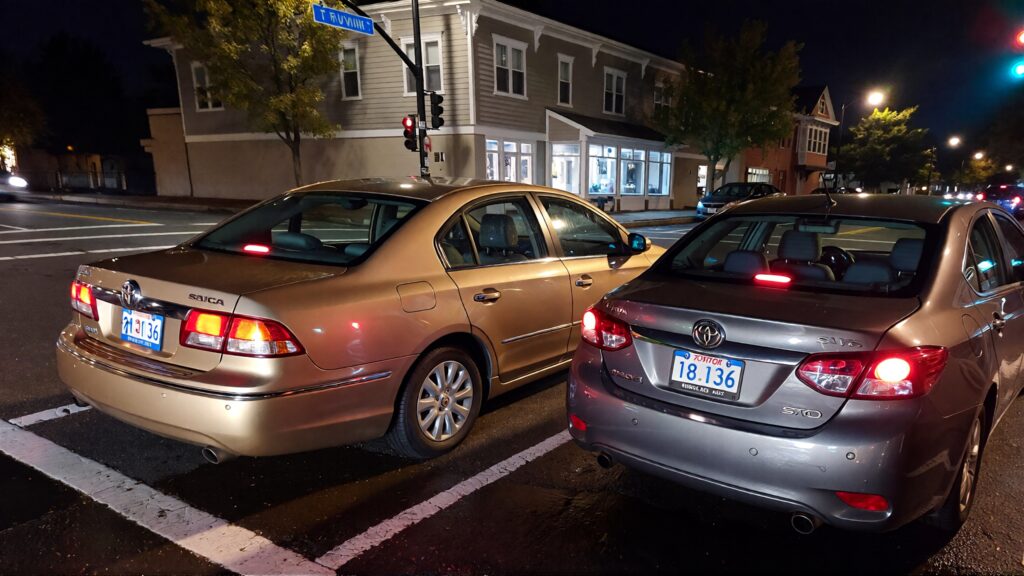
The suspect led officers on a pursuit from Santa Clara through Stevens Creek Boulevard, Interstate 880, and into San Jose before the situation turned fatal. At Naglee and Park Avenues, the car ran a red light, hit a 2016 Toyota sedan, and then struck a telephone pole.
According to the San Jose Police Department’s preliminary investigation, the Buick was traveling southbound on Park Avenue when it entered the intersection and struck the Toyota, which was traveling westbound on Naglee Avenue. The impact forced the Buick into a traffic pole on the southwest corner of the intersection.
The adult female passenger in the Buick sustained fatal injuries and was pronounced deceased at the scene, making this San Jose’s 21st traffic fatality of 2026. The male driver of the Buick suffered major injuries and was transported to a local hospital while in the custody of Santa Clara Police. Both occupants of the Toyota, two adult women, were taken to area hospitals with injuries that were later determined to be non-life-threatening.
Why Fleeing Drivers Create Catastrophic Legal Liability
Under California law, the driver of the Buick faces substantial civil and criminal exposure arising from this incident. California Vehicle Code §2800.2 makes it a felony to flee from a law enforcement officer with willful or wanton disregard for the safety of persons or property. That willful disregard is precisely what transforms a traffic stop into a fatal collision.
From a civil liability standpoint, California Civil Code §1714 establishes that everyone is responsible for injuries caused by their own negligence or unlawful conduct. A driver who runs a red light at high speed while fleeing police has committed multiple independent acts of negligence: the reckless driving observed before the pursuit, the decision to flee, traveling the wrong way on a roadway, and ultimately running the red light that caused the crash.
The surviving victims in the Toyota, as well as the estate of the woman who was killed, may have claims not only against the driver of the Buick but potentially against other parties depending on the full circumstances of the pursuit. California courts have examined questions of law enforcement liability in pursuit cases under Government Code §835, which governs dangerous conditions on public property, and under broader negligence standards when a pursuit is conducted in a manner that foreseeably endangers the public.
Damages Available to Victims of This Collision
Victims and surviving family members harmed in crashes caused by reckless or fleeing drivers are entitled to pursue compensation for a wide range of losses under California law. The two women injured in the Toyota may seek recovery for past and future medical expenses, lost income, and pain and suffering under California Civil Code §1714. If either victim develops long-term complications from their injuries, those future damages are also recoverable with the support of medical expert testimony.
For the family of the woman killed in this crash, California Code of Civil Procedure §377.60 permits eligible surviving family members to bring a wrongful death action to recover for loss of financial support, loss of companionship and consortium, and the grief and emotional suffering caused by the death. A separate survival action under CCP §377.30 may allow recovery for the pain and suffering the victim endured before her death, as well as any other damages she sustained.
The nature of this crash also opens the door to potential punitive damages. Unlike compensatory damages, which are intended to make a victim whole, punitive damages exist to punish conduct that rises to the level of malice, oppression, or conscious disregard for the safety of others under California Civil Code §3294.
A driver who was observed traveling the wrong way on a public road, refused to stop for law enforcement, led police on a multi-jurisdictional pursuit through city streets and a freeway, and then ran a red light at a busy intersection in the middle of the night has demonstrated precisely the kind of reckless indifference that California courts have found sufficient to support a punitive damages award.
In cases where punitive damages are appropriate, they can substantially increase the total value of a verdict beyond the underlying compensatory award, and they send a clear message that California will not tolerate this level of disregard for human life.
Estimating the Value of a Serious Injury Claim in California
California does not cap compensatory damages in personal injury cases, meaning a victim’s full losses can be presented to a jury. Settlement and verdict values in cases involving crashes caused by fleeing drivers tend to be significant because of the flagrant nature of the conduct involved.
Attorneys commonly use two methods to estimate a case’s value. The multiplier method multiplies the victim’s total economic damages, such as medical bills and lost wages, by a factor that reflects the severity of the harm.
For catastrophic or permanent injuries, that multiplier can range from three to five or higher. The per diem method assigns a daily dollar value to the pain and suffering experienced and multiplies it by the number of days the victim has lived and will continue to live with those effects. Both approaches are tools for negotiation and argument, not guarantees, and a qualified attorney can help apply them to the specific facts of any given case.
In a case like this one, where a driver made a series of deliberate decisions that led directly to a death and serious injuries, juries in Santa Clara County have historically been willing to award substantial verdicts. The severity of the collision itself is also a factor that can meaningfully influence settlement and verdict values.
When a vehicle strikes another at high speed after running a red light, the forces involved frequently produce injuries that go beyond what initial emergency room evaluations capture. Traumatic brain injuries, spinal damage, internal organ trauma, and psychological conditions such as post-traumatic stress disorder can emerge or worsen in the days and weeks following a crash.
Each of these conditions requires its own course of treatment, carries its own projected future costs, and contributes independently to a victim’s pain and suffering calculation. Insurance adjusters are trained to close claims quickly and for as little as possible, often before the full scope of a victim’s injuries is known.
Accepting a settlement before reaching maximum medical improvement can permanently forfeit a victim’s right to recover for future medical needs, which is why having legal representation from the outset of a claim is so important.
What Surviving Victims and Families Should Do Now
The period immediately following a serious crash is critical for protecting a legal claim. Evidence disappears, witnesses become harder to locate, and insurance companies move quickly to minimize their exposure. There are several important steps victims and families should take right away.
Seek a complete medical evaluation even if injuries seem minor at first. Many soft tissue and neurological injuries do not manifest fully in the hours after a crash. Obtaining a thorough medical record establishes a clear connection between the collision and any resulting harm.
Preserve everything connected to the incident. This includes photographs of vehicle damage, medical records, billing statements, and any communications from insurance companies. Do not give recorded statements to any insurance adjuster before consulting with an attorney.
California’s statute of limitations for personal injury claims is two years from the date of injury under CCP §335.1. For wrongful death claims, the same two-year period generally applies from the date of death. While that window may seem long, beginning the investigation early produces better outcomes. Witness memories fade, surveillance footage is overwritten, and accident reconstruction becomes harder over time.
How a Wrongful Death Settlement Calculator Can Help Families Understand Their Case Value
A wrongful death settlement calculator is an educational tool that allows surviving family members to input key variables related to their loss and receive a general estimate of what a claim might be worth. These variables typically include the deceased’s age, annual income, life expectancy, the number of dependents left behind, estimated future earning capacity, and the value of household services the deceased would have provided over their lifetime.
The calculator then applies recognized valuation methods to produce a range that gives families a starting point for understanding the financial dimensions of their loss. In a case like the Naglee and Park Avenue crash, where a woman was killed as a passenger in a vehicle driven by someone who had no regard for the lives of others, the economic and non-economic losses her family faces are substantial and deserve careful quantification.
While no calculator can account for every nuance of a specific case, including the availability of punitive damages or the particular facts that a jury might find compelling, these tools help families enter conversations with insurers and attorneys with a clearer sense of what fair compensation looks like.
They also underscore an important point: the value of a wrongful death claim is not limited to lost wages alone. California law recognizes the profound non-economic harm that comes from losing a parent, spouse, or child, and a thorough valuation must reflect both the financial and deeply personal dimensions of that loss. Call us now at +1-866-218-3776 to speak with the experts.
Take Action Today – Get the Help You Deserve
“Losing someone you love because a driver chose to run from police through city streets is a tragedy that never should have happened. To the family of the woman who lost her life that night, and to the two women who were injured simply because they were driving through a green light, I want you to know that what happened to you was not your fault, and you do not have to face the aftermath alone. California law gives you the right to hold the people responsible for this crash fully accountable, and that means pursuing every dollar of compensation available to you, including damages for your pain, your grief, your medical costs, and your lost future. My advice to anyone touched by this collision is to speak with an attorney before you speak with any insurance company. The decisions you make in the weeks ahead can have a lasting impact on your recovery, and we are here to make sure those decisions protect you.”- Andy Gillin, GJEL Accident Attorneys
If you or someone you love was injured in this crash or a similar collision anywhere in California, do not wait to get legal help. At GJEL Accident Attorneys, we have spent more than 40 years fighting for victims of reckless drivers, and we have recovered over $980 million for our clients and their families.
We handle every case on a strict contingency fee basis, which means you pay absolutely nothing unless we win your case. There are no upfront costs, no hourly fees, and no financial risk to you for seeking the representation you deserve. Call us today at +1-866-218-3776 or visit our San Francisco office to schedule a free consultation with our team.
Local Resources for San Jose Crash Victims and Families
Navigating the aftermath of a serious traffic collision involves more than medical recovery. Victims and families often need access to official reports, victim support services, and community resources to begin putting their lives back together. The following agencies and organizations serve San Jose and Santa Clara County residents affected by traffic collisions.
San Jose Police Department
The SJPD handles traffic collision investigations within San Jose city limits and is the lead investigating agency in this crash. Victims and families can request collision reports, follow up on investigation status, and access victim services directly through the department.
Non-Emergency Line: (408) 277-8900
Traffic Investigations Unit: (408) 277-4654
Website: sjpd.org
Collision Reports: www.sjpd.org/records/police-reports
Santa Clara Police Department
As the agency that initiated the enforcement stop preceding this crash, SCPD may hold relevant records and can direct families to appropriate resources within their jurisdiction.
Non-Emergency Line: (408) 615-4700
Website: www.santaclaraca.gov/government/departments/police-department
California Highway Patrol San Jose Area Office
The CHP oversees traffic enforcement on state highways and freeways, including the stretch of Interstate 880 traveled during this pursuit. CHP collision reports and traffic safety resources are available through their office.
Phone: (408) 961-0900
Address: 2975 Silver Creek Road, San Jose, CA 95121
Website: www.chp.ca.gov
Collision Reports: www.chp.ca.gov/programs-services/services-information/collision-reports
Santa Clara County Victim Services Unit
This county-run program provides free support to victims of violent crimes and serious traffic collisions, including help navigating the criminal justice process, referrals to counseling, and assistance accessing financial compensation through the California Victim Compensation Board.
Phone: (408) 295-2656
Website: www.sccgov.org/sites/da/victimservices
California Victim Compensation Board
The CalVCB program provides financial assistance to victims of violent crimes, which can include crashes involving fleeing or reckless drivers, for costs such as medical expenses, mental health treatment, funeral and burial expenses, and lost wages.
Phone: 1-800-777-9229
Website: www.victims.ca.gov
Santa Clara Valley Medical Center
As the region’s primary trauma center, SCVMC provides emergency and long-term care for seriously injured collision victims. Their social work team can also connect patients and families with community resources during recovery.
Phone: (408) 885-5000
Address: 751 South Bascom Avenue, San Jose, CA 95128
Website: www.scvmc.org
California Department of Motor Vehicles
The DMV can assist with driver record inquiries, SR-1 collision report filings, and license or registration matters arising after a serious crash.
Phone: 1-800-777-0133
Website: www.dmv.ca.gov
SR-1 Report Filing: www.dmv.ca.gov/portal/driver-education-and-safety/educational-materials/sr-1-report-of-a-traffic-accident
San Jose 311 City Services
San Jose’s 311 service connects residents with city departments and can assist with questions about traffic infrastructure, intersection safety, and other city-managed resources at the crash location.
Phone: (408) 535-3500
Website: www.sanjoseca.gov/i-want-to/report-a-concern/311
The San Jose intersection crash map provides a separate historical view of reported 2020–2024 collisions using published location-selection rules.
If you or a loved one was hurt in a crash like this one, our San Jose car accident lawyers offer a free consultation from our office at 1625 The Alameda #511, a few blocks from the Naglee and Park intersection. You pay no fee unless we win.
When another driver may be responsible for a death, our San Jose wrongful death lawyers can explain the family’s rights, available insurance, and next steps.