Last updated September 7, 2026
A young life was cut tragically short on the afternoon of March 19, 2026, when a fatal electric bicycle crash at a San Jose intersection claimed the life of a juvenile rider and left his passenger injured. The collision, which marks the city’s seventh traffic fatality of the year, has renewed community concern about e-bike safety among youth and the legal protections available to grieving families.
In the days that followed, a memorial grew at the scene on Remington Way — a quiet but powerful reminder that behind every traffic statistic is a child, a family, and a community forever changed. Electric bicycles have surged in popularity among young riders across the Bay Area in recent years, offering an affordable and accessible mode of independent transportation.
But that freedom carries real risk, and this crash is the latest and most devastating example of what can happen when speed, inexperience, and the demands of an intersection converge in a single, irreversible moment. For the family of the boy who lost his life, and for the passenger who witnessed it, the road to understanding what happened — and who is responsible — begins now.
What Happened with the Electric Bicycle Crash
At approximately 1:08 PM on March 19, 2026, San José Police Department patrol officers responded to the area of Remington Way and Allenwood Drive in East San Jose after receiving a report of a solo electric bicycle collision. Preliminary investigation revealed that a Magnum Cosmo electric bicycle, operated by a juvenile male with a juvenile male passenger aboard, was traveling northbound on Remington Way when it passed through the intersection with Allenwood Drive, lost control, and skidded to the ground.
The juvenile operator sustained life-threatening injuries and was transported by emergency responders to a local hospital, where he was subsequently pronounced deceased. The juvenile passenger sustained non-life-threatening injuries and was treated at the scene. The crash represents the city’s seventh fatal collision and seventh traffic death of 2026.
The identity of the deceased juvenile was withheld pending notification of next of kin by the Santa Clara County Office of the Medical Examiner. As of the time of this article, investigators have not released additional details regarding the specific cause of the loss of control or whether speed, road conditions, mechanical failure, or other factors played a role.
The Magnum Cosmo: Understanding the Electric Bicycle Involved
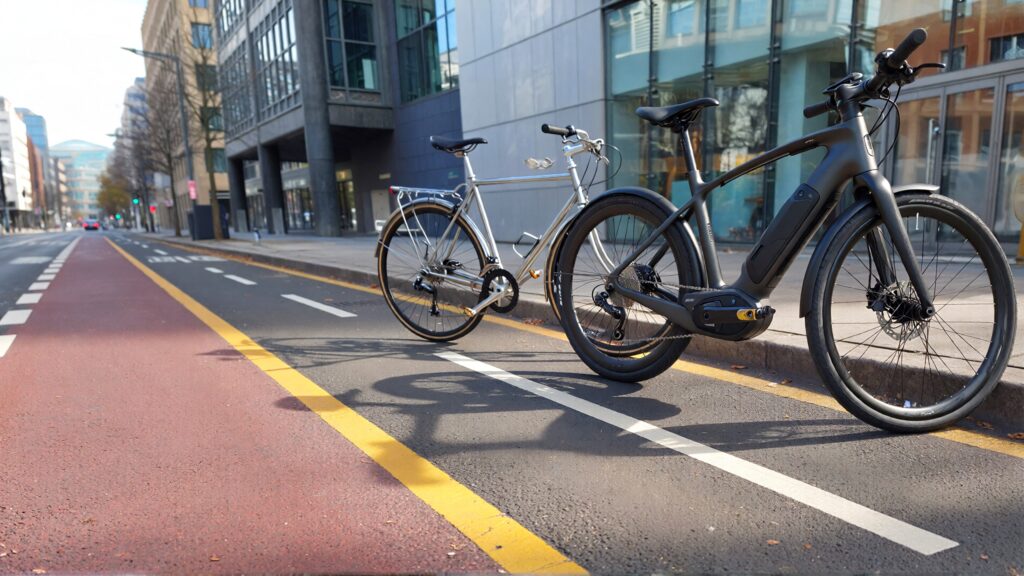
The Magnum Cosmo is a popular step-through commuter electric bicycle manufactured by Magnum Bikes. The Cosmo series features a 500-watt rear hub motor paired with a 48-volt battery system capable of achieving pedal-assist speeds up to 28 miles per hour in its highest configuration.
The bike ships as a Class 2 e-bike — meaning it is equipped with both throttle and pedal assist and is motor-limited to 20 mph — but can be configured as a Class 1 or Class 3 e-bike through settings adjustments or hardware modifications.
The Magnum Cosmo has a maximum weight capacity of 330 pounds and is marketed primarily as a city and commuter bicycle. Its low step-through frame, designed for easy mounting and dismounting, is particularly accessible to younger or smaller riders. The fact that the bike can reach speeds up to 25–28 mph in certain configurations raises serious questions in any crash investigation involving a juvenile operator.
California E-Bike Laws and the Rights of Juvenile Riders
California has undergone significant reform of its electric bicycle regulations in recent years, and families affected by e-bike crashes involving minors should understand how these laws apply. Under California Vehicle Code Section 312.5, electric bicycles are classified into three categories based on speed capability and drive mechanism.
Class 1 e-bikes provide pedal-assist only up to 20 mph; Class 2 e-bikes include throttle-assisted propulsion up to 20 mph; and Class 3 e-bikes provide pedal-assist up to 28 mph and require riders to be at least 16 years of age. Under current California law, all riders under 18 must wear a helmet on any class of e-bike. Violations of helmet requirements involving minors may result in citations issued either to the minor or to the minor’s parent or guardian — a significant provision under recently enacted legislation targeting parental accountability.
Senate Bill 1271, which went into effect on January 1, 2025, substantially tightened California’s e-bike regulatory framework. Under this law, e-bikes are now capped at 750 watts of motor power, Class 1 and Class 3 e-bikes may no longer use throttles, and all e-bike batteries must meet UL safety certification standards. Critically, speed-modification devices and kits that allow an e-bike to exceed its class limits are now explicitly illegal under California law.
If a Magnum Cosmo involved in a crash had been modified or unlocked to Class 3 speeds, this could bear legal significance in any subsequent litigation. Under California law, an e-bike is governed by the same general rules of the road as a standard bicycle per the California Vehicle Code. Riders must obey traffic signals, stop signs, and directional rules. Violations of these rules — whether by the rider or by another party — may establish a basis for liability.
Who May Be Liable in a Fatal Juvenile E-Bike Accident
When a child is killed or seriously injured in an e-bike accident, multiple parties may bear civil liability under California’s comparative fault framework governed by Civil Code Section 1714. Potential defendants in a case involving a juvenile e-bike fatality may include:
The E-Bike Manufacturer or Retailer: If a defect in the Magnum Cosmo — such as a faulty braking system, throttle malfunction, or motor failure — contributed to the loss of control, California product liability law may give rise to a claim against the manufacturer, distributor, or retailer. Under strict products liability doctrine, the plaintiff need not prove negligence; only that the product was defective and that the defect was a substantial factor in causing injury.
A Supervising Adult or Parent: If an adult entrusted a high-powered or improperly configured e-bike to a juvenile rider without appropriate supervision or safety instruction, California law may impose liability through negligent entrustment principles.
A Government Entity: If the road surface, signage, or intersection design at Remington Way and Allenwood Drive was defective or unreasonably dangerous and contributed to the crash, a government tort claim under the California Government Claims Act (Government Code Section 810 et seq.) could be filed. Families must be aware that claims against government entities carry a strict 6-month deadline for filing an administrative claim under Government Code Section 911.2 — far shorter than California’s standard personal injury statute of limitations.
A Third Party: If a vehicle driver, another cyclist, or any other third party’s negligent actions contributed to the crash — even if not identified in the initial police report — their liability may be established through further investigation.
Wrongful Death Claims for Families of Juvenile Victims
The death of a child is an unimaginable tragedy. California law provides a legal pathway for families through the wrongful death statute, California Code of Civil Procedure Section 377.60, which permits the surviving parents, spouse, and other eligible family members to pursue compensation for:
- Loss of financial support
- Loss of companionship, comfort, society, and affection
- Funeral and burial expenses
- Medical expenses incurred before death
Additionally, where the deceased child survived for a period of time before succumbing to injuries — as occurred in this case — the family may also bring a survival action under California Code of Civil Procedure Section 377.30. A survival action allows the estate to recover damages the child would have been entitled to bring, including pain and suffering sustained before death.
Families must act promptly. California’s statute of limitations for wrongful death actions under CCP Section 335.1 is two years from the date of death. However, the practical timeline for investigation, evidence preservation, and case building is far more compressed. Surveillance footage, skid mark measurements, vehicle data, and witness accounts can disappear rapidly.
Understanding What Your Case May Be Worth: The Settlement Calculator
Families often have little understanding of what a wrongful death claim involving a child may be worth, and this uncertainty can be exploited by insurance companies seeking early, low-value settlements. A skilled attorney uses two primary approaches to calculate damages:
The Multiplier Method assigns a monetary value to economic damages — such as future earning capacity and medical costs — and multiplies that figure by a factor typically ranging from 1.5 to 5, depending on the severity and permanence of the harm, the degree of fault, and the impact on surviving family members. In cases involving the death of a child, courts and juries often apply significant weight to the loss of companionship and parental grief.
The Per Diem Method assigns a daily dollar value to ongoing suffering and loss of relationship and multiplies it by the number of days the harm will continue — in the case of a parent who has lost a child, potentially for decades.
Online bicycle accident settlement calculators are widely available, and while they can offer a rough starting point, families should understand how they work and where their limitations lie. Most digital calculators prompt users to input a set of basic variables — total medical expenses, estimated lost wages, property damage, and a selected “pain and suffering multiplier” — and then return an estimated settlement range.
In a fatal e-bike case like this one, a calculator might accept figures such as emergency transport costs, hospital treatment expenses, and funeral costs, then apply a multiplier to produce a lump-sum estimate. The problem is that these tools are built on generalized assumptions and cannot account for the specific facts that drive settlement values in California wrongful death and bicycle accident cases.
They do not factor in the age of the victim and the decades of lost companionship a parent will endure, the degree of fault attributable to a manufacturer whose product may have been defective, the financial exposure of a government entity whose road design contributed to the crash, or the negotiating posture of a particular insurance carrier.
They also cannot assess the strength of the available evidence, the credibility of witnesses, or the likelihood that a case will proceed to trial rather than settle early. A settlement calculator can help a family begin thinking concretely about the categories of loss they have suffered — medical bills, funeral expenses, and the incalculable value of a child’s presence in their daily life.
What it cannot do is replace the judgment of an experienced bicycle accident attorney who has studied the crash report, retained accident reconstruction experts, and evaluated every avenue of recovery. Used as a starting point rather than a final answer, a settlement calculator is one tool among many — but the most important calculation is the one done by a legal team that knows California law, knows your case, and is committed to fighting for every dollar your family deserves.
Because every family’s circumstances are unique, these formulas are tools for estimation rather than guarantees. An experienced wrongful death attorney will evaluate all applicable damages categories, anticipate the defenses insurers or manufacturers are likely to raise, and provide a realistic assessment of the full value of your claim.
California E-Bike Safety and the Growing Youth Crisis
The San Jose crash did not occur in isolation. Bay Area authorities and public health officials have sounded increasing alarms about juvenile e-bike injuries and fatalities in recent years. According to federal data, children have experienced the fastest growth rate in e-bike injuries of any age group since 2022. A wrongful death lawsuit arising from an East Bay e-bike crash in the summer of 2025 — in which an 11-year-old rider was alleged to have triggered a collision that killed a 4-year-old in Burlingame — reflects the severity of the trend.
The San Jose crash on March 19 marked the city’s third traffic death in less than a week, a grim statistic that underscores the urgent need for community-wide action on traffic safety. Parents and guardians are urged to ensure that juvenile riders wear properly fitted helmets, that e-bikes are set to age- and skill-appropriate class configurations, and that minors are not permitted to carry passengers on e-bikes — a practice that increases instability and multiplies the consequences of any loss of control.
Take Action Today – Get the Help You Deserve
“When a child loses their life to a preventable accident, it is one of the most devastating events a family can endure. My heart goes out to this young man’s family and to the community in East San Jose that is mourning this loss. What I’ve seen in over 40 years of representing injury victims is that the legal system, when navigated correctly, can help families find accountability and achieve some measure of justice — even when no outcome can undo the loss. If you have lost a child or a loved one in a bicycle or e-bike crash, please reach out to us. We will listen, investigate, and fight for your family every step of the way. At GJEL, you pay nothing unless we recover for you.” — Andy Gillin, Managing Partner, GJEL Accident Attorneys
GJEL Accident Attorneys has spent more than 40 years fighting for seriously injured Californians and the families of those who have lost their lives in preventable accidents. With over $980 million recovered on behalf of our clients, we have the experience, resources, and tenacity to take on difficult cases — including wrongful death claims involving children, product liability against e-bike manufacturers, and government tort claims for dangerous road conditions.
We represent clients on a contingency fee basis. That means you pay nothing up front and owe us nothing unless we win your case. If your family has been affected by an e-bike accident in San Jose or anywhere in California, contact us today for a free consultation. Talk to an experienced GJEL accident attorney for a free legal consultation. Contact us at +1-866-218-3776 or visit our Fresno office to secure your future and compensation.
Local Resources for Families Affected by the San Jose E-Bike Crash
San José Police Department – Traffic Investigations Unit 201 W. Mission St., San Jose, CA 95110 (408) 277-8900 www.sjpd.org
GJEL’s San Jose crash map and road-user data offers a broader historical view of reported collisions from 2020–2024, with source and coverage notes.
Santa Clara County Office of the Medical Examiner-Coroner 333 W. Julian St., San Jose, CA 95110 (408) 793-1900 www.sccgov.org/sites/mec
Santa Clara Valley Medical Center (Trauma Center) 751 S. Bascom Ave., San Jose, CA 95128 (408) 885-5000 www.scvmc.org
Safe Routes to School – San Jose Unified School District 855 Lenzen Ave., San Jose, CA 95126 (408) 535-6000 www.sjusd.org
California Highway Patrol – San Jose Area 111 W. Alma Ave., San Jose, CA 95110 (408) 961-0900 www.chp.ca.gov
Bay Area Crisis Nursery / Child Grief Resources – 211 Santa Clara County Dial 2-1-1 or visit www.211sc.org for mental health and grief support referrals