A motorcyclist lost his life early Friday morning after a crash on Interstate 680 North near the Washington Boulevard off-ramp in Fremont, California. The collision, reported at approximately 7:20 a.m. on July 24, 2026, occurred during the height of the morning commute and prompted an emergency response that included lifesaving efforts by first responders. Despite those efforts, the motorcyclist did not survive.
This tragic event is a stark reminder of the dangers motorcyclists face on Bay Area freeways, where high speeds, dense traffic, and limited protection combine to make even a single-vehicle crash catastrophic.
How the Crash Unfolded
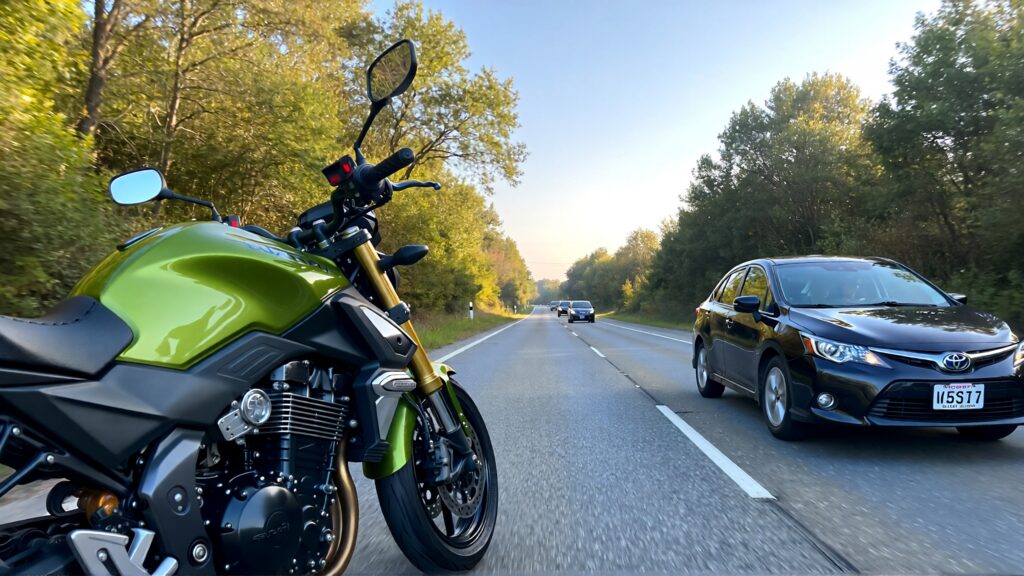
According to initial reports, the motorcyclist was traveling on I-680 North near the Washington Boulevard off-ramp when he lost control of his motorcycle. The bike reportedly collided with a guardrail along the right-hand shoulder of the freeway before coming to rest in the carpool lane, blocking lanes 1 and 2.
The resulting obstruction caused significant traffic disruptions during the peak of the morning commute, with a SigAlert issued advising drivers to seek alternate routes while crews worked to clear the scene.
The crash occurred during one of the busiest windows of the morning commute, when traffic on I-680 North typically builds steadily as drivers head toward Interstate 880, the Dumbarton Bridge, and points throughout the South Bay.
Because the motorcycle came to rest in the carpool lane and blocked two full lanes of traffic, the disruption extended well beyond the immediate crash site, backing up traffic for commuters who had no way to anticipate the closure ahead.
CHP units on scene worked to safely redirect vehicles around the wreckage while the SigAlert remained in effect, a process that can take considerable time on a freeway carrying heavy commuter traffic. For drivers stuck in the resulting delays, the incident served as a sobering reminder of how quickly conditions can change on a highway that thousands rely on every weekday morning.
Emergency Response and CPR Efforts
Firefighters and paramedics, including personnel from Alameda County Fire, arrived on scene shortly after the crash was reported. First responders immediately began CPR in an effort to revive the motorcyclist. Despite their swift and determined efforts, he succumbed to his injuries.
Cases like this underscore how quickly a routine commute can turn fatal, and how even the fastest emergency response cannot always overcome the severity of a high-speed motorcycle collision.
The response to this crash reflects the coordinated effort that goes into every roadway emergency of this severity. Alameda County Fire personnel are trained to begin resuscitation efforts within moments of arriving on scene, recognizing that the first minutes after a traumatic injury are often the most critical to a victim’s chances of survival.
In freeway crashes involving motorcyclists, first responders frequently face added challenges, including limited access to the victim if the motorcycle and rider are separated on impact, ongoing traffic hazards at the scene, and the need to stabilize severe trauma injuries before transport is even possible.
While the outcome in this case was tragic, the swift arrival and immediate action of emergency crews reflect the standard of care Bay Area residents can expect when a crash of this magnitude occurs on a major freeway like I-680.
Why Motorcycle Crashes on Freeways Like I-680 Are So Often Fatal
Motorcyclists riding on high-speed corridors like I-680 face unique risks. Unlike passenger vehicles, motorcycles offer virtually no structural protection in a crash, leaving riders exposed to direct impact with guardrails, pavement, or other vehicles. Common contributing factors in freeway motorcycle crashes include:
- Excessive speed, which reduces reaction time and increases the force of impact
- Lane-splitting or merging conflicts during heavy commute traffic
- Roadway hazards such as debris, uneven pavement, or poorly maintained guardrails
- Driver inattention or failure to notice motorcyclists in blind spots
- Mechanical failure or loss of control at highway speeds
When a rider is killed in a crash like this one, surviving family members are often left not only with grief but with serious financial burdens, including funeral costs, lost income, and the loss of companionship and support.
Beyond the physical vulnerability riders face, the design and traffic patterns of freeways like I-680 can compound the danger. Sections of highway near interchanges and off-ramps, such as the area close to Washington Boulevard, often see abrupt speed changes as some drivers slow to exit while others continue at highway speed, creating a volatile mix that leaves little room for error.
Guardrails and other roadside barriers, while designed to prevent vehicles from leaving the roadway entirely, can themselves cause severe or fatal injuries when a motorcyclist strikes them directly, since these barriers are generally engineered for passenger vehicles rather than the very different physics of a motorcycle impact.
Early morning hours present their own hazards, including reduced visibility, fatigue among commuters starting long workdays, and a false sense of an open road that can encourage higher speeds before traffic fully builds. Taken together, these factors help explain why a single motorcycle crash on a freeway like I-680 so often proves fatal, even when the ride begins as an ordinary commute.
Legal Considerations Following a Fatal Motorcycle Accident
Under California law, families who lose a loved one in a traffic collision may have the right to pursue a wrongful death claim. California Code of Civil Procedure §377.60 identifies who may bring such a claim, typically a surviving spouse, domestic partner, children, or other dependents, while CCP §377.30 governs survival actions brought on behalf of the deceased’s estate.
California Civil Code §1714 establishes the general duty of care that all individuals owe to one another on the road, meaning drivers and riders alike are responsible for operating their vehicles safely and avoiding foreseeable harm to others. If a government entity’s negligence, such as a poorly maintained guardrail or roadway defect, contributed to the crash, California Government Code §835 may allow for a claim against the public entity responsible for maintaining that section of freeway.
Families should also be aware that CCP §335.1 establishes a two-year statute of limitations for most personal injury and wrongful death claims in California, making it important to consult with an attorney as soon as possible to preserve evidence and protect legal rights.
Beyond identifying who may bring a claim and the applicable deadlines, families should understand that a wrongful death case often requires piecing together evidence that can be lost or altered within days of a crash. Skid marks, guardrail damage, and roadway conditions can be repaired or cleared quickly once a freeway reopens to traffic, and surveillance footage from nearby cameras is frequently overwritten within a matter of weeks.
An attorney can move quickly to request CHP collision reports, preserve physical evidence at the scene, and identify any witnesses who may have seen the crash unfold before their recollections fade. If the investigation reveals that a defect in the roadway or guardrail contributed to the crash, additional steps may be taken, such as filing a government claim.
It should be within the strict six-month window required for claims against public entities, may also be necessary. Because these deadlines and evidentiary windows can overlap and vary depending on the facts of the case, families are often best served by having legal counsel involved early rather than waiting until the CHP investigation concludes.
How Wrongful Death Settlements Are Calculated
When evaluating a wrongful death claim, attorneys typically consider both economic and non-economic damages. Two common methods used to help estimate the value of pain, suffering, and loss of companionship include:
The Multiplier Method: This approach takes the total economic damages, such as medical bills, funeral expenses, and lost income, and multiplies that figure by a number (typically between 1.5 and 5) based on the severity of the loss and its impact on the family.
The Per Diem Method: This method assigns a dollar value to each day the family is expected to experience the impact of their loss, then multiplies that amount over an anticipated period.
Every case is different, and the true value of a claim depends on specific facts, including the victim’s age, earning potential, and the relationships affected by the loss.
In addition to the multiplier and per diem methods, insurance adjusters and attorneys typically weigh several case-specific factors that can significantly shift the final settlement value. These include the victim’s age and life expectancy at the time of the crash, since a younger victim with decades of expected earnings and family support ahead of them generally results in a higher valuation than an older victim closer to retirement.
The number and closeness of surviving dependents also play a major role, as a spouse and young children who relied heavily on the victim’s income and presence will typically see a different calculation than an adult sibling or more distant relative.
Insurance policy limits can further complicate matters, since even a strong claim may be constrained by the at-fault party’s available coverage. This is one reason attorneys often investigate whether additional sources of recovery, such as underinsured motorist coverage or a government entity’s liability, may apply.
Because these variables interact in ways that are difficult to model with a formula alone, families are encouraged to treat any settlement estimate as a starting point for discussion with an attorney rather than a guaranteed outcome.
Estimating Your Potential Settlement
Families affected by a fatal motorcycle accident often want to understand what their case might be worth before speaking with an attorney. While no online tool can replace a full case evaluation, a settlement calculator can offer a starting point by factoring in medical expenses, lost income, funeral costs, and non-economic damages like loss of companionship.
A motorcycle accident settlement calculator to help families begin to understand the potential scope of their claim before pursuing a free consultation with an experienced attorney. Using a settlement calculator early in the process can also help families set realistic expectations before they begin negotiating with insurance companies, who often present an initial offer well below what a claim may ultimately be worth.
By inputting details such as the victim’s approximate income, age, and the size of their immediate family, families can get a preliminary sense of how economic damages alone might add up, even before non-economic factors like loss of companionship and emotional support are factored in.
It’s worth noting that these tools are meant to inform, not replace, a full case evaluation, since they cannot account for nuances like disputed liability, multiple defendants, or the specific circumstances that unfolded on I-680 that morning.
For families who want a more precise picture of what their case may be worth, GJEL Accident Attorneys offers a free consultation where an experienced attorney can review the specific facts of the crash and provide a more tailored assessment than any online calculator can offer.
Taking the First Step Toward Justice
“Losing someone in a crash like this leaves a family with so many questions, and so little clarity on what to do next. I want families affected by this tragedy to know that you don’t have to navigate the CHP investigation, the insurance adjusters, or the legal process on your own while you’re grieving. Our firm has spent more than 40 years standing beside families in Fremont and across California after exactly this kind of loss, and we know how to move quickly to preserve evidence and protect your rights before it’s too late. If your loved one was hurt or killed in this collision, please reach out to us. We work on a contingency fee basis, so there’s no cost to you unless we recover compensation on your behalf, and our only goal is to help you get the answers and support your family deserves right now.”- Andy Gillin, GJEL Accident Attorneys
If you lost a loved one in this motorcycle crash on I-680 North near Washington Boulevard, or in any traffic collision in Fremont or the greater Bay Area, GJEL Accident Attorneys is here to help. With over 40 years of experience and more than $950 million recovered for injury victims and their families, our team understands what it takes to hold negligent parties accountable.
Call us today at +1-866-218-3776 for a free, no-obligation consultation, or visit our San Francisco office to learn more. We work on a contingency fee basis, so there is no cost to you unless we win your case.
Local Resources for Families Affected by This Crash
California Highway Patrol, Dublin Area Office
4999 Gleason Drive, Dublin, CA 94568
(925) 828-0466
The Dublin Area Office patrols I-680 and I-580 throughout Alameda and Contra Costa Counties and is investigating this collision.
Fremont Police Department
2000 Stevenson Blvd., Fremont, CA 94538
(510) 790-6800
Fremont PD Website: https://www.fremontpolice.gov
Washington Hospital Emergency Department
2000 Mowry Ave., Fremont, CA 94538
(510) 818-7430
Washington Health Website: https://www.washingtonhealth.com