Last updated July 17, 2026
A devastating hit-and-run crash on Eight Mile Road in Stockton has left a pedestrian and two dogs dead, and a community searching for answers. The California Highway Patrol is actively investigating the case and asking for the public’s help in identifying the driver responsible.
The loss has hit particularly hard given the circumstances surrounding the victim. Reports indicate the pedestrian was traveling with all of their belongings and two companion animals at the time of the crash, details that have only deepened the sense of tragedy felt throughout the Stockton community.
For neighbors near Shumway Oak Grove Regional Park, the news has raised renewed concerns about pedestrian safety along this stretch of Eight Mile Road, where vehicles often travel at high speeds, with limited lighting and few protections for those walking or biking. As CHP investigators continue piecing together the timeline of events, residents are left grappling with the reality that whoever was behind the wheel has yet to be held accountable.

How the Crash Unfolded
On the morning of June 27, 2026, at approximately 10:18 a.m., the Stockton Communications Center received a call reporting a pedestrian down on Eight Mile Road near Shumway Oak Grove Regional Park. CHP units responded immediately and quickly determined that the incident was a hit-and-run crash involving fatal injuries.
Paramedics arrived on scene at 10:27 a.m. and pronounced the pedestrian deceased. Based on the condition of the scene, the medical examiner estimated that the victim had likely been deceased for approximately four to twelve hours before CHP arrived, suggesting the crash may have occurred sometime overnight or in the early morning hours.
According to investigators, the pedestrian had been riding a bicycle westbound on Eight Mile Road, east of Interstate 5, towing a shopping cart trailer and accompanied by two dogs. An unknown vehicle traveling westbound on the same road struck the pedestrian at an undetermined speed before fleeing the scene. Both dogs were also struck in the collision and did not survive.
Description of the Suspect Vehicle
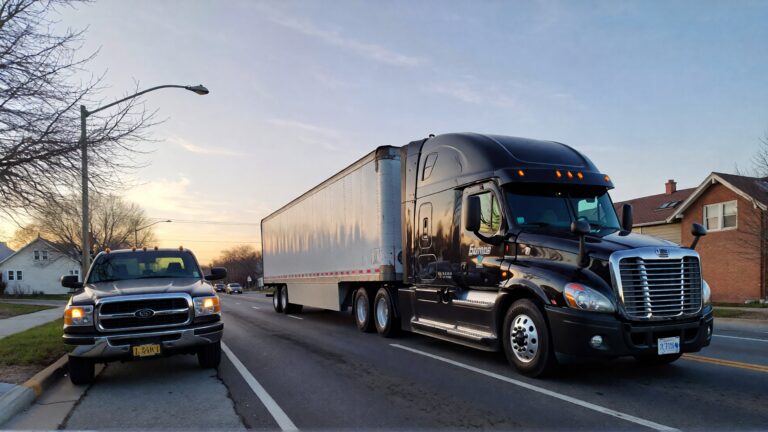
CHP investigators believe the vehicle involved is a silver or light gray SUV, or possibly a Ford truck, with significant damage to the front right side. The vehicle may have been last seen in the Spanos Park West neighborhood, near Scott’s Creek Drive. Authorities have not yet determined whether alcohol or drugs played a role in the crash, and the investigation remains ongoing.
The extent of the damage described by investigators, concentrated on the front right portion of the vehicle, is consistent with a direct impact and suggests the vehicle itself may bear visible evidence of the crash, including a damaged headlight, dented or cracked front fender, broken grille, or paint transfer from the bicycle or shopping cart involved.
Body shops and collision repair centers throughout the Stockton area and in broader San Joaquin County have been encouraged to report any vehicles matching this description that are brought in for repair. Investigators are also reviewing surveillance footage from businesses and residences along Eight Mile Road and near the Spanos Park West area in hopes of capturing the vehicle on camera before or after the crash.
Given the specific nature of the damage and the vehicle’s potential proximity to Scott’s Creek Drive afterward, CHP officials remain hopeful that a public tip could lead to swift identification. Anyone with information about the vehicle or the crash is urged to contact the CHP Stockton Area office.
Understanding Hit-and-Run Laws in California
California law treats hit-and-run crashes as a serious criminal matter, separate from any civil liability the at-fault driver may face. Under California Vehicle Code §20001, a driver involved in a collision resulting in death or injury must stop at the scene, render reasonable assistance, and identify themselves. Failing to do so is a felony when the crash results in death or serious injury, and convicted drivers can face significant prison time.
Beyond the criminal consequences, fleeing the scene does not shield a driver from civil liability. Under California Civil Code §1714, every individual is responsible for injuries caused by their want of ordinary care, and that responsibility doesn’t disappear simply because a driver left the scene. If the driver is identified, the victim’s family can pursue a wrongful death claim to recover damages for their loss.
It’s also worth noting that fleeing can itself be powerful evidence in a civil case. Courts and insurance companies often view a driver’s decision to leave the scene as an indication of an awareness of fault, since drivers involved in crashes they believe were not their responsibility are far more likely to remain and cooperate with law enforcement.
This consciousness of guilt can strengthen a family’s negligence claim once the driver is identified, even though the criminal and civil cases proceed on separate tracks with different standards of proof. While a criminal conviction requires proof beyond a reasonable doubt, a civil claim only requires a preponderance of the evidence, meaning that even if criminal charges are reduced or resolved differently than victims hope, families may still have a strong path toward financial accountability through civil court.
Wrongful Death and Survival Actions Under California Law
When a hit-and-run crash takes a life, California law provides surviving family members with legal avenues to seek accountability and compensation:
Wrongful Death Claims (CCP §377.60): This statute allows certain surviving family members, including spouses, children, and in some cases parents, to bring a claim against the at-fault party for the losses they’ve suffered as a result of their loved one’s death. These damages can include loss of financial support, loss of companionship, and funeral and burial expenses.
Survival Actions (CCP §377.30): A survival action is brought on behalf of the decedent’s estate for damages the victim could have claimed had they survived, such as pain and suffering experienced between the time of the crash and the time of death.
Statute of Limitations (CCP §335.1): California law generally gives victims and their families two years from the date of the incident to file a personal injury or wrongful death claim. While this may seem like ample time, evidence and witness recollections fade quickly, making it critical to act promptly, especially in hit-and-run cases where identifying the driver requires a time-sensitive investigation.
It’s important for grieving families to understand that wrongful death and survival actions are not mutually exclusive, and in many cases both can be pursued simultaneously to ensure the full scope of the loss is addressed.
While a wrongful death claim compensates the family for their own losses moving forward, a survival action recognizes that the decedent’s estate may be entitled to damages for what the victim endured before passing, including conscious pain and suffering, lost wages between the date of injury and death, and related medical or hospice expenses.
In hit-and-run cases like this one, where the medical examiner’s estimate suggests the victim may have remained at the scene for an extended period before being discovered, these distinctions can carry significant weight. An experienced attorney can help families determine who qualifies to bring each type of claim under California law and how to coordinate them effectively to maximize the recovery available to the family.
The Challenge of Hit-and-Run Cases
Hit-and-run crashes present unique obstacles for victims and their families. Without an identified driver, pursuing compensation can initially seem impossible. However, several avenues remain available:
Uninsured motorist coverage on the victim’s own auto policy, if applicable, may provide compensation when the at-fault driver cannot be identified or located. Additionally, if the driver is later identified through law enforcement efforts, witness tips, or forensic evidence such as paint transfer and debris field analysis, a civil claim can move forward against that individual.
In some cases, if a government entity’s negligence in road design, signage, or lighting contributed to conditions that made the crash more likely, a claim may also be pursued under Government Code § 835, which governs liability for dangerous conditions of public property.
The emotional toll of waiting for answers can also compound the financial uncertainty families face after a hit-and-run death. Unlike crashes where the at-fault driver is known and insured, hit-and-run cases often leave families in limbo, unsure whether justice or compensation will ever materialize while they’re also trying to cover funeral costs and navigate grief.
This is precisely why working with an attorney early in the process matters. An experienced legal team can begin gathering and preserving evidence, such as surveillance footage, vehicle debris, and witness statements, before they’re lost to time, while also helping the family explore every available insurance and legal avenue.
Even when a driver is never identified, families may still have options through their own insurance policies or, in rarer cases, through claims against third parties whose negligence contributed to the conditions of the crash.
How Settlement Value Is Calculated in Wrongful Death Cases
Insurance companies and attorneys often use established methods to help quantify damages in wrongful death and personal injury claims:
The Multiplier Method: This approach takes the total of the victim’s economic damages, such as medical expenses and lost income, and multiplies that figure by a number typically between 1.5 and 5, depending on the severity of the loss and the impact on surviving family members.
The Per Diem Method: This method assigns a specific dollar value for each day between the incident and the resolution of the claim, accounting for the ongoing impact of the loss on the family.
Because every case is different, an experienced attorney can help families understand which approach, or combination of approaches, applies to their specific circumstances.
Several other factors can influence the final settlement value beyond the calculation method used. The decedent’s age, earning capacity, and life expectancy at the time of death often play a significant role, as does the closeness of the relationship between the victim and the surviving family members bringing the claim.
In hit-and-run cases specifically, the circumstances surrounding the driver’s decision to flee can also factor into negotiations, particularly if punitive damages become a consideration once the driver is identified and the facts of their conduct are fully established. Additionally, because hit-and-run cases frequently involve uninsured motorist claims rather than a traditional liability claim against an at-fault driver’s insurer.
The available policy limits on the victim’s own insurance may ultimately shape what compensation is realistically achievable. Because every case is different, an experienced attorney can help families understand which approach, or combination of approaches, applies to their specific circumstances.
Using a Settlement Calculator for Hit-and-Run Accident Claims
The hit-and-run settlement calculator can be a useful starting point for families trying to understand the potential value of a hit-and-run wrongful death or injury claim. These tools typically ask for key details, such as medical and funeral expenses, lost income, the severity of the incident, and the impact on surviving family members, then apply the multiplier or per diem methods to generate an estimated range of compensation.
For hit-and-run cases in particular, a settlement calculator can help families get a clearer picture of what an uninsured motorist claim might yield, since these claims are often the primary path to compensation when the at-fault driver is never identified.
While no calculator can account for every nuance of a case, such as the emotional weight of losing a loved one or the unique circumstances surrounding a driver’s decision to flee, these tools offer a helpful baseline for families beginning to navigate settlement negotiations.
It’s important to remember that a calculator’s estimate is just that, an estimate, and working with an experienced attorney remains the best way to ensure all economic and non-economic damages are fully accounted for in any settlement discussion. Call us now at +1-866-218-3776 to speak with the experts.
Take Action Today – Get the Help You Deserve
“My heart goes out to everyone affected by this senseless tragedy. Losing a loved one is devastating under any circumstances, but when a driver chooses to flee rather than stop and help, that grief is compounded by anger, confusion, and a desperate need for answers. I’ve spent over 40 years standing beside families in California who have faced this exact pain, and I can tell you that you are not alone, and you do not have to carry this burden by yourself. While law enforcement works to identify the driver responsible, there are steps you can take right now to protect your family’s rights and financial future. I encourage anyone affected by this crash, or any hit-and-run incident, to reach out to our team for a free consultation. Let us handle the legal complexities so you can focus on healing.”- Andy Gillin, GJEL Accident Attorneys
If you’ve lost a loved one in a hit-and-run crash, you don’t have to navigate this difficult process alone. GJEL Accident Attorneys has recovered more than $980 million for clients across California over the past 40+ years. We understand that pursuing legal action can feel overwhelming, especially while grieving, which is exactly why we work on a contingency fee basis.
This means you owe us nothing upfront, no hourly fees, no retainer, and no out-of-pocket costs, and you only pay if we successfully recover compensation on your behalf. This structure exists so that financial hardship never stands between a grieving family and the justice they deserve. Every family affected by this tragedy deserves a dedicated legal team fighting for them, not a legal bill adding to their burden.
At GJEL, we ensure that all evidence is properly preserved and that all potential sources of compensation are thoroughly investigated, allowing families to focus on healing. Talk to an experienced GJEL accident attorney for a free legal consultation. Contact us at +1-866-218-3776 or visit our
Oakland office.
Local Resources for Victims and Families
California Highway Patrol – Stockton Area Office 2729 Myrtle Road, Stockton, CA 95205 (209) 942-1700 https://www.chp.ca.gov
San Joaquin County Sheriff’s Office 27 East Market Street, Stockton, CA 95202 (209) 468-4400 https://www.sjgov.org/department/sheriff
San Joaquin County Victim/Witness Assistance Center 222 East Weber Avenue, Room 412, Stockton, CA 95202 (209) 468-2350 https://www.sjgov.org/department/da/victim-witness