Last updated July 17, 2026
A teenager lost his life in the early morning hours of Saturday, May 31, 2026, when a Chevrolet Camaro carrying four young passengers collided with a Recology commercial transfer truck on Interstate 80 in San Francisco, launching the vehicle over a bridge railing and into an SFPD impound lot 25 feet below. Three others sustained injuries ranging from moderate to major in one of the most dramatic and tragic freeway crashes the city has seen in recent memory.
The elevated Seventh Street off-ramp on eastbound I-80 became the scene of unimaginable devastation after the two-vehicle collision shortly after 1:30 a.m., when what may have been a split-second lapse in judgment behind the wheel set off a catastrophic chain of events.
The Camaro, carrying four teenagers, struck a Recology commercial transfer truck before being hurled over a metal bridge railing and plummeting into the San Francisco Police Department’s impound lot below, where it crushed several parked vehicles and came to rest upside down. For the family of the 17-year-old boy who did not survive, and for the three others who were rushed to the hospital with serious injuries, the night of May 30 will cast a long shadow over their lives.
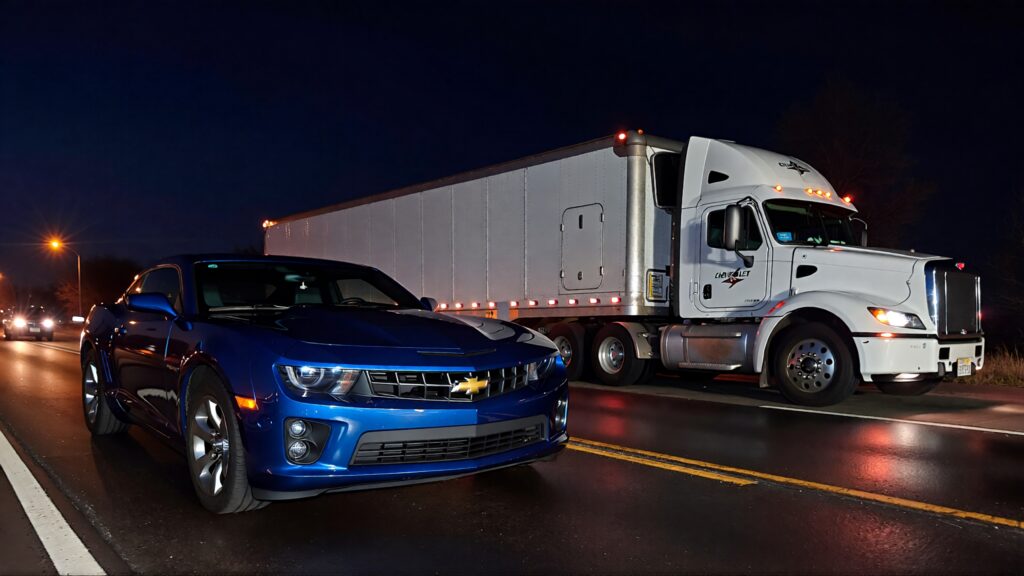
What Happened in the Two-Vehicle Collision
California Highway Patrol officers were called at approximately 1:30 a.m. to the eastbound side of I-80 near the Seventh Street off-ramp on initial reports of a jackknifed big rig. When officers arrived, the full picture of the collision became clear.
CHP determined that a Chevrolet Camaro was traveling in the first lane of the freeway when the driver made an “unsafe turning movement,” striking the left corner of the Recology truck. The impact sent both vehicles into sand barrels located at the top of the Seventh Street off-ramp.
While the truck was able to stop, the Camaro was catapulted over the sand barrels, over the metal bridge railing, and fell about 25 feet down into the San Francisco Police Department’s impound lot at 450 Seventh Street. The Camaro struck several unoccupied vehicles in the lot, continued forward, and toppled over onto its roof, landing atop another unoccupied vehicle. Investigators are looking at speed as a possible contributing factor in the collision.
Victims: A Teen Killed, Three Others Injured
One 17-year-old boy, who was a backseat passenger in the Camaro and was not wearing a seatbelt at the time of the crash, was pronounced dead at the scene by the San Francisco Fire Department. His identity was not released due to his age. The San Mateo Daily Journal later identified the victim as a recent Hillsdale High School graduate.
The 18-year-old driver was able to remove himself from the car and was taken to a hospital for treatment of moderate injuries. Two other passengers, a 17-year-old boy and an 18-year-old man, were rescued from inside the car and taken to a hospital for treatment of moderate and major injuries, respectively.
CHP said both the truck driver and the 18-year-old who was behind the wheel of the Camaro remained on scene and cooperated with the police investigation. Authorities said neither drugs nor alcohol appeared to be factors in the collision.
The crash left a community in mourning and three young survivors facing uncertain recoveries. The victim, later identified by the San Mateo Daily Journal as a recent Hillsdale High School graduate, represented a life full of potential cut devastatingly short. His friends, classmates, and family are now left to grieve a loss that no parent or loved one should ever have to endure.
The three surviving occupants, all teenagers or young adults on the cusp of adulthood, face their own difficult roads ahead. The 18-year-old driver, though able to walk away from the wreckage under his own power, will carry the weight of that night with him.
The two passengers who required rescue by firefighters from inside the crushed vehicle, one of whom was transported with major injuries, face physical recoveries that may take months and emotional trauma that may take far longer. In crashes like this one, the harm does not end when the ambulances leave the scene.
California Law and Liability in Commercial Truck Collisions
Crashes involving commercial vehicles, such as the Recology transfer truck, raise distinct legal considerations under California law. When a passenger vehicle collides with a semi-truck or transfer vehicle, liability can extend beyond the driver of the car to include the trucking company, the vehicle’s maintenance provider, and other parties, depending on the facts of the investigation.
Under California Civil Code §1714, all persons have a duty to exercise ordinary care to prevent harm to others. For commercial trucking operations, that standard is heightened. Federal and state regulations impose strict requirements on carriers regarding driver qualifications, hours of service, vehicle maintenance, and safe operation. When any of those regulations are violated and a fatal or serious injury crash results, the trucking company may bear direct or vicarious liability.
In this case, CHP has cited an unsafe turning movement by the Camaro’s driver as an initial cause of the collision. However, a full investigation may reveal additional factors, including each vehicle’s speed, the truck’s position, lane conditions on the elevated off-ramp, and the condition of the roadway barriers involved. An independent investigation by a personal injury attorney can uncover facts that a police report alone cannot.
Wrongful Death Claims Under California Law
The family of the 17-year-old passenger who was killed in this crash may have grounds to pursue a wrongful death claim under California Code of Civil Procedure §377.60. This statute allows certain surviving family members, including parents, to seek compensation when a loved one is killed due to another party’s negligence.
Recoverable damages in a wrongful death case can include the financial support the deceased would have provided over a lifetime, the loss of companionship, comfort, and guidance, funeral and burial expenses, and the value of household services. Because the victim was a minor with his entire future ahead of him, the economic and non-economic losses his family faces are profound and long-lasting.
Survivors who were injured may pursue their own personal injury claims under CCP §335.1, which provides a two-year statute of limitations from the date of the collision. Missing that deadline typically bars recovery entirely, which is why consulting with an attorney promptly after a serious crash is critical.
Seatbelt Use and Comparative Fault in California
A significant detail in this case is that the 17-year-old who died was reportedly not wearing a seatbelt. Under California’s comparative fault doctrine, a defendant may seek to reduce their liability by arguing that the victim’s conduct contributed to the severity of the victim’s injuries. However, under California’s pure comparative negligence system, even if a court assigns some fault to the victim, the remaining defendants remain responsible for their proportionate share of the damages.
This means that even where a victim’s own actions are considered, a family may still recover substantial compensation if another party’s negligence was a significant cause of the crash. An experienced personal injury attorney can anticipate and counter comparative fault arguments to protect the family’s claim.
It is worth emphasizing that seatbelt non-use, while legally relevant under California’s comparative fault framework, does not eliminate a family’s right to pursue compensation. Insurance companies and defense attorneys routinely seize on details like seatbelt non-use to minimize payouts and shift blame onto victims rather than addressing the underlying negligence that caused the crash in the first place.
California’s pure comparative negligence system, codified in Civil Code §1714, was designed precisely to prevent that kind of all-or-nothing outcome. Even if a jury were to assign a percentage of fault to the victim for not wearing a seatbelt, the remaining defendants, whether that is the driver of the Camaro, a trucking company, or a public entity responsible for road infrastructure, would still owe damages proportional to their own share of fault.
An experienced wrongful death and personal injury attorney knows how to contextualize seatbelt evidence, present the full picture of negligence to a jury or insurer, and fight back against bad-faith efforts to blame a teenager who lost his life for the circumstances that took it.
The Dangers of Elevated Freeway Off-Ramps and Inadequate Barriers
This crash raises serious questions about the safety of freeway infrastructure. The Seventh Street off-ramp is elevated, and the force of the collision was sufficient to send a vehicle over the bridge railing and into a lot 25 feet below. California Government Code §835 holds public entities liable for dangerous conditions of public property when the condition creates a substantial risk of injury and the entity had notice of it.
If the investigation reveals that the barrier design, height, or condition was inadequate to prevent this type of ejection, Caltrans or another public entity could face liability alongside any negligent drivers.
The fact that a passenger vehicle could be propelled entirely over a freeway bridge railing and fall 25 feet onto a surface below is a question that transportation safety investigators and engineers will need to answer carefully. Modern highway barrier systems are designed and rated to contain errant vehicles, redirect their trajectory, and absorb crash energy rather than allow a vehicle to vault over or through them.
If the barrier at the Seventh Street off-ramp was aging, below current design standards, improperly maintained, or simply insufficient for the geometry and traffic speeds of that particular elevated structure, that represents a potential failure of the public infrastructure that California drivers have a right to expect will protect them.
Caltrans and the City of San Francisco have an ongoing duty to inspect, upgrade, and maintain freeway infrastructure to current safety standards, and when that duty goes unmet, Government Code §835 provides a legal pathway for injured victims and grieving families to hold public entities accountable.
Prior crash history at or near this off-ramp, maintenance records, engineering assessments, and federal highway safety data may all become critical pieces of evidence as attorneys and investigators examine whether the barrier system performed as it should have, or whether a preventable design or maintenance failure contributed to the death of a 17-year-old boy.
Settlement Value: What Cases Like This May Be Worth
Valuing a catastrophic or fatal crash case requires a careful analysis of multiple factors. Attorneys typically use two primary methodologies:
The multiplier method calculates economic damages, such as medical bills and future lost earnings, and multiplies them by a factor of 1.5 to 5 or higher, depending on the severity of the injuries and the degree of negligence. In cases involving the death of a young person, the lifetime earnings component alone can run into the millions of dollars.
The per diem method assigns a daily dollar value to pain and suffering, then multiplies it by the number of days the victim endured that suffering. For a young man who lost his life, the family’s grief, loss of companionship, and future guidance are the central non-economic losses that juries and insurers weigh heavily.
Cases involving commercial trucking defendants, elevated highway infrastructure, and the death of a minor tend to produce significant verdicts and settlements. Insurance policy limits, the number of potentially liable defendants, and the strength of the underlying negligence evidence all shape the ultimate recovery.
Catastrophic Injury and Fatal Accident Settlement Calculator
Every case is unique, and no online tool can substitute for a consultation with an experienced personal injury attorney. However, families affected by crashes like this I-80 tragedy can get a general sense of their claim’s value by considering: total past and future medical expenses, the victim’s projected lifetime earnings, the duration and intensity of pain and suffering experienced, whether any negligence by a commercial carrier or public entity is involved, and whether punitive damages may apply if egregious conduct is proven. GJEL Accident Attorneys offers free consultations to help families understand what their case may be worth.
Families navigating the aftermath of a crash this severe are often overwhelmed by the immediate financial pressures that compound their grief: emergency room bills, follow-up surgeries, rehabilitation costs, funeral and burial expenses, and the sudden loss of a young person’s future earning potential. California law is designed to make injured victims and surviving families whole, and the full scope of recoverable damages is often far broader than families initially realize.
In wrongful death and catastrophic injury cases involving commercial vehicles, damages can encompass past and future medical expenses, lost lifetime earnings calculated by economists using actuarial data, loss of financial support, loss of love and companionship, loss of parental guidance for surviving siblings, and the pain and suffering endured before death in cases where the victim survived even briefly after impact.
When a commercial trucking company or public entity is among the defendants, insurance policy limits tend to be substantially higher than in standard passenger vehicle cases, and the potential for multiple liable parties means that the total recovery pool can be significantly larger. Because every variable in a catastrophic case, from the degree of negligence to the victim’s projected career trajectory, affects the final number, families deserve a thorough case evaluation from an attorney who handles these matters at the highest level, not a generic estimate from a calculator.
Take Action Today – Get the Help You Deserve
“This crash on I-80 is the kind of tragedy that stops you cold. Four young people, kids really, got into a car that night and only three of them came home. To the family of the boy who was killed, and to the survivors still fighting through their injuries, I want you to know that what happened to you matters deeply and you do not have to face what comes next alone. Commercial trucking crashes like this one involve layers of liability that insurance companies are already working to minimize before the families involved even know their rights. At GJEL, we have spent more than 40 years recovering over $980 million, making sure that injured people and grieving families are not left to bear the financial devastation caused by someone else’s negligence. If you or someone you love was in that car, please call us. The consultation is free, you pay nothing unless we win, and the only thing we are focused on is fighting to get you everything you deserve.” — Andy Gillin, Managing Partner, GJEL Accident Attorneys
If you or a loved one was injured in this crash or any serious accident involving a commercial vehicle on California’s highways, do not wait to get legal help. The insurance companies representing trucking firms like Recology have experienced claims adjusters and defense attorneys working their side of the case from the moment a crash is reported, and every day that passes without legal representation is a day that evidence can disappear, witnesses become harder to reach, and your family’s leverage diminishes.
GJEL Accident Attorneys has spent more than 40 years standing up for injury victims and grieving families across California, recovering over $980 million in the process. Our contingency fee structure means there are no upfront costs, no hourly bills, and absolutely no fee unless we win your case. You have nothing to lose by calling and everything to gain. Reach out to GJEL Accident Attorneys today at +1-866-218-3776 or visit our Orinda office to schedule your free consultation and let us start fighting for you.
Local Resources for Families Affected by This Crash
California Highway Patrol, Golden Gate Division Address: 1551 Benicia Road, Vallejo, CA 94591 Phone: (707) 917-4491 Website: chp.ca.gov
San Francisco Police Department, Traffic Collision Report Unit Address: 1245 3rd Street, San Francisco, CA 94158 Phone: (415) 553-0123 Website: sf.gov/departments/police-department
San Francisco General Hospital (Zuckerberg San Francisco General) Address: 1001 Potrero Avenue, San Francisco, CA 94110 Phone: (415) 206-8000 Website: zuckerbergsanfranciscogeneral.org
Caltrans District 4 (Bay Area) Address: 111 Grand Avenue, Oakland, CA 94612 Phone: (510) 286-0167 Website: dot.ca.gov/caltrans-near-me/district-4
Bay Area 511 Traffic and Transit Information Phone: 511 Website: 511.org