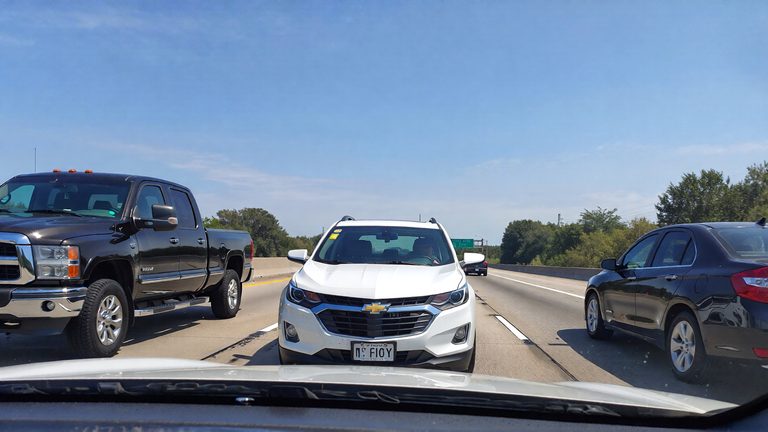
A minor injury traffic collision involving two sedans occurred early Tuesday morning at West Mount Whitney Avenue and South Trinity Avenue, just west of Five Points in Fresno County. The crash was reported on November 24 at approximately 6:05 a.m. and involved a silver Chevrolet and a maroon Toyota.
Because the two-vehicle crash occurred before sunrise, when many local residents are traveling to work in the surrounding agricultural communities, it likely affected drivers already on the road at the start of the morning commute. The vehicles’ final positions, the exact number of people injured, and the cause of the crash have not been made public, and the CHP investigation may clarify these details in the coming days.
What We Know About the Two-Vehicle Crash
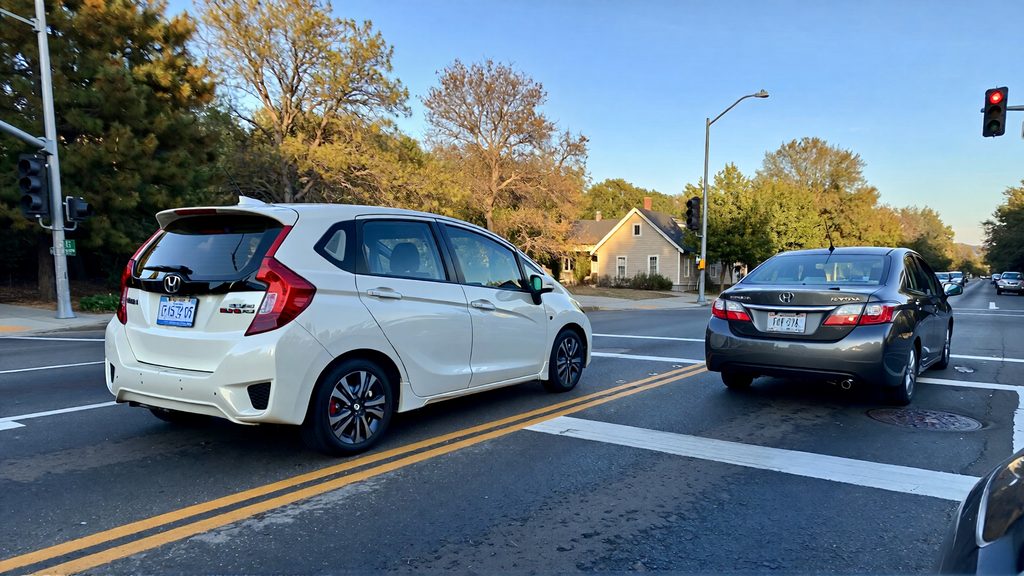
Early reports describe a two-vehicle crash with minor injuries at the intersection of West Mount Whitney Avenue and South Trinity Avenue. The two vehicles were both sedans, one silver Chevrolet and one maroon Toyota.
The exact cause of the collision, the number of people hurt, and the direction each vehicle was traveling have not been publicly confirmed. The California Highway Patrol (CHP) typically handles collision investigations on unincorporated county roads like this one, and additional details may emerge as the investigation continues.
Early reports classify the crash as a minor injury collision, a label that usually reflects the information available to dispatchers and responding officers at the time of the call. Initial classifications can change as injured people are evaluated at the scene or later at a hospital, and symptoms that were not apparent at the roadside sometimes lead to a more serious diagnosis.
Because the crash occurred on an unincorporated county roadway west of Five Points, the California Highway Patrol is the agency most likely to conduct the investigation and issue the official collision report. That report typically documents the positions of the vehicles, statements from drivers and witnesses, and the officer’s findings about contributing factors, and it can take days or weeks to become available.
Until then, details such as the identities of those involved, the extent of their injuries, and who may have been at fault remain unconfirmed, and readers should treat early information as preliminary.
Why Early Morning Crashes in Rural Fresno County Deserve Attention
A 6:05 a.m. collision happened during the pre-dawn commute, when many drivers are heading to farm work, packing facilities, and jobs in Fresno and Kings County. In late November, the sun has not yet risen at that hour, so visibility is limited.
Central Valley drivers also contend with seasonal tule fog, glare from low headlights, and the fatigue that comes with early shifts. Rural intersections in the Five Points area often lack traffic signals and street lighting, which leaves drivers with less margin for error when another vehicle enters the intersection.
Even a collision labeled “minor injury” can carry real consequences. Soft tissue injuries, whiplash, concussions, and back or neck strain may not show their full severity for days. Adrenaline often masks pain at the scene, and many people leave the roadside believing they are fine, only to wake up the next morning unable to move comfortably.
What to Do After a Two-Vehicle Crash in Fresno County
If you were involved in a collision like this one, the steps you take in the first hours and days can protect both your health and your legal rights. Call 911 if anyone is hurt, and move vehicles out of travel lanes only if it is safe to do so.
Exchange names, contact information, license plate numbers, and insurance details with the other driver. Photograph both vehicles, the intersection, any skid marks, and your visible injuries, and collect contact information from any witnesses.
Seek medical attention promptly, even if your symptoms seem mild. Prompt treatment protects your health and creates a medical record linking your injuries to the crash. Insurance adjusters often point to gaps in treatment when they argue that an injury was not caused by the collision.
California law also requires drivers to report certain crashes. Under Vehicle Code §16000, you must file an SR-1 report with the DMV within 10 days if the collision caused injury or death, or property damage exceeding $1,000, regardless of fault. Vehicle Code §§20001 and 20002 impose duties to stop, share information, and render aid after a crash.
Understanding Fault in a California Intersection Collision
California follows a pure comparative fault system, which means an injured person can still recover compensation even if they were partly responsible for the crash. Their recovery is simply reduced by their percentage of fault.
If a jury finds you were 20 percent at fault for a collision with $100,000 in damages, you could still recover $80,000. Civil Code §1714 establishes the general duty of every person to use ordinary care and skill to avoid injuring others, and that duty applies squarely to drivers approaching an intersection.
Fault in an intersection crash often turns on right-of-way, speed, lane position, whether a driver stopped at a stop sign, and whether either driver was distracted or impaired. Physical evidence, vehicle damage patterns, and the CHP collision report all play a role in establishing what happened. Because evidence at rural intersections can disappear quickly, acting soon matters.
How Compensation Is Calculated After a Car Accident
Injured drivers and passengers may be entitled to recover economic damages such as medical bills, future treatment costs, lost wages, and vehicle repair or replacement. They may also recover non-economic damages for pain and suffering and loss of enjoyment of life. Attorneys and insurers commonly use two methods to estimate the value of non-economic damages.
The multiplier method takes a client’s total medical expenses and multiplies them by a factor that reflects the severity and permanence of the injury. Less serious injuries that resolve quickly sit at the lower end of the range, while injuries with lasting effects sit at the higher end.
The per diem method assigns a daily dollar value to pain and suffering and multiplies it by the number of days a person experiences symptoms, from the date of the crash through full recovery. Neither method is a guarantee, and every claim depends on its own facts, the available insurance coverage, and the strength of the evidence.
Insurance coverage matters as well. California’s minimum liability limits increased to $30,000 per person, $60,000 per accident, and $15,000 for property damage for policies issued or renewed on or after January 1, 2025. In many collisions, those limits are insufficient, making underinsured and uninsured motorist coverage on your own policy an important source of recovery.
Time Limits for Filing a Claim
Under California Code of Civil Procedure §335.1, most personal injury lawsuits must be filed within two years of the date of injury. If a government entity may share responsibility, for example, when a dangerous road condition or a poorly maintained intersection contributes to a crash, Government Code §835 governs liability, and a much shorter deadline applies.
A written claim against a public entity generally must be presented within six months under Government Code §911.2. Missing these deadlines can permanently bar a claim, so speaking with an attorney early is important.
Time limits are one of the most important and most overlooked parts of a personal injury claim after a crash like the one on Mt. Whitney Avenue. Under California Code of Civil Procedure §335.1, most lawsuits for injuries caused by another driver’s negligence must be filed within two years of the date of the collision, which means the deadline for a November 24 crash would fall in late November of the second year.
A lawsuit for vehicle damage alone generally has a longer statute of limitations of 3 years under Code of Civil Procedure § 338. Shorter deadlines apply when a public entity may share responsibility, such as when a poorly maintained roadway, missing signage, or an obscured intersection contributes to a crash.
In those cases, Government Code §911.2 generally requires that a written claim be presented to the responsible agency within six months of the incident, and that a lawsuit typically follow within six months after the claim is rejected. Courts can sometimes allow a late claim, but only under limited circumstances and on a tight timeline.
Insurance policies can also impose their own notice requirements, including deadlines for reporting a crash or making an uninsured or underinsured motorist claim, and missing them can put coverage at risk even when the lawsuit deadline is still open. Because the clock begins to run on the day of the collision and evidence at rural intersections can disappear quickly, speaking with an attorney soon after a crash is the best way to protect your right to recover compensation.
Catastrophic Injury Settlement Calculators and Why They Matter
Catastrophic injury settlement calculators are tools that attorneys and injured people use to estimate the potential value of a claim involving severe, life-altering harm, such as traumatic brain injuries, spinal cord damage, amputations, major burns, or permanent disability. In these cases, the real cost of an injury reaches far beyond the emergency room bills.
A reliable calculator starts by totaling economic damages, including past and future medical care, rehabilitation, home modifications, assistive equipment, long-term nursing or attendant care, and lost wages or reduced earning capacity over a person’s working life.
It then estimates non-economic damages for pain, suffering, emotional distress, and loss of enjoyment of life, most often using the multiplier method, which multiplies medical expenses by a factor reflecting the injury’s severity and permanence, or the per diem method, which assigns a daily value to suffering across the expected length of recovery or lifetime.
These calculations matter because catastrophic injuries generate costs that continue for decades, and accepting an early offer based only on current bills can leave a family without the resources to cover future care. Insurance companies run their own valuation software, so an accurate, well-documented calculation gives an injured person a realistic starting point for negotiation and helps ensure that future needs are not overlooked.
At the same time, a calculator is only an estimate. The final value of any claim depends on the available insurance coverage, the degree of fault assigned to each party under California’s pure comparative fault rules, the quality of medical and expert evidence, and the specific facts of the case.
For that reason, calculator results work best as an educational starting point that an experienced attorney then refines with life care planners, economists, and medical experts. Call us now at 1-855-508-9565 to speak with the experts.
Take Action Today: You Won’t Pay Unless We Win
“If you or someone you love was hurt in the crash on Mt. Whitney Avenue, I know how overwhelming those first days can feel, even when the injuries are described as minor. Pain that seems manageable at the scene can turn into weeks of missed work and mounting medical bills, and you should not have to face the insurance company on your own. Get medical care right away, keep every record, and be careful about what you say to an adjuster before you understand your rights. California law gives you a limited window to act, so a conversation with an attorney sooner rather than later can protect your claim. At GJEL Accident Attorneys, we take these cases on contingency, which means you pay nothing unless we win, and we will fight to make sure you and your family get the care and compensation you deserve.”-Andy Gillin, Managing Partner, GJEL Accident Attorneys
If you or someone you love was hurt in a crash near Five Points or anywhere in Fresno County, the team at GJEL Accident Attorneys is ready to help. With more than 40 years of experience and over $950 million recovered for clients, we know how to stand up to insurance companies and fight for the full value of your claim. We work on a contingency fee basis, which means you pay nothing unless we win your case. Call 1-855-508-9565 for a free consultation or visit our Stockton office to get started.
Local Resources for Fresno County Crash Victims
The resources below are organized by what you may need after a crash, with the full website addresses included:
Law Enforcement and Collision Reports
The California Highway Patrol Fresno Area office handles collision investigations in this part of Fresno County. Its office page, with location and contact information, is at https://www.chp.ca.gov/find-an-office/central-division/435-fresno. The CHP Fresno Communications Center page is at https://www.chp.ca.gov/find-an-office/central-division/435-fresno-communications-center, and the non-emergency number is (559) 262-0400. To request a copy of your collision report, use the CHP’s report request page at https://www.chp.ca.gov/traffic/request-a-collision-report. Drivers, passengers, vehicle owners, and other parties of interest can generally request the report by mail or in person, and CHP has a statewide non-emergency line at 1-800-835-5247 for questions about the process.
The Fresno County Sheriff’s Office maintains its own records for incidents handled by deputies. Its main website is https://fresnosheriff.org/, and the Records Unit page is at https://fresnosheriff.org/units/records.html. The Records Unit can be reached at (559) 600-8400. The Fresno Police Department generally handles crashes inside Fresno city limits rather than rural county roads, but its frequently asked questions page at https://www.fresno.gov/police/frequently-asked-questions/ explains who is eligible to obtain a traffic collision report and how to request one, and its records page is at https://www.fresno.gov/cityclerk/records/.
Reporting the Crash to the DMV
California requires drivers to report certain collisions to the Department of Motor Vehicles, regardless of fault, by filing an SR-1 within 10 days if anyone was injured, no matter how slightly, or if property damage exceeded $1,000. The DMV’s online SR-1 reporting page is at https://www.dmv.ca.gov/portal/dmv-virtual-office/accident-reporting/. This report is required in addition to any report made to law enforcement or your insurance company, and failing to file it can put your driving privileges at risk.
Traffic and Road Condition Information
Caltrans District 6, which covers Fresno County, provides information about state highways and conditions. Its district page is at https://dot.ca.gov/caltrans-near-me/district-6/d6-about. For real-time traffic, lane closures, and incident information, Caltrans QuickMap is available at https://quickmap.dot.ca.gov/, and a text-based highway conditions page is at https://roads.dot.ca.gov/. You can also call 1-800-427-7623 for current highway conditions. QuickMap covers the state highway system, so it will not show every rural county road, such as Mount Whitney Avenue.
Reporting Road Hazards on County Roads
If a roadway condition may have contributed to a crash, such as faded striping, a missing stop sign, damaged pavement, or an obscured intersection, the Fresno County Public Works and Planning Department is the agency responsible for county-maintained roads. Its Road Maintenance and Operations Division page is at https://www.fresnocountyca.gov/Departments/Public-Works-and-Planning/divisions-of-public-works-and-planning/road-maintenance-and-operations-division, and hazards can be reported through https://fresnocountyca.gov/Departments/Public-Works-and-Planning/divisions-of-public-works-and-planning/road-maintenance-and-operations-division/reporting-a-road-hazard. The division is located at 2220 Tulare Street, 10th Floor, Fresno, CA 93721, with phone hours Monday through Friday from 8:00 a.m. to 5:00 p.m. If you believe a dangerous road condition contributed to your crash, tell your attorney early, since claims against public entities carry short filing deadlines.

Related California legal resources: California car accident lawyers and Fresno personal injury lawyers.