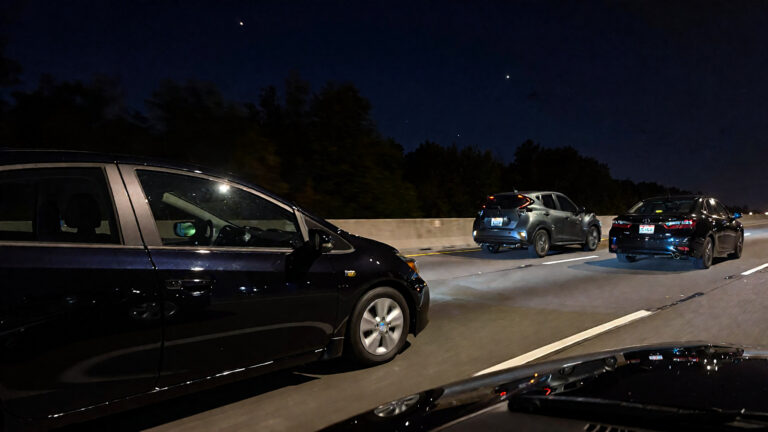
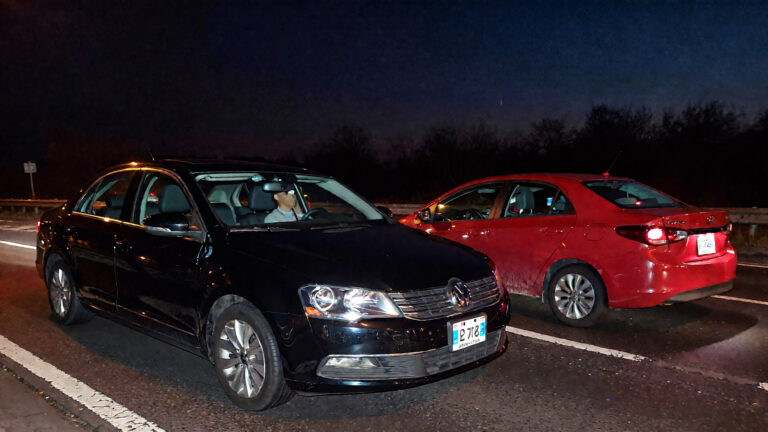
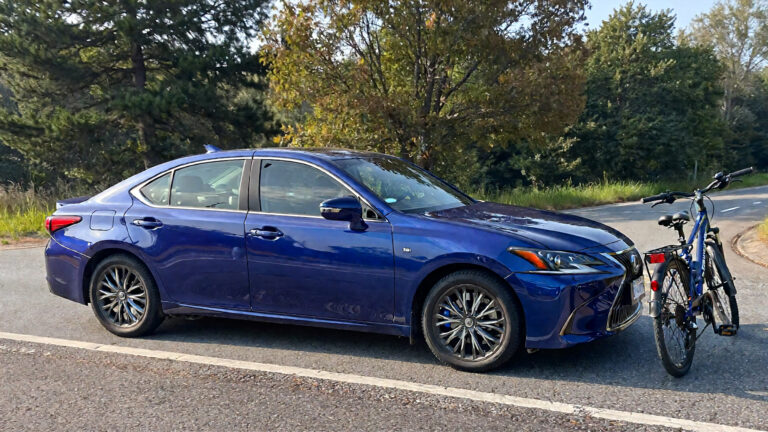
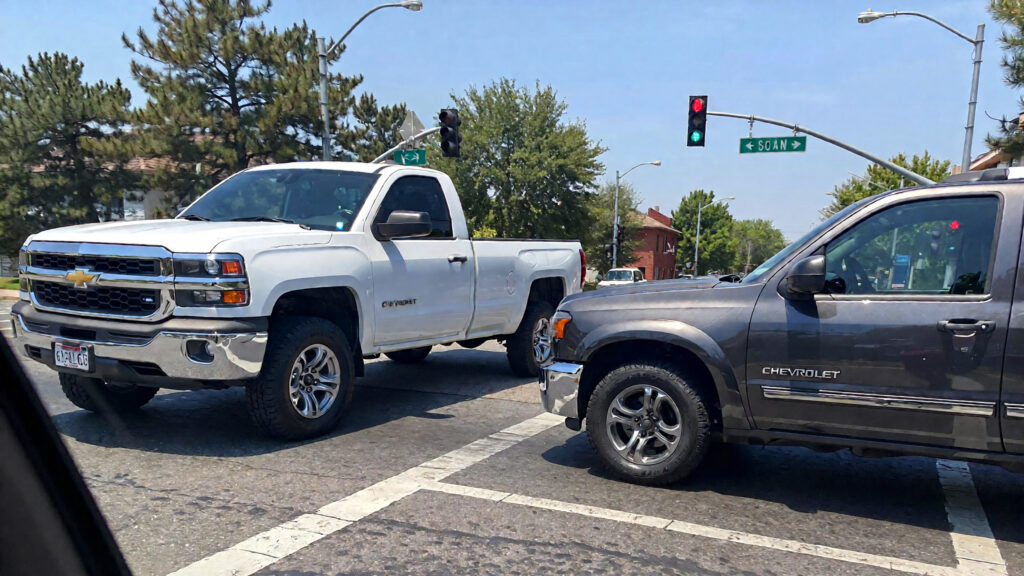
A white pickup truck and a gray Chevrolet Blazer collided Tuesday afternoon at the intersection of North Russell Avenue and West Shields Avenue, causing significant damage to both vehicles and triggering the Blazer’s airbags. The California Highway Patrol reported that the two-vehicle crash occurred at approximately 5:32 p.m. on September 22, in a rural stretch of Fresno County where Shields Avenue crosses Russell Avenue.
What We Know About the Crash
According to the California Highway Patrol, the collision involved a white pickup truck and a 2025 gray Chevrolet Blazer, a small SUV that sustained enough impact force to deploy its airbags. Investigators have not yet released the exact mechanics of the collision, including which vehicle had the right of way or whether either driver attempted evasive action.
Rural intersections like Russell and Shields, which serve as connectors between agricultural roads and larger thoroughfares, often lack the traffic signals or dedicated turn lanes found in more urbanized parts of the county, and speeds on these roads tend to be higher than in residential areas. CHP has not confirmed the extent of injuries to either driver, and the investigation into the cause of the crash remains open.
The collision occurred in the late afternoon, a period when visibility can shift quickly as the sun begins to lower, particularly along east-west corridors like Shields Avenue where westbound drivers may face glare that makes it harder to judge the speed and distance of cross traffic.
Afternoon hours on rural routes also tend to see a mix of commuter traffic returning from work and agricultural vehicles moving between fields, a combination that can complicate right-of-way decisions at unsignalized intersections. CHP has not indicated whether either vehicle was towing equipment or hauling a load.
Otherwise operating under conditions that could have affected handling or stopping distance, and no information has been released about whether alcohol, drugs, or driver fatigue played any role in the crash. Until the agency completes its reconstruction of the collision, the precise sequence of events, including each vehicle’s speed and approach to the intersection, remains unconfirmed.
Common Causes of Intersection Collisions in Rural Fresno County
Two-vehicle crashes at rural intersections frequently stem from a narrow set of recurring factors. Failure to yield at a stop sign or uncontrolled intersection is one of the most common causes, particularly at crossings where visibility is limited by crops, irrigation equipment, or roadside vegetation.
Excessive speed also plays an outsized role on agricultural roads, where long, straight stretches can encourage drivers to travel faster than conditions safely allow. Distracted driving, whether from cell phone use or simple inattention, remains a persistent hazard at any intersection, and left-turn maneuvers across oncoming traffic are a frequent source of T-bone and broadside collisions like the one described here.
Until CHP completes its investigation, the specific cause of this crash will remain unconfirmed, but these patterns are worth understanding for anyone evaluating a claim arising from a similar incident. Poor intersection design and inconsistent signage compound many of these risks in unincorporated parts of Fresno County, where road maintenance and traffic control fall to the county rather than a city government with a dedicated traffic engineering department.
Stop signs that have faded, been obscured by overgrown vegetation, or are simply unfamiliar to drivers passing through the area for the first time can turn an otherwise manageable crossing into a hazard. Dust and debris kicked up by agricultural equipment can also reduce visibility at critical moments, and the absence of street lighting means that any crash occurring near dusk, like this one, carries an added layer of risk as natural light fades.
Because many of these intersections were laid out decades ago to serve farm traffic rather than the volume of commuter and commercial vehicles they now carry, drivers unfamiliar with a specific crossing often have little warning before they are required to stop, yield, or judge the speed of cross traffic, which is why local knowledge and driver attentiveness matter so much on roads like Russell and Shields.
Establishing Liability After a California Intersection Crash
California follows a pure comparative negligence system, meaning that fault in a collision can be divided between multiple parties, and an injured driver can still recover damages even if they bear some responsibility for the crash, with their recovery reduced in proportion to their share of fault.
Under California Civil Code section 1714, every person is required to exercise ordinary care to avoid injuring others, and a driver who violates the Vehicle Code, whether by running a stop sign, speeding, or failing to yield, may be found negligent as a matter of law.
If a defect in the roadway itself, such as an obscured stop sign or an unsafe intersection design, contributed to the crash, Government Code section 835 allows injured parties to pursue a claim against the public entity responsible for maintaining that roadway. Identifying every liable party matters because it directly affects how much compensation an injured driver or passenger can ultimately recover.
Determining fault at an uncontrolled or partially controlled rural intersection often requires more investigative work than a crash at a signalized city intersection, since there is rarely camera footage and independent witnesses can be scarce on low-traffic agricultural roads.
Attorneys handling these cases typically rely on the CHP collision report, vehicle damage patterns, skid marks, and any available data from a vehicle’s event data recorder to reconstruct which driver had the right of way and whether either party had an opportunity to avoid the collision.
Because California’s statute of limitations generally gives an injured person two years from the date of the crash to file a personal injury lawsuit, and even less time in some claims against a government entity under the Government Claims Act, delaying an investigation can mean losing access to evidence, such as skid marks or debris fields, that fades or is cleared from the roadway within days.
This is one of the primary reasons injured drivers benefit from having an attorney secure evidence early, before critical details about fault are lost to the passage of time or roadway cleanup.
How Compensation Is Calculated in Injury Claims
Attorneys typically rely on one of two methods to value a personal injury claim arising from a crash like this one. The multiplier method takes the total of a victim’s economic damages, including medical bills and lost wages, and multiplies it by a factor reflecting the severity of the injury, typically ranging from 1.5 for minor injuries to 5 or higher for catastrophic or permanent harm.
The per diem method instead assigns a specific dollar value to each day the victim experiences pain and suffering, from the date of the crash through the end of treatment or recovery. Insurance adjusters and attorneys often use both approaches together to arrive at a realistic settlement range, and the right method depends heavily on the nature and permanence of the injuries involved, which is why a case-specific evaluation matters more than any generic formula
Beyond choosing a valuation method, a full accounting of damages after a crash like this one must go beyond immediate medical bills. Economic damages can include future medical care for injuries requiring ongoing treatment, physical therapy, or long-term monitoring, as well as lost earning capacity if a driver is unable to return to the same type of work or the same hours they held before the collision.
Non-economic damages, which cover pain, suffering, and the loss of ability to participate in normal daily activities, are harder to quantify but are just as legally recoverable, particularly when an injury results in a lasting physical limitation. Property damage to the vehicles themselves, including the total loss of a vehicle like the Blazer involved in this crash.
If the airbag deployment indicates significant structural damage, it is typically calculated separately from personal injury damages and settled under the applicable auto insurance policy. Because insurance companies often make an early settlement offer before the full scope of a victim’s injuries and losses is known, accepting a quick payout can leave real damages uncompensated, which is why a thorough medical and financial review before any settlement is finalized protects an injured driver’s long-term interests.
Personal Injury Settlement Calculators and How They Help Determine Compensation Value
A personal injury settlement calculator is a tool that attorneys and insurance adjusters use to estimate the value of a claim before a case settles or goes to trial. Understanding how these tools work can help crash victims set realistic expectations for their own recovery.
At its core, a settlement calculator takes a victim’s documented economic damages, such as emergency room bills, follow-up treatment, physical therapy, prescription costs, and lost wages, and applies either the multiplier or per diem method discussed earlier to estimate the value of pain and suffering.
The calculator then adds that pain and suffering estimate to the total economic damages to produce a preliminary settlement range, which serves as a starting point for negotiations rather than a final number. Because every case involves a different combination of injury severity, treatment duration, and impact on daily life, no calculator can substitute for a detailed review of medical records and the specific facts of a crash like the one at Russell and Shields Avenues.
Where these tools genuinely help is in giving injured drivers and passengers a frame of reference before they engage with an insurance adjuster, who often has access to sophisticated valuation software of their own and an interest in minimizing payouts.
A calculator can illustrate, for example, how a soft-tissue injury with a few weeks of physical therapy might play out differently than a fracture requiring surgery and months of rehabilitation, helping a victim recognize when an early settlement offer falls short of what the claim may actually be worth.
That said, settlement calculators cannot account for every variable that affects a real claim, including comparative fault findings, policy limits, the strength of available evidence, or a defendant’s willingness to litigate rather than settle. For that reason, GJEL Accident Attorneys treats calculator-based estimates as a conversation starter, not a conclusion.
It also works on a case-by-case basis to build a documented, evidence-backed valuation that reflects what a client has actually lost and is likely to lose going forward. Call us now at 1-855-508-9565 to speak with the experts.
Take Action Today: You Won’t Pay Unless We Win
“Crashes like this one happen in an instant, but the recovery, both physical and financial, can take months or years, and I don’t want anyone dealing with that alone. If you or someone you love was hurt in this collision, please don’t wait to talk to a doctor and, when you’re ready, an attorney. Insurance companies move quickly after a crash, often before you know the full extent of your injuries, and having someone in your corner from the start makes a real difference in protecting what you’re owed. Our team has spent more than 40 years helping injured Californians through exactly this kind of situation, and we’d be glad to talk through your options at no cost to you.” — Andy Gillin, Managing Partner, GJEL Accident Attorneys
If you or a loved one was hurt in this collision or another crash on Fresno County’s rural roadways, you do not have to face medical bills, lost wages, and insurance company pressure alone.
GJEL Accident Attorneys has recovered more than $950 million for injured Californians over more than 40 years of practice, and we handle every case on a contingency fee basis, meaning you pay nothing unless we win. Call us today at 1-855-508-9565 or visit our Stockton office for a free, no-obligation consultation.
Local Resources for Fresno County Crash Victims
Anyone involved in this collision, or a similar crash in the area, has several official agencies available to assist with reports, records, and follow-up. The California Highway Patrol’s Fresno Area office, which covers unincorporated roadways including the Russell and Shields Avenues intersection, is located at 1380 E. Fortune Avenue, Fresno, CA 93725, and can be reached at (559) 705-2200;
Drivers can find office hours, incident report request forms, and general traffic safety information at chp.ca.gov. The Fresno County Sheriff’s Office, the primary law enforcement agency for unincorporated Fresno County, maintains a Records Unit reachable at (559) 600-8400 out of its administration office at 2200 Fresno Street, Fresno, CA 93721, and its full range of services, including online public records requests, is detailed at fresnosheriff.org.
For questions about road conditions, signage, or maintenance responsibility at the intersection itself, the Fresno County Department of Public Works and Planning oversees roughly 3,600 miles of county roads and can be reached through its offices at 2220 Tulare Street, Fresno, CA 93721, with department information, traffic control resources, and contact details available at fresnocountyca.gov.
For medical care, Community Regional Medical Center, home to the Table Mountain Rancheria Trauma Center and the only Level I trauma center between Los Angeles and Sacramento, is located at 2823 Fresno Street, Fresno, CA 93721, and can be reached at (559) 459-6000, with detailed service information available at communitymedical.org.
Drivers involved in this crash are also required under California law to file a Report of Traffic Accident Occurring in California, known as an SR-1 form, with the Department of Motor Vehicles within 10 days if anyone was injured or killed, or if property damage exceeded $1,000; the form and filing instructions are available directly through the DMV at dmv.ca.gov.
Should a personal injury claim arising from this crash proceed to litigation, civil matters in Fresno County are handled by the Superior Court of California, County of Fresno, based at the B.F. Sisk Courthouse, 1130 O Street, Fresno, CA 93721, reachable at (559) 457-2000, with case information, self-help resources, and filing procedures available at fresno.courts.ca.gov.