A head-on collision between a Toyota pickup truck and a white PG&E work truck happened Monday on O’Byrne’s Ferry Road in Copperopolis, according to the California Highway Patrol. The two-vehicle collision occurred around 10:05 a.m. on Oct. 12, the CHP report said. The information released so far does not detail injuries or the cause of the crash, and the investigation may produce more information in the coming days.
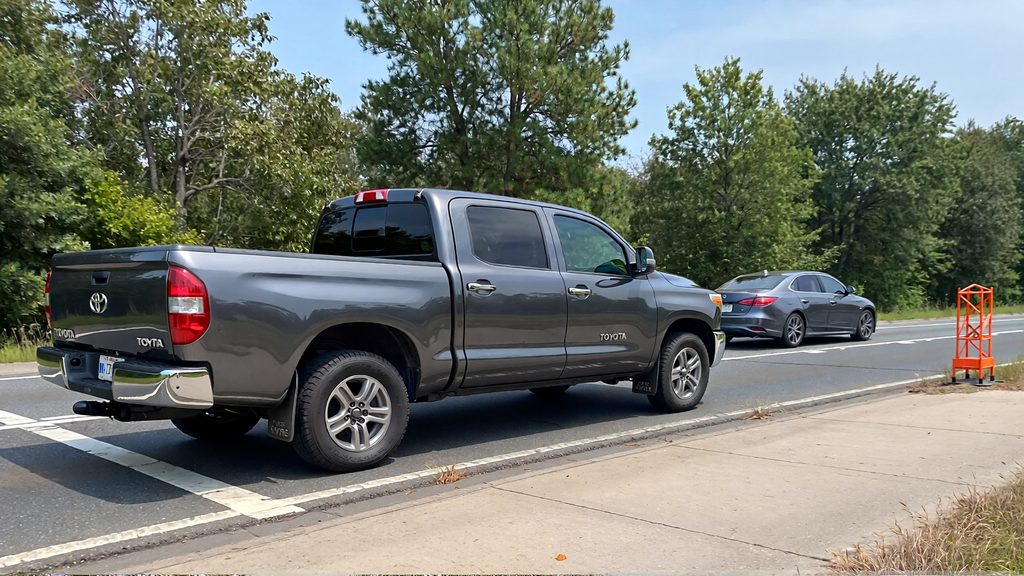
Why Head-On Collisions Are So Dangerous
Head-on crashes combine the speed of both vehicles into a single point of impact, which is why they so often cause catastrophic harm. Rural two-lane roads like O’Byrne’s Ferry Road leave little room for error, and a momentary lane departure can put two vehicles on a collision course with almost no time to react.
Occupants of a pickup truck colliding with a heavier work truck can face serious injuries, including traumatic brain injuries, spinal cord damage, fractures, and internal bleeding. Our thoughts are with everyone involved and their families as they recover from a frightening morning.
Head-on collisions are among the most dangerous crashes on the road because the forces of both vehicles combine at impact. When two objects collide while traveling in opposite directions, the energy absorbed is proportional to the square of their combined speed, which means even a crash at moderate speeds can cause catastrophic injuries.
There is also very little time to react, brake, or steer away, and the front of a vehicle offers limited room to absorb the impact before it reaches the occupants. For anyone on a motorcycle or e-moto, the danger is far greater.
A rider has no steel frame, airbags, or seat belt, and is often thrown from the vehicle and into the pavement or another object, which can cause severe head, chest, spinal, and internal injuries. A young rider’s smaller body offers even less protection. The Turlock Police Department has not said how this collision occurred or at what angle the vehicles met, so it should not be assumed to be a head-on crash.
How Fault Is Determined in a Head-On Collision
California law requires drivers to exercise ordinary care under Civil Code §1714, and several Vehicle Code provisions apply to head-on collisions. Vehicle Code §21650 generally requires drivers to stay on the right half of the roadway, and §21658 governs lane use on multi-lane roads.
Other common factors include unsafe speed under Vehicle Code §22350, distracted driving, fatigue, impairment, and roadway or visibility conditions. Investigators typically examine scene evidence, vehicle damage, skid marks, and statements from drivers and witnesses.
California follows a pure comparative fault system, which means an injured person can still recover damages even if they were partly at fault. Their recovery is reduced by their percentage of fault. A driver found 20 percent at fault, for example, would see a damages award reduced by 20 percent. Because fault is rarely obvious in the first days after a collision, preserving evidence early matters.
Claims Involving a Company Work Vehicle
When a crash involves a utility or commercial work truck, the question of who is legally responsible can extend beyond the driver. Under California’s doctrine of respondeat superior, an employer can be held liable for the negligence of an employee acting within the scope of their job duties.
Employers may also face claims related to hiring, training, supervision, vehicle maintenance, or scheduling practices. These cases often involve corporate insurance carriers and legal teams who begin working to protect the company’s interests right away, so injured people should be careful about giving recorded statements without guidance.
Not every crash involves a work vehicle, but when the driver is on the job, the legal picture can change significantly. Under California’s doctrine of respondeat superior, an employer can be held responsible for the negligence of an employee who causes a crash while acting within the scope of employment, which may include driving a company truck, a delivery van, or even a personal vehicle used for a work errand.
A claim may also reach the company directly if it negligently hired, trained, supervised, or retained an unsafe driver, or if it entrusted a vehicle to someone it knew or should have known was unfit to drive.
This matters for families because a business typically carries commercial insurance with higher coverage limits than a personal auto policy, and the company’s own records can reveal important facts, such as GPS and telematics data, dash camera footage, driver logs, dispatch messages, cell phone records, maintenance histories, and internal safety policies.
Companies are not required to keep all of this information indefinitely, so an attorney can send a preservation letter early to help prevent it from being lost or overwritten. California also has owner liability rules under Vehicle Code §§ 17150 and 17151 that apply when someone drives a vehicle with the owner’s permission, though those provisions carry statutory limits.
Understanding Settlement Value After a Serious Collision
Many people wonder how a personal injury claim is valued. Two common approaches are the multiplier method and the per diem method. The multiplier method totals economic damages, such as medical bills and lost wages, then multiplies that figure by a number reflecting the severity of the injuries and their lasting impact to estimate pain and suffering.
The per diem method assigns a daily dollar value to the pain and disruption of recovery and multiplies it by the number of days a person is expected to suffer. As a simple illustration, a daily value of $300 over 180 days of recovery would equal $54,000 in non-economic damages.
Catastrophic injury settlement calculators can help families understand these concepts, but they are educational tools only. Real case value depends on the medical evidence, future care needs, permanent impairment, lost earning capacity, available insurance coverage, and the degree of fault assigned to each party. Head-on crashes often require long-term treatment, which is why careful documentation of medical care from the outset is so important.
Important Deadlines for Injury Claims
In most California personal injury cases, the statute of limitations is 2 years from the date of injury under Code of Civil Procedure § 335.1. If a loved one dies as a result of a collision, a wrongful death action under Code of Civil Procedure §377.60 is generally subject to the same two-year window.
Also, a survival action under §377.30 may be available. Insurance companies may contact injured people quickly and push for early, low settlements, so it helps to understand your rights before making major decisions.
Deadlines are one of the most important and most overlooked parts of any injury or wrongful death case, and missing one can end a claim no matter how strong the facts are. In California, most personal injury and wrongful death lawsuits must be filed within two years under Code of Civil Procedure §335.1, and in a wrongful death case, that clock generally begins on the date of death.
Claims that involve a government entity follow a much shorter timeline. If a city, county, or state agency may share responsibility, for example, because of a poorly maintained roadway, a missing sign, or an obstructed sightline, Government Code §911.2 generally requires a written claim to be presented within six months, and a lawsuit usually must follow within six months after the claim is rejected.
Insurance policies add another layer because many require prompt notice of a crash and may set their own time limits for uninsured or underinsured motorist claims. Different family members may be subject to different rules, and special provisions may apply when a minor is involved, so no one should assume that more time is available.
Evidence is also perishable, since surveillance video, vehicle data, and witness memories can disappear long before a legal deadline arrives. A family should speak with an attorney as soon as they are able, and well before any deadline approaches, so that the right claims are preserved and the evidence is secured while it still exists.
Catastrophic Injury Settlement Calculators and Why They Matter
A catastrophic injury settlement calculator is an online tool that helps injured people and families get a rough sense of what a serious claim might be worth. Most calculators work from the same two methods that attorneys and insurers use.
The multiplier method sums the economic losses, including medical bills, future care, rehabilitation, lost income, and reduced earning capacity, and then multiplies the total by a factor reflecting the severity and permanence of the harm. The per diem method assigns a daily dollar value to pain, suffering, and loss of enjoyment of life and multiplies it by the number of days the person is expected to be affected.
In catastrophic cases, such as traumatic brain injuries, spinal cord injuries, amputations, and severe burns, the numbers can be very large because the losses often last a lifetime, which is why projecting future medical care and lost earning capacity accurately matters so much.
A calculator gives families a starting point for understanding how these factors fit together, and it can help them see why accepting a quick early offer from an insurer may leave long-term needs unpaid.
Calculators have real limits, however. They cannot account for disputed fault under California’s pure comparative fault rules, available insurance coverage, the credibility of evidence, or the opinions of medical and economic experts, all of which can raise or lower the final value. For that reason, any result should be treated as an educational estimate and not a promise of what a case will recover.
A fatal crash like this one is evaluated differently, since a wrongful death claim looks at the family’s loss of companionship, support, and guidance along with funeral costs and financial losses, but the same principle applies. A careful review by an experienced attorney is the most reliable way to understand what a claim may be worth. Call us now at 1-855-508-9565 to speak with the experts.
How GJEL Accident Attorneys Can Help
“When a collision changes your life in an instant, the last thing you should have to worry about is how to navigate the legal system on your own. If you or someone you love was hurt in a crash like this one, please know that you do not have to have all the answers right now. What matters most is protecting your health and your family’s future. Insurance companies move quickly, and they often look for ways to limit what they pay, so speak with an experienced California accident attorney before you give a recorded statement or accept any offer. The sooner we are involved, the sooner we can preserve evidence, document your losses, and make sure important deadlines are not missed. We handle these cases on a contingency fee basis, so you pay nothing unless we recover compensation for you. Reach out, ask your questions, and let us carry some of the weight while you focus on healing.” – Andy Gillin, Managing Partner, GJEL Accident Attorneys
GJEL Accident Attorneys has more than 40 years of experience representing people injured in serious vehicle collisions across California, and the firm has recovered over $950 million for its clients.
We handle personal injury cases on a contingency fee basis, which means you pay no attorney fees unless we win your case. If you or someone you love was hurt in a head-on crash, call GJEL Accident Attorneys at 1-855-508-9565 or visit our Stockton office for a free consultation.
Local Resources and Where to Find Help in Copperopolis
Families and witnesses affected by a serious collision in the Copperopolis area can turn to the following agencies for information, records, and support. Please confirm each link and phone number before publishing:
Calaveras County Sheriff’s Office. The Sheriff’s Office provides law enforcement for Copperopolis and the surrounding unincorporated areas. It is located at 1045 Jeff Tuttle Drive, San Andreas, CA 95249. The non-emergency line is (209) 754-6500, and the anonymous tip line is (209) 754-6030. In an emergency, call 9-1-1. Website: http://sheriff.calaverasgov.us
Calaveras County Coroner’s Office. The Coroner investigates deaths in the county and provides autopsy reports, toxicology reports, and death certificates to families and insurers. The mailing address is P.O. Box 848, Angels Camp, CA 95222, and the phone number is (209) 736-4552. The office is open Monday through Friday, 8:30 a.m. to 5:00 p.m., and is closed on weekends and holidays. Website: https://coroner.calaverasgov.us
California Highway Patrol. The CHP handles many collisions on state routes and county roads in the Copperopolis area, including Highway 4, and is the source of traffic collision reports when it responds to them. Families can request a copy of a report through the CHP office that handled the crash. Website: https://www.chp.ca.gov
Caltrans District 10. Caltrans maintains the state highway system in Calaveras County, and District 10 is the place to report hazards such as damaged signs, poor lighting, or roadway defects on state routes. Website: https://dot.ca.gov/caltrans-near-me/district-10
Calaveras County Public Works. County-maintained roads are managed separately from state highways, so this department is the point of contact for road conditions, signage, and sightline concerns on county roads. Website: https://www.calaverasgov.us
Calaveras County Superior Court. If a civil lawsuit or related court proceeding is filed, the court’s website provides case information, filing instructions, and locations. Website: https://www.calaveras.courts.ca.gov
California Victim Compensation Board (CalVCB). The state program can reimburse eligible families for funeral and burial costs, counseling, and certain other expenses when a qualifying crime is involved. It can be reached at 1-800-777-9229. Eligibility depends on the circumstances of the collision, so confirm it applies before directing readers here. Website: https://victims.ca.gov
California Department of Motor Vehicles and Office of Traffic Safety. The DMV explains how electric bicycles, motor-driven cycles, and motorcycles are classified, as well as licensing and helmet rules. The Office of Traffic Safety publishes safety information for bicycle, e-bike, and motorcycle riders. Websites: https://www.dmv.ca.gov and https://www.ots.ca.gov
988 Suffering and Crisis Lifeline. Anyone struggling with grief or distress after a loss can call or text 988 at any time for free, confidential support. Website: https://988lifeline.org