Last updated July 17, 2026
A multi-vehicle crash occurred on southbound Interstate 880 in Fremont during Tuesday morning’s rush hour, snarling traffic and sending at least one person to the hospital. The collision underscores the persistent dangers that commuters — especially motorcyclists — face daily on one of the East Bay’s most congested freeways.
The timing of the crash — just before 8:00 a.m. on a Tuesday — placed it squarely in the middle of peak commute traffic, when southbound I-880 carries some of its heaviest vehicle loads of the week. Thousands of Bay Area workers travel this corridor daily to reach employment centers in Fremont, Milpitas, San Jose, and Silicon Valley, and the stretch near Stevenson Boulevard is particularly prone to sudden slowdowns and stop-and-go conditions.
For motorcyclists, those conditions create a uniquely hazardous environment: distracted drivers, abrupt braking, unpredictable lane changes, and vehicles accelerating out of on-ramp merge zones all dramatically increase the risk of a serious collision. When a crash does occur in this type of congested, high-speed environment, the injuries to motorcycle riders are frequently severe — and the disruption to the surrounding community is immediate and widespread, as this morning’s traffic delays made clear.

What We Know About the Multi-Vehicle Crash
The collision was first reported at approximately 7:41 a.m. on Tuesday, March 24, 2026, on southbound Interstate 880 just south of the Stevenson Boulevard on-ramp in Fremont, according to the California Highway Patrol. Initial reports indicated that a motorcycle struck multiple vehicles, including a white Dodge and a blue Toyota, in what quickly became a multi-vehicle incident during the height of the morning commute.
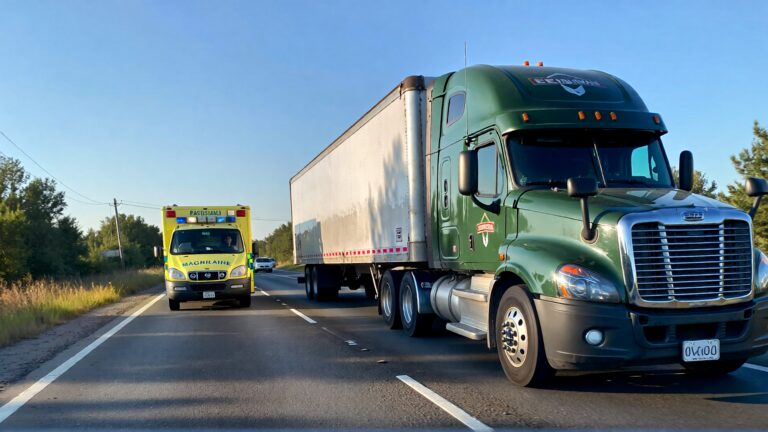
The motorcyclist sustained serious injuries in the crash and was transported to a nearby hospital for treatment. Following the collision, the California Highway Patrol reported that several southbound lanes were blocked, with only the express lane remaining open for a period of time as emergency crews worked the scene. All lanes were eventually reopened after crews cleared the wreckage and debris. The cause of the crash remains under active investigation by the CHP.
Traffic in the area was significantly slowed during the morning commute as officers managed the scene, directed traffic, and assisted those involved. No additional injuries have been reported at this time, though investigations into multi-vehicle crashes frequently uncover additional details in the days that follow.
Why I-880 in Fremont Is Particularly Dangerous for Motorcyclists
Interstate 880 is one of the busiest and most accident-prone corridors in the entire East Bay, running through Fremont and connecting major parts of Alameda County. The stretch near Stevenson Boulevard sees extremely high traffic volumes during peak commute hours, with vehicles frequently merging onto and off the freeway, creating high-risk conflict points.
Motorcyclists are especially vulnerable in these environments. Unlike passenger car occupants who are protected by a steel frame, airbags, and seatbelts, motorcyclists have no such structural protection. The consequences of a collision at freeway speeds are almost always severe. According to the National Highway Traffic Safety Administration (NHTSA), motorcyclists are approximately 24 times more likely to die in a crash per mile traveled than passenger car occupants.
On-ramp merge zones — like the one near Stevenson Boulevard — are among the most dangerous locations on any freeway. Merging vehicles often fail to account for motorcycles already in traffic lanes, either because of blind spots, distracted driving, or inadequate checking of mirrors and blind spots before merging. When a vehicle merges or changes lanes without yielding to an oncoming motorcycle, the results can be catastrophic.
California Laws That Apply to Multi-Vehicle Motorcycle Crashes
Several provisions of California law are directly relevant to crashes like this one on the southbound I-880:
California Vehicle Code § 21804 requires drivers entering a highway from an on-ramp to yield the right-of-way to all approaching traffic already on the freeway. A violation of this statute by any driver involved in the Stevenson Boulevard merge zone could serve as powerful evidence of negligence in a personal injury claim.
California Vehicle Code § 22107 prohibits unsafe lane changes — a driver may not move from one lane to another until it is reasonably safe to do so and only after giving an appropriate signal. In multi-vehicle pileups, investigators examine whether any driver made an abrupt or unsignaled lane change that triggered the chain reaction.
California Civil Code § 1714 establishes the foundational principle of California negligence law — that every person is responsible for the injury they cause to another through their want of ordinary care or skill. In a multi-vehicle crash involving a motorcycle, this statute is the legal backbone of any personal injury claim.
California Code of Civil Procedure § 335.1 gives injured victims two years from the date of an accident to file a personal injury lawsuit. While two years may seem like a long time, evidence preservation, witness recollection, and insurance investigation timelines make it important to consult an attorney as soon as possible after a serious collision.
California’s Pure Comparative Fault Rule (Li v. Yellow Cab Co., 13 Cal. 3d 804) allows an injured person to recover damages even if they were partially at fault for the crash. However, any percentage of fault assigned to the injured party will reduce their total recovery by that same proportion. In motorcycle crashes, insurance companies frequently attempt to assign comparative fault to the rider, making early legal representation essential.
Liability in a Multi-Vehicle Freeway Collision
Determining liability in a multi-vehicle crash is rarely straightforward. When a motorcycle collides with multiple passenger vehicles, investigators and attorneys must work backward from the physical evidence to identify the primary cause and assess each driver’s contribution to the crash.
Several parties may share responsibility in a crash of this nature. The driver of any vehicle that changed lanes unsafely or failed to yield at the on-ramp may bear primary liability. If the white Dodge or blue Toyota merged recklessly or cut off the motorcyclist, their negligence could be the proximate cause of the injuries sustained. In some multi-vehicle crashes, a chain reaction is triggered by a single driver’s error, meaning the initial party bears liability for all downstream collisions.
The most valuable evidence for establishing liability in freeway motorcycle crashes includes CHP collision reports and officer observations, traffic camera footage from Caltrans or nearby businesses, electronic data recorders (black boxes) from the involved vehicles, eyewitness accounts from other commuters, and cell phone records if distracted driving is suspected.
What Your Motorcycle Accident Settlement May Be Worth
Motorcycle crash victims often wonder what their case is worth. While every case is unique and the final value depends on the specific facts and injuries involved, California courts and insurance adjusters consider several categories of damages when evaluating a claim.
Medical expenses include all past and future costs related to treatment — emergency room care, surgery, hospitalization, rehabilitation, physical therapy, medication, and any ongoing medical needs resulting from the injuries.
Lost income covers wages, salary, and other earnings the victim was unable to earn while recovering, as well as any reduction in future earning capacity if the injuries are long-term or permanent.
Pain and suffering represent the non-economic harm caused by the crash — the physical pain, emotional distress, loss of enjoyment of life, anxiety, and psychological trauma that often accompany serious motorcycle injuries.
Property damage accounts for the cost to repair or replace the motorcycle and any personal property destroyed in the collision.
Settlement calculators typically use either the multiplier method — adding up all economic damages and multiplying by a factor of 1.5 to 5 (or higher in catastrophic cases) based on injury severity — or the per diem method, which assigns a daily dollar value to pain and suffering for each day the victim suffers from their injuries. Insurance companies use these frameworks as starting points, but seasoned personal injury attorneys know how to build the strongest possible case to maximize the final settlement.
Motorcycle Accident Settlement Calculators and How They Help Compute Settlement Values
One of the most pressing questions for anyone injured in a motorcycle crash is: What is my case actually worth? A motorcycle accident settlement calculator is a practical tool that helps injured victims — and their attorneys — arrive at a reasonable estimate of the total compensation they may be entitled to pursue. These calculators work by aggregating all documented economic losses, such as emergency medical bills, hospitalization costs, surgical expenses, physical therapy, lost wages, future lost earning capacity, and the cost to repair or replace the damaged motorcycle, and then applying a recognized formula to account for the non-economic damages that are harder to quantify but no less real.
The two most widely used methods are the multiplier method, which takes the total of all economic damages and multiplies it by a factor typically ranging from 1.5 to 5 — or higher in cases involving catastrophic or permanent injuries — based on the overall severity and impact of the harm suffered, and the per diem method, which assigns a specific daily dollar value to the victim’s pain and suffering and multiplies it by the total number of days the victim is expected to live with the effects of their injuries.
While settlement calculators provide a valuable starting framework, they are most powerful when used alongside an experienced personal injury attorney who understands how California juries and insurance companies evaluate motorcycle injury claims, can push back against efforts to undervalue non-economic damages, and knows how to present the full picture of a victim’s losses to secure the maximum possible recovery. Call us now at +1-866-218-3776 to speak with our experts.
Take Action Today – Get the Help You Deserve
“When I hear about a motorcyclist being seriously hurt in a multi-vehicle crash during the morning commute, I know the road ahead for that person and their family is not easy. Medical bills arrive fast, the ability to work may disappear overnight, and insurance adjusters start calling before you’ve even had a chance to catch your breath. At GJEL Accident Attorneys, we have spent over 40 years making sure that injured riders and their families don’t have to face that fight alone. You deserve answers, you deserve accountability, and you deserve every dollar of compensation the law allows. Our team is ready to step in, take on the insurance companies, and fight for you — so you can focus on what matters most: getting better.” — Andy Gillin, Managing Partner, GJEL Accident Attorneys
If you or a loved one were injured in Tuesday’s multi-vehicle crash on southbound I-880 near Stevenson Boulevard, or in any other motorcycle or multi-vehicle accident in the Bay Area, you should speak with an experienced California personal injury attorney as soon as possible. At GJEL Accident Attorneys, we handle motorcycle accident cases on a contingency fee basis — meaning you pay nothing unless we win your case.
With over 40 years of experience representing accident victims across California and more than $980 million recovered for our clients, GJEL has the resources, experience, and dedication to fight for the maximum compensation you deserve. Talk to an experienced GJEL accident attorney for a free legal consultation. Contact us at +1-866-218-3776 or visit our Berkeley office to secure your future and compensation.
Local Resources for Fremont I-880 Crash Victims
California Highway Patrol – Hayward Area Office Responding agency for incidents on I-880 in Fremont 1221 Oak Street, Suite 500, Oakland, CA 94612 Phone: (510) 457-2000 Website: www.chp.ca.gov
Fremont Police Department 2000 Stevenson Blvd, Fremont, CA 94538 Non-Emergency: (510) 790-6800 Website: www.fremontpolice.gov
Washington Hospital Healthcare System (nearest major trauma-capable hospital) 2000 Mowry Avenue, Fremont, CA 94538 Phone: (510) 797-1111 Website: www.whhs.com
Alameda County Emergency Medical Services 1000 San Leandro Blvd, Suite 200, San Leandro, CA 94577 Phone: (510) 618-2050 Website: www.acgov.org/ems
Caltrans District 4 – Bay Area 111 Grand Avenue, Oakland, CA 94612 Phone: (510) 286-4444 Website: www.dot.ca.gov/caltrans-near-me/district-4
Bay Area 511 (Traffic & Transit Information) Phone: 511 Website: www.511.org