Last updated September 2, 2026
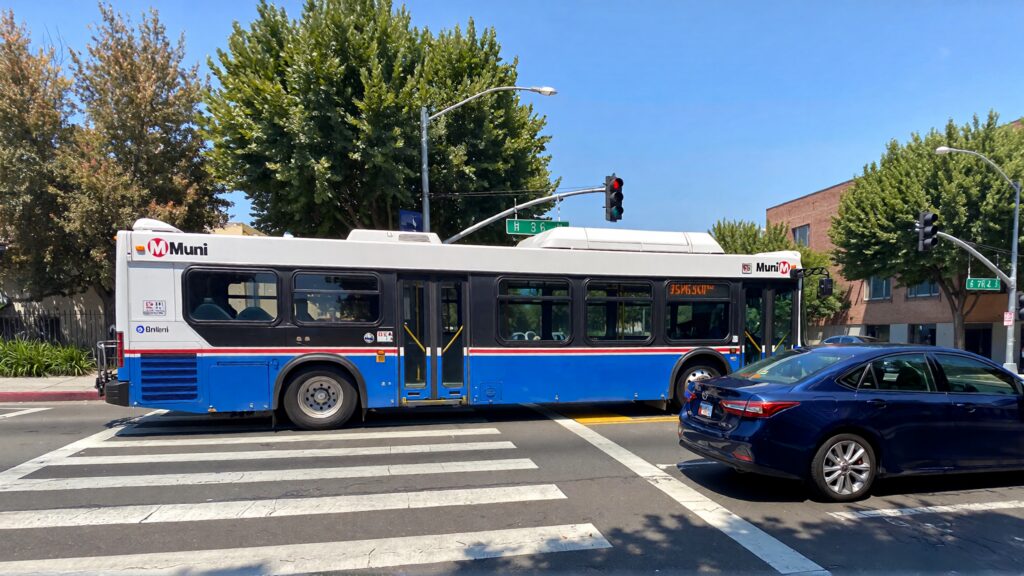
A midday Muni bus collision at 22nd and Mission streets sends two to the hospital and raises questions about public transit safety and liability in one of San Francisco’s busiest corridors. On the afternoon of Wednesday, May 20, 2026, a collision between a San Francisco Municipal Railway (Muni) bus and a passenger vehicle brought emergency responders to the busy intersection of 22nd Street and Mission Street in the Mission District.
The San Francisco Fire Department confirmed the crash occurred after 4:00 PM, during a typically high-traffic period in one of the city’s most densely traveled commercial corridors. Two people sustained injuries in the crash and were transported by ambulance to a local hospital for treatment. A third individual who was present at the scene declined ambulance transport. Emergency personnel urged the public to avoid the area as crews worked to manage the scene and render aid.
What We Know About the Muni Bus Collision
The collision occurred at the intersection of 22nd Street and Mission Street in the Mission District. The accident took place after 4:00 PM on Wednesday, May 20, 2026. A Muni bus and at least one other vehicle were involved. Two people were taken to a local hospital for treatment. A third person declined medical transport. Emergency personnel secured the scene and advised the public to find alternate routes.
The Mission District is one of San Francisco’s most heavily trafficked neighborhoods, with Mission Street serving as a major arterial road for both public transit and private vehicles. Muni bus routes operate continuously through the area, and the combination of bus traffic, pedestrians, cyclists, and private vehicles creates conditions that require constant vigilance from all road users.
Injuries Sustained in Bus Accidents
Collisions involving large public transit vehicles, such as Muni buses, carry significant injury potential due to the sheer size and weight disparity between buses and standard passenger cars. The occupants of the smaller vehicle are at a considerably higher risk of serious harm.
Common injuries in bus-vehicle collisions include traumatic brain injuries, cervical and spinal injuries, broken bones and fractures, internal organ damage, soft tissue injuries such as whiplash, and lacerations requiring surgical intervention. Even injuries that initially appear minor can evolve into chronic, debilitating conditions over time. Anyone involved in a collision with a Muni bus should seek a thorough medical evaluation as soon as possible, even if they feel relatively unharmed at the scene.
Bus accidents involving large municipal vehicles can also result in psychological injuries that are just as debilitating as physical ones. Victims frequently experience post-traumatic stress disorder, anxiety, depression, and a persistent fear of riding public transit or traveling on busy streets.
These mental health consequences can interfere with a person’s ability to work, maintain relationships, and carry out daily routines. Under California law, emotional distress damages are fully compensable as part of a personal injury claim, meaning victims are not limited to recovering only for their visible, physical harm.
Who May Be Liable After a Muni Bus Collision in San Francisco?
Establishing liability in crashes involving publicly operated transit vehicles involves multiple layers of legal analysis. Under California Civil Code §1714, all individuals and entities have a duty to exercise reasonable care to avoid causing injury to others. When a Muni bus driver or the San Francisco Municipal Transportation Agency (SFMTA) fails to meet that standard, they may be held responsible for resulting harm.
Potential liable parties in a Muni bus accident may include:
The Muni bus driver, if the negligent operation of the vehicle contributed to the crash. The San Francisco Municipal Transportation Agency is the public entity responsible for operating and maintaining the Muni fleet and overseeing driver training. A third-party vehicle driver, if their conduct caused or contributed to the collision. Vehicle manufacturers or maintenance providers, if a mechanical defect played a role.
Importantly, claims against public entities in California are governed by the Government Claims Act and Government Code §835. Before filing a lawsuit against the SFMTA or the City and County of San Francisco, an injured party must first file an administrative claim with the appropriate government agency. This claim must generally be filed within six months of the date of the incident. Missing this deadline can permanently bar a victim from recovering compensation, making it essential to consult an attorney promptly after any accident involving a public transit vehicle.
California’s Statute of Limitations for Personal Injury Claims
Under California Code of Civil Procedure §335.1, injured victims have two years from the date of the accident to file a personal injury lawsuit. However, as noted above, when the claim involves a government entity such as the SFMTA, the six-month government claims deadline applies first and is far more restrictive.
For wrongful death claims arising from fatal transit accidents, California Code of Civil Procedure §377.60 and §377.30 establish the right of eligible surviving family members, including spouses, children, and other dependents, to pursue compensation for their loss.
It is also worth noting that the statute of limitations can be paused, or “tolled,” under certain circumstances. If the injured party is a minor, the two-year clock generally does not begin running until they turn 18. If a victim was left mentally incapacitated by their injuries, the limitations period may be tolled for the duration of that incapacity.
In some cases, victims do not immediately discover the full extent of their injuries, and California’s discovery rule may allow additional time to file. These exceptions are narrow and fact-specific, which is why speaking with an experienced personal injury attorney as early as possible is the most reliable way to protect your right to compensation.
Estimating Compensation After a Bus Accident
Personal injury settlements in California are typically calculated using one of two methods:
The multiplier method adds up all economic damages, including medical expenses, lost wages, and projected future costs, and multiplies the total by a factor between 1.5 and 5, depending on the severity and permanence of the injuries. A more serious injury with lasting consequences will typically command a higher multiplier.
The per diem method assigns a daily dollar value to the victim’s pain and suffering and multiplies it by the number of days the victim is expected to endure that condition. This approach is particularly useful in cases involving long-term recovery or permanent disability.
Both methods are starting points for negotiation. The final settlement value depends on the specific facts of the case, the quality of medical documentation, the strength of the evidence, and the skill of the attorney representing the victim.
The Financial Impact of a Serious Accident
After a traffic accident, victims and their families are often blindsided by costs they never anticipated. Emergency transport fees, hospital stays, surgeries, physical therapy, and specialist consultations can quickly add up to tens or hundreds of thousands of dollars. Meanwhile, missed workdays and reduced earning capacity add further strain.
In cases involving catastrophic injury or death, families may also face funeral and burial expenses alongside the grief of loss. These compounding financial pressures make it critical for victims to understand their legal rights and act quickly to protect them.
Property damage adds yet another layer of financial stress that victims are often unprepared for. When a personal vehicle is totaled or requires extensive repairs following a collision with a Muni bus, the owner may be left without reliable transportation while simultaneously trying to manage medical appointments, insurance calls, and legal proceedings.
Rental car costs accumulate quickly, and if the victim is unable to drive due to their injuries, the expense and logistical burden compound further. In California, property damage is recoverable as part of a personal injury claim, and victims should carefully document all vehicle-related losses, including repair estimates, rental receipts, and any diminished value their vehicle sustains as a result of the accident.
How a Bus Accident Settlement Calculator Can Help You Estimate Your Claim
A bus accident settlement calculator is an online tool that helps injured victims get an early, general sense of what their claim may be worth based on the specific details of their case. By inputting information such as the total cost of medical treatment, projected future medical expenses, lost wages, the severity of injuries, and the degree of pain and suffering experienced, the calculator applies established valuation methods, including the multiplier and per diem approaches, to generate an estimated settlement range.
While no calculator can guarantee a specific outcome or replace the judgment of an experienced personal injury attorney, these tools serve an important purpose in the early stages of a claim. They help victims understand the categories of damages available to them, set realistic expectations before entering negotiations with an insurance company, and identify gaps in their documentation that may need to be addressed.
For victims of Muni bus accidents in San Francisco, where claims against a government entity add procedural complexity, having even a rough baseline estimate can be a valuable starting point for informed decision-making. Call us now at +1-866-218-3776 to speak with our experts.
Take Action Today – Get the Help You Deserve
“A collision involving a Muni bus in the middle of a busy afternoon is a frightening and disorienting experience, and the days that follow can feel just as overwhelming as the crash itself. Medical bills start arriving, you may be missing work, and you still have no clear answers about what caused the accident or who is responsible. What I want people injured in this crash to understand is that you have legal rights, and those rights come with strict deadlines, especially when a government-operated transit vehicle is involved. At GJEL, we have spent more than 40 years standing beside injured Californians at exactly this kind of crossroads, and we are ready to do the same for you. Please do not wait to get the help you deserve.” — Andy Gillin, Managing Partner, GJEL Accident Attorneys
GJEL Accident Attorneys has recovered over $980 million for injured clients across California over more than four decades of practice. Our firm handles the full scope of personal injury and wrongful death cases, including accidents involving Muni buses and other public transit vehicles, and we understand the procedural requirements that apply when claims involve government entities.
We work on a contingency fee basis, which means you pay nothing unless we win your case. If you or a loved one was injured in the Mission District bus collision or any other traffic accident in the San Francisco Bay Area, contact us today for a free consultation.
Talk to an experienced GJEL accident attorney for a free legal consultation. Contact us at +1-866-218-3776 or visit our San Jose office to secure your future and compensation.
Local Resources for Accident Victims in San Francisco
San Francisco Police Department (SFPD) Website: sanfranciscopolice.org The SFPD is the primary law enforcement agency responsible for investigating traffic collisions within San Francisco city limits. Victims and witnesses can request official traffic collision reports through the department’s online records portal. Accident reports are typically available within several days of the incident and are an essential piece of documentation for any personal injury claim. Traffic Collision Reports: sanfranciscopolice.org/stay-safe/traffic-safety
San Francisco Municipal Transportation Agency (SFMTA) Website: sfmta.com The SFMTA oversees all Muni bus operations throughout San Francisco, including driver oversight, vehicle maintenance, and route management. If you were injured in a collision involving a Muni bus, the SFMTA is the public entity against which a government tort claim must be filed before any lawsuit can proceed. Information about Muni service and safety can be found on their official website. Safety and Accessibility: sfmta.com/getting-around/accessibility
San Francisco Department of Public Works (SFDPW) Website: sfpublicworks.org The SFDPW is responsible for maintaining San Francisco’s streets, signals, and infrastructure. If a road defect, malfunctioning traffic signal, or poorly maintained intersection contributed to the collision, the SFDPW may bear partial responsibility. Reports of hazardous street conditions can be submitted through the city’s 311 service portal. Report a Street Issue: sf311.org
City and County of San Francisco Government Claims Program Website: sf.gov/information/file-government-claim. Before filing a lawsuit against a San Francisco government entity, such as the SFMTA or the City and County of San Francisco, injured victims must first submit a formal government tort claim through this program. The claim must generally be filed within 6 months of the incident. Failing to meet this deadline can forfeit your right to pursue compensation entirely.
California Highway Patrol (CHP) Golden Gate Division Website: chp.ca.gov Phone: (415) 557-1094 The CHP maintains traffic collision records for incidents occurring on state highways and freeways in the San Francisco region. Their Statewide Integrated Traffic Records System (SWITRS) provides access to collision data that can be useful in building a personal injury case. Traffic Collision Records: chp.ca.gov/programs-services/services-information/switrs-internet-statewide-integrated-traffic-records-system
San Francisco 311 Customer Service Center Website: sf311.org San Francisco’s 311 service center connects residents and accident victims with the appropriate city departments for non-emergency needs. Through the 311 portal, users can report street hazards, request city services, and obtain referrals to relevant municipal agencies involved in accident response and infrastructure maintenance.
Zuckerberg San Francisco General Hospital and Trauma Center Website: zuckerbergsanfranciscogeneral.org Address: 1001 Potrero Ave, San Francisco, CA 94110 Phone: (415) 206-8000 As the only Level 1 trauma center in San Francisco, Zuckerberg San Francisco General Hospital is the primary destination for victims of serious traffic collisions in the Mission District and surrounding neighborhoods. Retaining medical records from this facility is a critical step in documenting injuries for any personal injury claim.
California Department of Motor Vehicles (DMV) Website: dmv.ca.gov The California DMV provides resources for accident victims, including guidance on reporting collisions to the state and obtaining driver and vehicle records relevant to a claim. California law requires drivers involved in a collision resulting in injury or death to report the accident to the DMV within ten days using form SR-1. Report a Traffic Accident: dmv.ca.gov/portal/driver-education-and-safety/educational-materials/fast-facts/reporting-an-accident-ffdl-25
Bay Area 511 Traffic and Transit Information Website: 511.org 511.org is the official traffic and transit information service for the San Francisco Bay Area, operated in partnership with the Metropolitan Transportation Commission. The platform provides real-time traffic updates, incident reports, and transit service alerts that can help corroborate the circumstances surrounding a collision, including route delays and service disruptions involving Muni buses at the time of an accident.
A crash with a Muni bus is a claim against a public agency, and the rules and deadlines are different from a claim against another driver. Our car accident lawyers in San Francisco handle both kinds of cases and can tell you where yours stands at no cost.