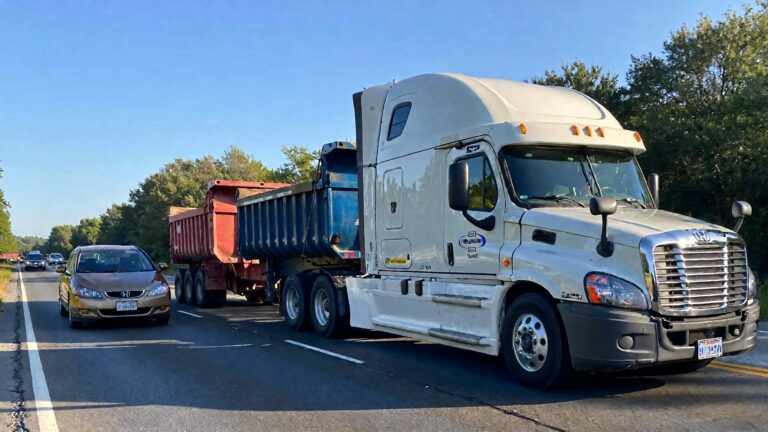
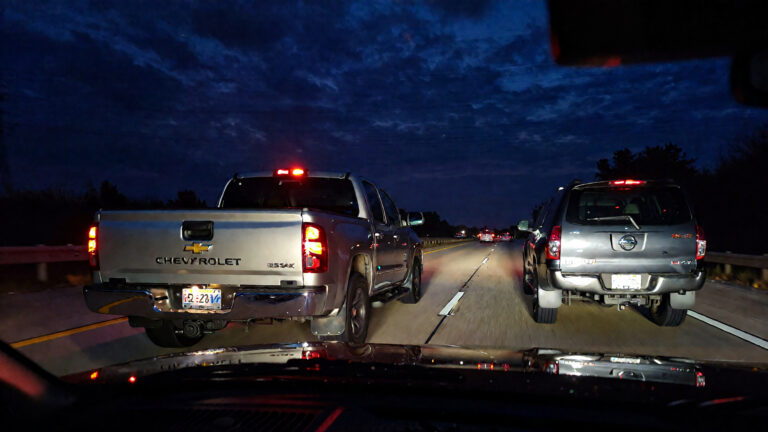
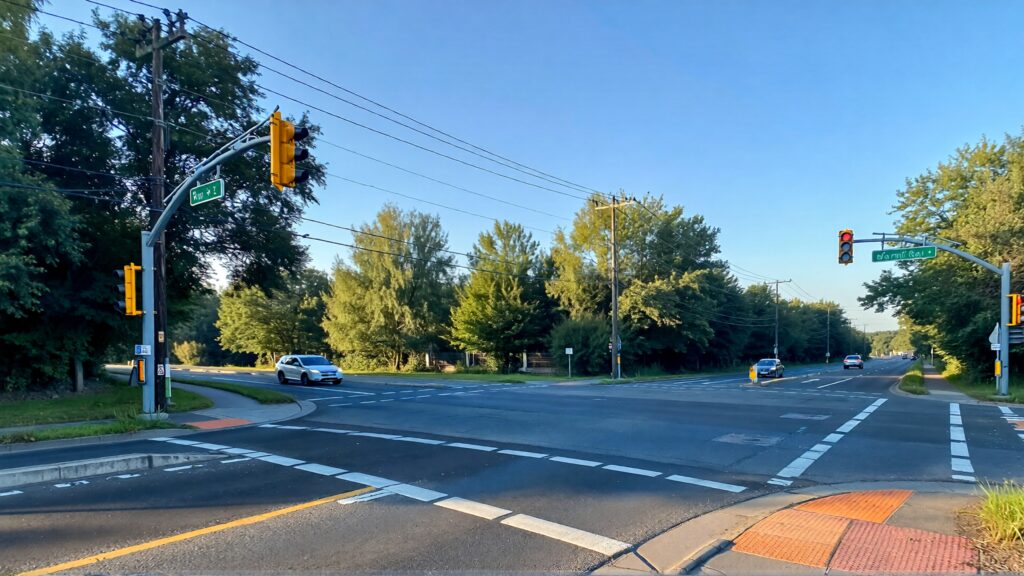
A car accident that led to injuries took place at an intersection in Monterey County on Monday morning. According to the California Highway Patrol, the crash happened at approximately 7:34 a.m. at the intersection of Murphy Road and San Juan Road. Officers confirmed that two vehicles collided, one of which was identified as a white pickup truck. The identity of the second vehicle has not yet been released.
Paramedics and numerous other first responders were dispatched to the scene. Upon arrival, they found one or more parties suffering from injuries. Those injured were evaluated on scene before being transported to local hospitals for further treatment. As of this writing, no additional details about the cause of the collision or the extent of the injuries have been made public, and the investigation remains active.
The Toll a Morning Commute Crash Can Take
A collision like this one is a reminder of how quickly an ordinary Monday morning drive can turn into a life-altering event. Injuries sustained in intersection crashes, particularly when a passenger vehicle is struck by a larger truck, often involve significant trauma that requires immediate emergency care and extended recovery.
Victims may face weeks or months away from work, mounting medical bills, and physical limitations that affect everything from driving to spending time with family. The financial and emotional strain that follows a serious crash is one of the most difficult parts of recovery, and it is often made worse by uncertainty about how to move forward.
Understanding Compensation After a California Car Accident
Anyone injured in this collision, or in a similar crash, may have grounds to pursue a personal injury claim against the driver or drivers responsible. Under California law, an injured party generally has the right to recover compensation for the full scope of harm the collision caused. This can include the cost of emergency treatment, surgery, physical therapy, and ongoing medical care, as well as compensation for income lost while recovering and unable to work.
Non-economic damages, such as pain and suffering and the loss of enjoyment of life that comes with a serious injury, are also recoverable in most cases. In situations involving especially reckless or grossly negligent conduct, California law also allows punitive damages to punish the at-fault party and deter similar conduct in the future.
California operates under a comparative negligence system, established through case law interpreting California Civil Code Section 1714, which means an injured party can still recover damages even if they were partially at fault for the collision, though their recovery may be reduced in proportion to their share of responsibility. Because fault in an intersection crash can be disputed, an early investigation that preserves evidence such as traffic camera footage, witness statements, and vehicle data is often critical to a successful claim.
How Settlement Value Is Often Calculated
Insurance companies and attorneys frequently rely on one of two general methods to estimate the value of pain and suffering in a personal injury claim. The multiplier method takes the total of a victim’s economic damages, such as medical bills and lost wages, and multiplies that figure by a number typically between 1.5 and 5, depending on the severity and permanence of the injury, to arrive at a pain-and-suffering value.
The per diem method instead assigns a specific dollar amount for each day the victim experiences pain and suffering, from the date of the accident through the expected recovery period, and multiplies that daily rate by the number of days. Which method applies and how it is calculated depend heavily on the specific facts of the case, the nature of the injuries, and the strength of the supporting medical documentation.
Time Limits on Filing a Claim in California
California law imposes a strict deadline on personal injury lawsuits. Under California Code of Civil Procedure Section 335.1, an injured person generally has two years from the date of the accident to file a lawsuit for personal injury caused by another party’s negligence. Missing this deadline typically bars an injured party from recovering compensation in court.
This is regardless of how strong the underlying claim may have been. Because evidence can also disappear quickly, memories fade, surveillance footage gets overwritten, and vehicles get repaired, it is generally advisable to consult an attorney well before that two-year window closes.
The two-year deadline under Code of Civil Procedure Section 335.1 is not the only timeline an injured party needs to watch. If a road design defect, poor signage, obscured visibility, or a maintenance failure at the Murphy Road and San Juan Road intersection contributed to this collision, any claim against a government entity, such as the county or a state transportation agency, is governed by the California Government Claims Act rather than the standard personal injury statute.
Under Government Code Section 911.2, a claim against a public entity generally must be filed within just six months of the incident, a dramatically shorter window than the two years typically allowed for claims against private drivers. Missing this shorter deadline can permanently bar a claim against a government entity even if the underlying two-year statute of limitations for the driver has not yet expired.
Because it is not always clear at the outset whether a public entity bears any responsibility for a crash, particularly one occurring at an intersection where road conditions could be a factor, injured parties are best served by speaking with an attorney as soon as possible so that no filing deadline is inadvertently missed.
Catastrophic Injury Settlement Calculators and How They Help Compute Settlement Value
When an accident results in catastrophic injuries, such as traumatic brain injuries, spinal cord damage, severe fractures, or injuries requiring amputation, calculating a fair settlement becomes far more complex than in a typical fender-bender claim.
Catastrophic injury settlement calculators are tools attorneys use to organize and project the full financial impact of a life-altering injury, pulling together both current and future costs into a single, defensible figure. These calculators typically account for past and anticipated medical expenses, including surgeries, hospitalization, rehabilitation, and any long-term care or in-home assistance the victim may need for the rest of their life.
They also factor in lost earning capacity, which looks beyond wages missed during recovery to estimate how the injury may limit a person’s ability to work and earn income over their entire career.
Beyond the economic losses, these tools help quantify non-economic damages such as pain and suffering, loss of enjoyment of life, and impacts on relationships and daily independence, often using the multiplier or per diem methods discussed earlier as a starting point.
While no calculator can replace the judgment of an experienced attorney or the input of medical and economic experts, these tools give injured parties and their legal teams a data-driven starting point for settlement negotiations, helping ensure that an insurance company’s early offer isn’t allowed to undervalue a lifetime of consequences stemming from a single, catastrophic moment.
Talk to a California Car Accident Attorney
“An accident like this one can turn a normal Monday morning into one of the hardest days of your life, and I know how overwhelming that can feel. In the middle of dealing with injuries, missed work, and mounting medical bills, the last thing anyone should have to worry about is fighting an insurance company on their own. If you or someone you love was hurt in this crash, please don’t wait to get answers. Speaking with an attorney early on can protect your rights, make sure important evidence isn’t lost, and help you understand what your claim may truly be worth. You focus on healing, and let us handle the rest.” – Andy Gillin, GJEL Accident Attorneys
If you or a loved one was hurt in this collision or any other car accident in Monterey County, you do not have to navigate the aftermath alone. GJEL Accident Attorneys has spent more than 40 years fighting for injured Californians and has recovered over $950 million for clients across the state.
Andy Gillin and the GJEL team work on a contingency fee basis, meaning you pay nothing upfront and no fees at all unless they win your case. Call 1-855-508-9565 or visit our Sacramento office today for a free, no-obligation consultation to discuss your rights and your options for recovery.
Resources and Agency Websites
The California Highway Patrol, Monterey Area, investigated this collision and can be reached through its official page at https://www.chp.ca.gov/find-an-office/coastal-division/730-monterey, which includes office hours, contact information, and details on requesting a copy of the traffic collision report once it becomes available.
The Monterey County Sheriff’s Office, which provides law enforcement services to the unincorporated areas of the county where this intersection is located, maintains a website at https://mcso.countyofmonterey.gov/ with information on filing reports, records requests, and non-emergency contact options.
The Transportation Agency for Monterey County (TAMC), the regional planning body responsible for roadway safety projects, transportation funding, and infrastructure improvements throughout the county, can be found at https://www.tamcmonterey.org/, including information on current and upcoming safety improvement projects that may be relevant to this intersection.
The Monterey County Superior Court, Traffic Division, which processes citations and related traffic proceedings stemming from this collision, is available at https://www.monterey.courts.ca.gov/divisions/traffic, where case information, payment options, and court procedures are detailed.