
A truck might jackknife for multiple reasons, including adverse weather conditions and stopping suddenly. For truck drivers, jackknifing can be terrifying and deadly. In this post, we’ll share more details on what a jackknife accident is, how truck drivers can reduce the risk of jackknifing, and what to do if you’re involved in a truck accident.
What Is a Jackknife Truck?
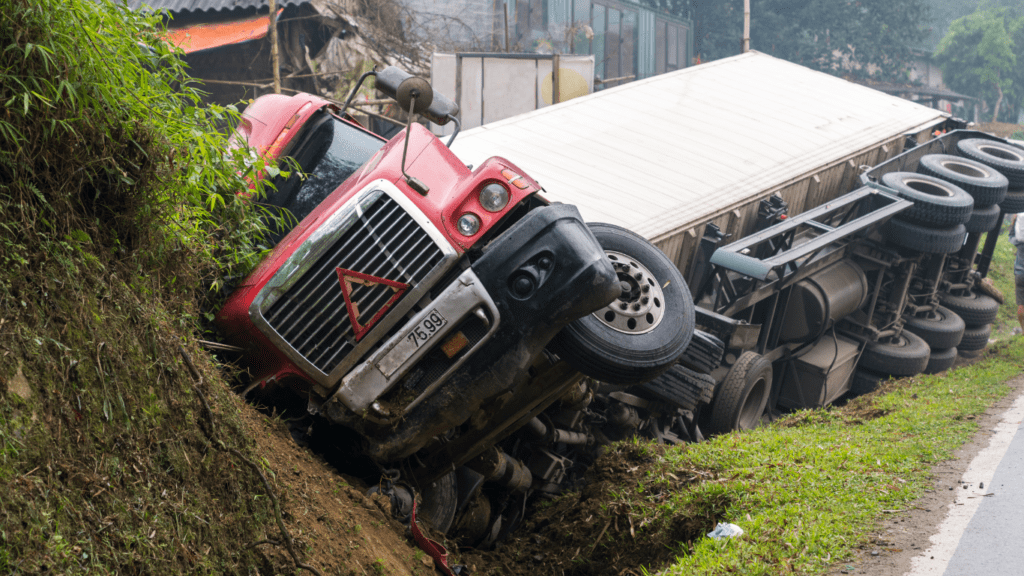
A jackknife occurs when a truck’s trailer skids and folds back toward the cab. Visually, it’s similar to a folding pocket knife. Jackknifing usually happens when the tractor and trailer are no longer moving at the same speed or one part loses traction before the other, causing the trailer to swing sharply to the side. Jackknifing can lead to severe consequences, including rollovers. A jackknife truck poses a significant risk to the truck driver and other California motorists. It’s not uncommon for truck accidents involving a jackknife to entail many vehicles. Understanding what causes a truck to jackknife and how to prevent it is crucial for every truck driver, whether you’re experienced or new to the road.
Types of Jackknife
There are two common types of jackknife accidents. A tractor jackknife happens when the cab’s drive wheels lose traction or lock up, causing the tractor to skid out of alignment and pull the trailer with it. A trailer jackknife happens when the trailer’s wheels lose traction first and the trailer swings outward, eventually forcing the cab to follow.
Common Causes of Jackknife Truck Accidents
Jackknifing typically starts with a truck losing traction, often with the trailer’s wheels. Several factors can trigger this loss of traction, including sudden braking or slippery roads. The truck cab slows down, but the momentum causes the trailer to swing around toward the cab. Conditions like wet or icy roads can cause a trailer to skid uncontrollably.
What Causes Trucks to Jackknife?
Articulated vehicles like tractor-trailers are susceptible to jackknifing, a dangerous fold towards the cab, under conditions like excessive speed, worn brakes, and driver fatigue.
What triggers trailer swings in large trucks?
Trailer swing, when a truck’s rear swings dramatically towards the cab, often occurs due to loss of traction triggered by factors like sudden braking, slick roads, or uneven weight distribution.
Other causes include equipment failure, especially with a truck’s braking system. The brakes may lock up on one side of the trailer but not the other, causing an imbalance. Worn tires and faulty suspension components can also reduce stability and make it harder for a driver to keep the truck under control during braking, turning, or lane changes. The truck’s cargo load can also impact a truck’s risk of jackknifing. A truck with improperly loaded or unsecured cargo can shift during transit. That leads to instability and the increasing risk of a jackknife. Overloaded trailers can create similar problems by changing how weight is distributed across the rig.
Driver error is also a leading cause of truck accidents, including jackknifes. Drivers who excessively speed, make abrupt maneuvers, or fail to adjust their driving style to current weather conditions can also lose control and cause a jackknife accident. Excessive speed is especially dangerous on curves and steep grades, where the added force of a skid can quickly push the trailer out of alignment. Fatigue, distraction, and inexperience can also lead to delayed reactions or overcorrection, both of which increase the risk of jackknifing.
Light or empty trailers can also be more likely to jackknife because there is less weight pressing the tires onto the road. That reduced traction can make wheel lock-up and trailer swing more likely during hard braking.
If you or someone you know experienced a jackknife accident, contact a professional Sacramento truck accident lawyer to help you win your case!
Tips for Preventing a Jackknife Accident
Preventing a potential jackknife is primarily about being prepared. Truck drivers must verify the truck is regularly maintained and undergoes all its safety checks. Defective brakes and malfunctioning mechanical systems can lead to any accident, not just jackknifed. Drivers should also pay close attention to tire condition and suspension performance, since both affect traction and stability.
Truck drivers need to adapt to road conditions and factor in weather. For example, gradual and slow braking is necessary on slippery roads. Ensure you’re making steady and slow turns, especially on icy roads. Careful maneuvers can reduce the risk of a trailer losing traction and swinging around. Watching your speed is also crucial because conditions might make driving below the posted speed limit essential. This is particularly important when traveling downhill or entering curves, where speed can quickly make a small skid much worse.
Properly loading and securing cargo cannot be overstated. An unevenly loaded trailer is significantly more susceptible to jackknifing, as the imbalance affects the vehicle’s stability. Drivers aren’t typically loading and unloading cargo; therefore, they must guarantee the completion of all safety checks before getting on the road. Drivers should also be cautious with lightly loaded or empty trailers, since reduced weight can mean less traction during braking.
Maintaining safe speeds, properly loaded cargo, and regular vehicle maintenance can significantly reduce the risk of loss of control and jackknifing in large trucks. Understanding trailer dynamics and practicing defensive driving techniques are crucial for truck drivers to mitigate instability and prevent dangerous situations. While impossible to eliminate entirely, advanced braking systems and improved trailer designs are continuously being developed to further enhance stability and prevent jackknifing in semi-trucks.
What to Do in the Event of a Jackknife Accident?
Knowing what to do next is essential in the unfortunate event of a jackknife accident. The first step is to stay calm and ensure everyone is safe. Next, call 911 to alert emergency personnel of an injury accident involving an 18-wheeler truck. If you can do so safely, take photos of the accident scene, including vehicle damage, skid marks, debris, and other factors that may have contributed to the accident. All parties should avoid discussing fault at the accident scene and allow the officer to make their observations. If the other driver is at fault, the claims adjuster could use anything you say against you during the liability investigation. California is a comparative negligence state, which means the adjuster will try to pin as much liability on you as possible. That’s because your percentage of fault reduces the amount of your compensation. For example, 30% liability means you can only recover a maximum of 70% of your damages.
Should You Hire a Truck Accident Attorney?
You should meet with a California lawyer for truck accident cases if you suffered injuries and believe you are not at fault for the collision. Hire an experienced lawyer at GJEL Accident Attorneys to protect your rights. Insurance adjusters are prohibited from speaking to someone who has an attorney representing them. That means your attorney will also handle all potential settlement negotiations on your behalf. If we cannot reach an agreement, we are fully prepared to file a lawsuit.
Contact GJEL Accident Attorneys Today
If you need assistance pursuing compensation for a jackknife accident, let the experienced team at GJEL Accident Attorneys help. We offer free, no-obligation initial consultations and only charge fees once we recover compensation. Let us use our years of litigation experience to work for and fight for you. We serve all of California from the South Bay to the North Bay. Contact one of our offices today for a free case review.
California Truck Accident Help & Resources
Find the right next step fast. Explore local lawyers near you, practical guides, tools, case results, and recent crash updates. Questions now? Call (866) 268-7118 for a free case review.
- Local Counsel Near You
- Crash Types & Causes
- Legal Process & FAQs
- Tools & Calculators
- Injury Guides
- Case Results & Settlements
- Recent Truck Accident News & Safety Updates
- Other Serious Crashes We Track
Local Counsel Near You
- San Francisco Truck Accident Lawyers Help with major injury and wrongful death trucking cases in San Francisco.
- Sacramento Truck Accident Lawyers Local team for crashes on I‑5, I‑80, and regional corridors.
- San Jose Truck Accident Lawyer Guidance after big‑rig and commercial vehicle crashes in San Jose and South Bay.
- Oakland Truck Accident Lawyers Advocates for complex East Bay trucking claims.
- Fresno Truck Accident Lawyer Central Valley trucking collisions, including Highway 99.
- Fremont Truck Accident Lawyers Support after crashes on I‑880 and major arterials.
- Pleasanton Truck Accident Lawyer Local counsel for I‑580 and Tri‑Valley incidents.
- Richmond Truck Accident Lawyers Experienced team for port and refinery corridor crashes.
- Fairfield Truck Accident Lawyers Help for I‑80 and Highway 12 trucking wrecks.
- Stockton Truck Accident Lawyer Representation for San Joaquin County truck collisions.
- Orinda Truck Accident Lawyers Tailored support for Contra Costa County cases.
- Concord Truck Accident Lawyers Serious injury trucking claims in and around Concord.
- Walnut Creek Truck Accident Lawyer Strategic help for complex commercial vehicle crashes.
- Hayward Truck Accident Lawyers Support for I‑880 and SR‑92 trucking incidents.
- Antioch Truck Accident Lawyer Help navigating claims in East Contra Costa.
- Gilroy Truck Accident Lawyer Representation for South Santa Clara County crashes.
- Berkeley Truck Accident Lawyers Local guidance for trucking and delivery vehicle cases.
- San Jose Truck Accident Legal Help: What To Do Next Step‑by‑step actions and how a lawyer strengthens your claim.
Crash Types & Causes
- Jackknife Truck Accidents Common causes, liability, and evidence to prove fault.
- Underride Crashes How underride happens and steps to reduce risk and prove negligence.
- Truck Rollovers Why rollovers occur and how they impact injury claims.
- Logging Truck Accidents Unique hazards, violations, and case strategy.
- Truck Driver Fatigue Hours‑of‑service, warning signs, and fatigue liability.
Legal Process & FAQs
- When To Hire a Truck Accident Attorney The timeline that preserves evidence and maximizes leverage.
- What a Truck Accident Attorney Actually Does Investigation, expert workups, negotiation, and trial prep.
- Benefits of Hiring a Truck Accident Attorney Why specialized trucking experience matters for results.
- If the Driver or Company Is From Another State Jurisdiction, where to file, and how cross‑state claims work.
Tools & Calculators
- Logging Truck Accident Settlement Calculator Get a rough estimate, then confirm value with a free attorney review.
Injury Guides
- Traumatic Brain Injury After a Semi‑Truck Crash Symptoms, treatment, life‑care planning, and compensation paths.
Case Results & Settlements
- California Truck Accident Verdicts & Settlements Browse outcomes and see how similar cases resolved.
- $1 Million Semi‑Truck Collision Settlement How expert analysis established liability for a minor client.
- $420,000 Sacramento Truck Accident Settlement Strategic workup that delivered a strong result.
Recent Truck Accident News & Safety Updates
- Semi‑Truck Collision on SR‑36 in Humboldt County Major injuries reported and why rural highway cases are complex.
- Fatal Semi‑Truck Collision Near Turlock Details and legal considerations for families.
- Crane Truck Crash in Salinas Commercial vehicle hazards and liability questions.
- Truck Goes 200 Feet Down Embankment in Shasta County Rescue timeline and potential causes.
- Semi‑Truck Crash on Highway 395 Critical injuries and how investigations proceed.
- Dump Truck Driver Suffers Major Injuries on I‑680 Case factors when a professional driver is hurt.
- Dump Truck Collision in Rancho Cordova Minor injuries and fuel spill response.
- Fatal Pedestrian‑Truck Collision on Highway 37 Rights of families after a catastrophic loss.
- Motorcycle and Truck Collision in San Francisco Downtown risks and reconstruction issues.
- Motorcycle Lodged Under Semi on I‑80 in Davis Multi‑vehicle dynamics and liability splits.
- Fire Truck Rollover in Fresno County Emergency vehicle rules and how they affect claims.
Other Serious Crashes We Track
- Petaluma Pedestrian Crosswalk Crash Safety reminders for drivers and pedestrians.
Last updated: August 18, 2025. This hub is for information only and not legal advice. For immediate help, call (866) 268-7118 or request a free case review.